
A deep dive into the mass cancellations at IndiGo Flight in December 2025 triggered by new pilot-duty rules, crew shortages and technical disruptions — how hundreds of flights were scrapped, the regulatory backlash, reimbursements & what lies ahead.
Why Did This Indigo flight Crisis Break Out?
New Pilot Rest Rules — The Spark
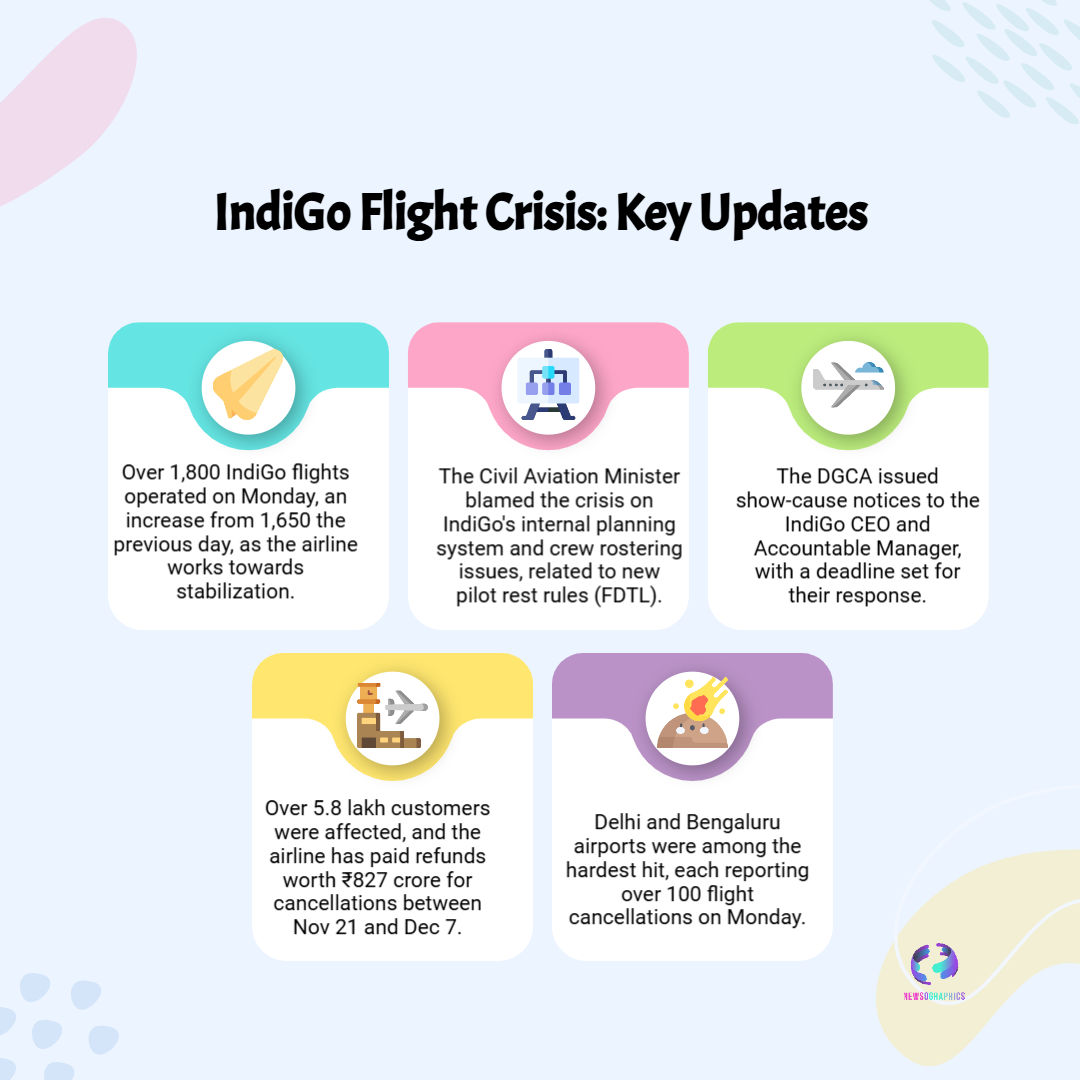
In November 2025, the aviation regulator DGCA implemented updated Flight Duty Time Limitation (FDTL) regulations, raising mandatory rest periods for cockpit crews and curtailing night-duty allowances.
Although these changes were known well in advance, the airline failed to scale up crew strength accordingly. As a result, many flights ended up without legally available pilots — triggering mass cancellations nationwide.
Compounding Factors: Tech Glitches & Crew-Scheduling Chaos
The regulatory overhaul by itself did not fully explain the scale of the disruption. Around the end of November, the airline rushed an emergency software patch for its fleet of Airbus A320s — a move that disrupted crew scheduling and created further confusion just as the airline was operating at minimal slack due to the FDTL changes.
Multiple sources also pointed to a shortage of cabin crew and ground-staff, making it difficult to manage cancellations, baggage, re-routing and passenger support.
Scale & Impact of the Disruption
- Over the past week, more than 4,500 flights were cancelled across IndiGo’s network.
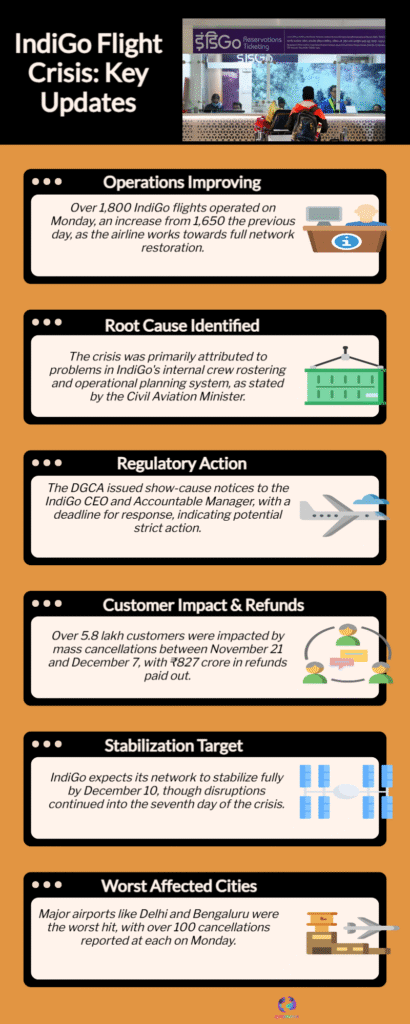
- On a single day (Sunday), the airline cancelled nearly 650 flights; on Monday, about 500 flights were cancelled despite 1,800 flights being operated.
- Major airports — including Indira Gandhi International Airport (Delhi), Kempegowda International Airport (Bengaluru), Mumbai International Airport — were among the worst-hit, with over 100 flight cancellations each at times.
- Reports of stranded passengers, chaos at terminals, missed onward connections, and long queues at check-in and customer-service counters were widespread.
Regulatory & Industry Fallout
- DGCA issued a show-cause notice to the airline’s CEO and management for “significant lapses” in planning and crew scheduling.
- The regulator even deployed its own contracted inspectors to operate some flights, and rolled back certain crew rest-rules temporarily in an attempt to ease disruptions.
- The crisis has raised broader questions about capacity planning, over-reliance on a single dominant carrier in India’s aviation ecosystem, and the readiness of airlines to adapt to regulatory changes.
Relief & Recovery: What the Airline, Government, and Passengers Are Doing
- The government says efforts are underway to restore normalcy: According to the latest update, over 1,800 flights were operated on Monday, and the airline claims its network connectivity has been “fully restored.”
- Refunds totaling ₹827 crore were issued for tickets cancelled between November 21 and December 7; about 5.8 lakh passengers were reportedly affected.
- Baggage mishandling issues are being addressed: out of roughly 9,000 displaced pieces, 4,500 have already been delivered, with the rest scheduled within 36 hours.
- The airline— acknowledging its misjudgment — says it aims to stabilise operations fully by December 10, 2025.
What’s Next: What to Watch
- Passengers should double-check flight status before heading to airports — especially for short-haul or connecting flights.
- Smaller airlines may see a rise in demand as travelers seek alternatives — potentially shifting India’s aviation dynamics.
- Regulatory and industry observers may push for stronger pre-emptive planning for crew and fleet before implementing big policy changes.
- Finally, the crisis may prompt a broader debate about whether a more diversified airline ecosystem (less reliance on one big player) is needed for resilient air travel infrastructure.
The turmoil around IndiGo’s cancellations offers a sobering look at how regulatory compliance, crew management, and software-logistics interplay can disrupt travel on a massive scale — sometimes overnight. For passengers, the worst may be receding, but the shockwaves could reshape Indian domestic aviation for months to come.