
After Shashi Tharoor’s article on political dynasties, Congress leaders defended Rahul Gandhi and hit back at BJP’s attacks — reactions and political fallout explained.
Congress Leaders Rally Behind Rahul Gandhi After Tharoor Row
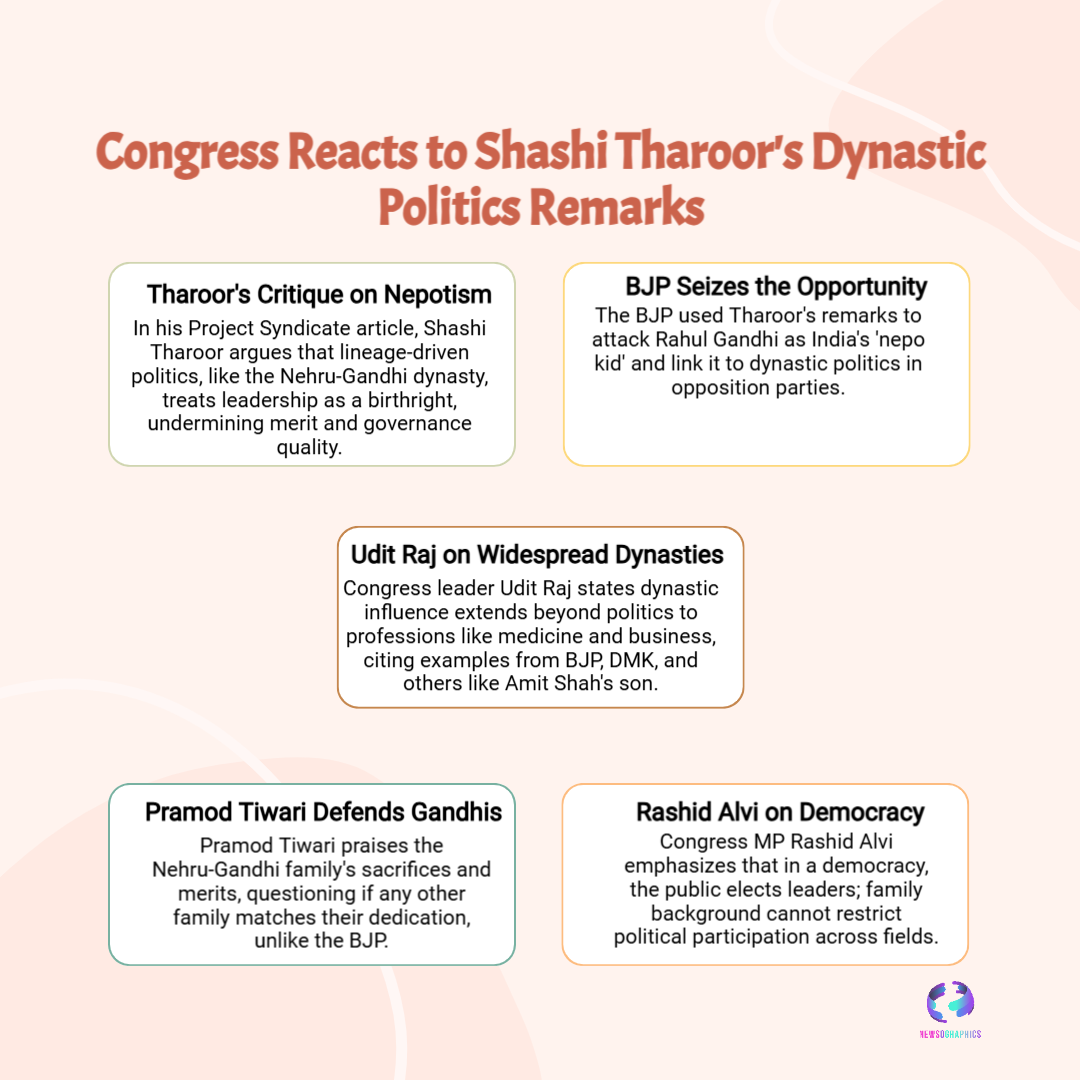
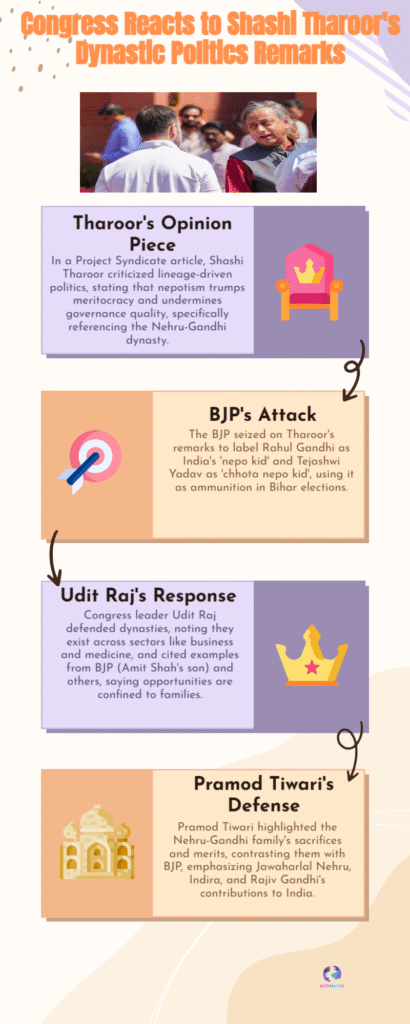
A fresh controversy erupted after Congress MP Shashi Tharoor opinion piece on political dynasties — in which he critiqued lineage-driven politics — drew sharp reactions across the political spectrum. The BJP seized on Tharoor’s language to label Rahul Gandhi a “nepo kid,” triggering an immediate pushback from several Congress leaders who defended the party’s leadership and highlighted the historical context of the Nehru–Gandhi family.
Tharoor’s article, carried on an international opinion portal, argued that when political power is passed down by birth rather than earned through merit and grassroots engagement, governance suffers. He singled out the broader phenomenon of dynasty politics in India, saying that lineage can concentrate opportunities within families — a remark that opponents immediately weaponised.
Senior Congress figures responded with a mix of defence and counter-argument. Udit Raj pointed out that dynastic influence is not limited to politics and cited examples across parties, while Pramod Tiwari and others defended the Gandhi family’s record of public service and sacrifice. Rashid Alvi emphasised democratic choice, arguing voters ultimately decide who leads, and warned against policing who can contest elections.
The row has two immediate political effects. First, it hands the BJP a cultural flashpoint to frame the opposition as out of touch; second, it exposes a fault line within public discourse about merit, legacy and political entitlement — themes that could shape narrative framing ahead of state and national ballots. Political analysts say the controversy may be short-lived if the Congress pivots the conversation to development and governance; if not, it risks allowing identity and personality-driven debate to overshadow policy issues.