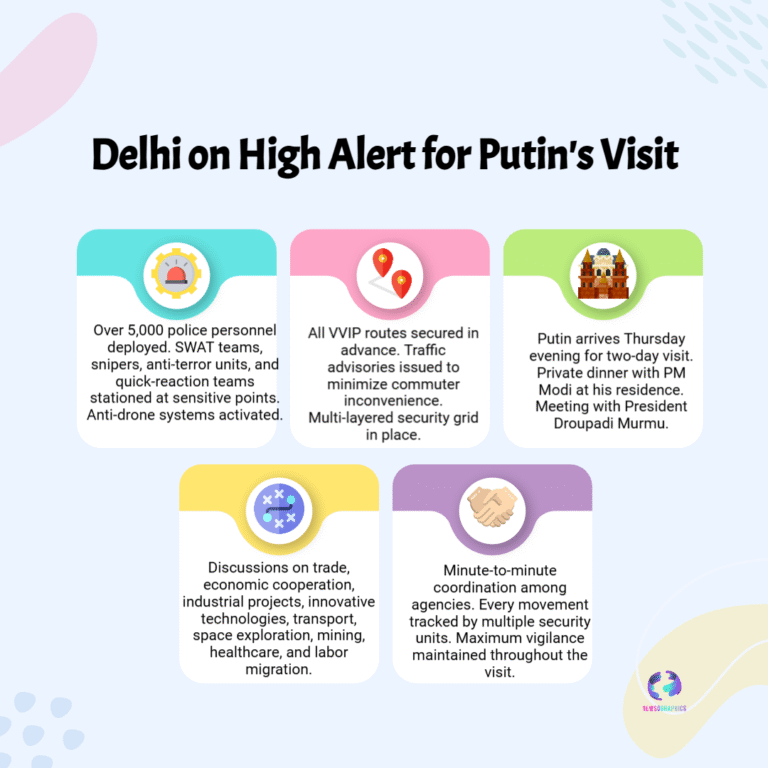
Russian President Vladimir Putin’s December 2025 visit to India marked a landmark India–Russia summit, sealed major trade and defence agreements, and reinforced cooperation across energy, space and strategic sectors.
Why This Visit Matters
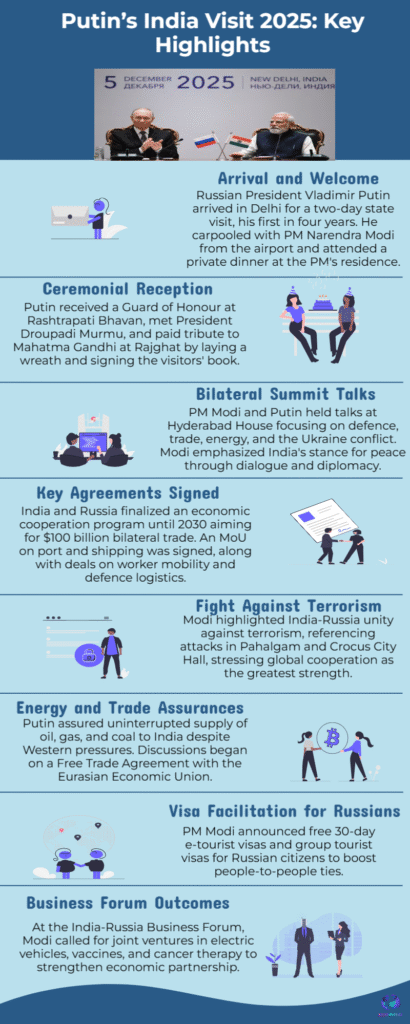
This December 2025 visit by Vladimir Putin is his first to India since 2021 and comes against the backdrop of global geopolitical tension. Beyond ceremony, the trip serves as a reaffirmation of the long-standing strategic partnership between India and Russia — one that spans decades, even as global alignments shift.
What Happened on the Ground: Events & Diplomacy
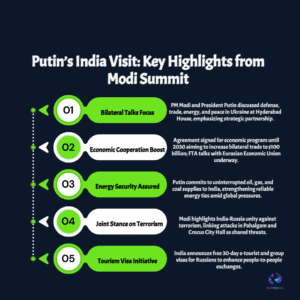
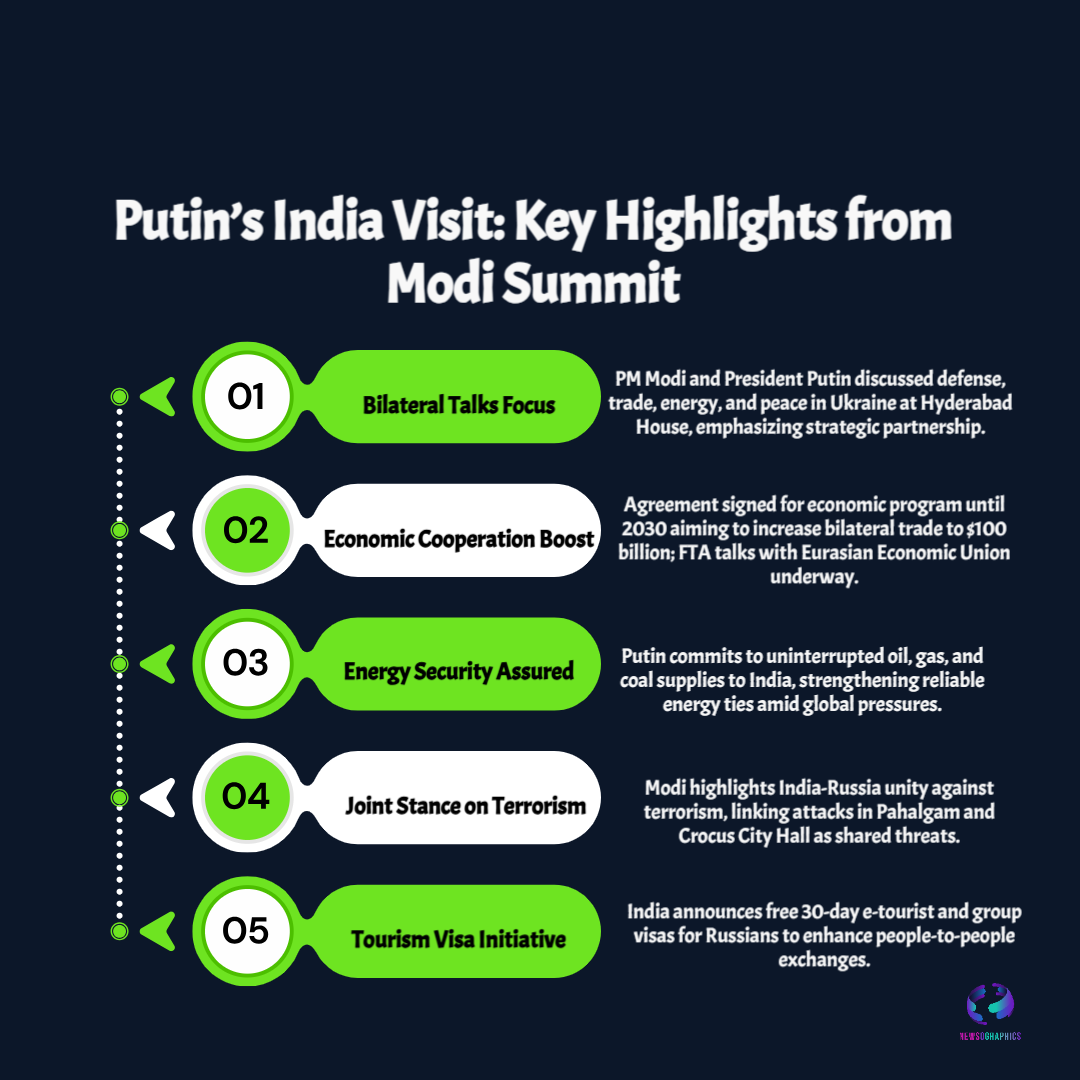
- The summit itself — the 23rd India–Russia Annual Summit — convened at Hyderabad House and involved high-level meetings, exchanges, and a joint address.
- On arrival in Delhi, Putin was welcomed with a traditional guard of honour at the presidential residence.
- In a rare gesture, Putin and Narendra Modi traveled together in the same car from the airport to the PM’s residence — an expression of personal rapport and diplomatic warmth.
Broad Economic & Trade Commitments
- India and Russia agreed to launch a long-term economic cooperation roadmap through 2030, signaling an intent to deepen industrial, energy, and trade collaboration.
- Under this new framework, trade and cooperation are expected to expand across sectors including energy, fertilisers, mining, manufacturing, technology, and logistics.
- Specific MoUs were signed: joint ventures in fertiliser or chemical sectors (for example, building a urea plant with Russia’s Uralchem), and enhancements in port & shipping cooperation.
Strategic, Defence, Space & Technology Cooperation
- Other areas include healthcare, civil nuclear energy (notably projects like the one at Kudankulam Nuclear Power Plant), workforce mobility, and logistics — pointing to a multi-dimensional relationship.
- The summit reaffirmed cooperation in defence, with discussions on further procurement (or collaboration) involving defence hardware and logistic support frameworks.
- Beyond traditional defence, partners agreed to deepen collaboration in space technology, including possible transfer of rocket-engine technology, joint efforts in satellite and orbital missions — signalling a long-term science & technology partnership.
Geopolitical Messaging: Peace, Strategic Autonomy & Global Balancing
- This visit conveys that India will maintain its independent foreign policy: engaging with Russia on critical needs such as energy and defence, even amid pressure from Western nations — a delicate diplomatic balancing act.
- On Ukraine and global conflict, Modi told Putin that “India is on the side of peace,” emphasising desire for global stability while avoiding taking sides overtly.
- Putin, in response, thanked for paying attention to peace efforts — reinforcing bilateral trust and shared commitment to diplomacy.
What This Means for India: Opportunities and Challenges
Potential Benefits
- Diversified energy and resource supplies: Agreements may help secure stable crude, fertiliser, and raw-material imports, assisting energy security and industrial needs.
- Strengthened strategic & defence capabilities: Access to Russian technology, arms, and joint R&D could enhance India’s defence preparedness and push toward self-reliance in key sectors.
- Technology and space-sector gains: Collaboration in advanced space, rocket, and satellite domains could boost India’s technological aspirations and scientific outreach.
- Broader economic growth: Infrastructure, manufacturing, logistics, and trade expansion could generate jobs, stimulate exports (especially in pharma, agriculture, consumer goods), and reduce dependency on limited sources.
Diplomatic and Geopolitical Tightrope
- The visit underscores India’s strategy to maintain independent global relations — but balancing ties with both Russia and Western alliances may invite diplomatic scrutiny.
- Reliance on Russian imports (energy, defence) may continue — India will need careful management to avoid overdependence while diversifying supply chains.
- Managing global perceptions: As geopolitical tensions persist (e.g. ongoing Ukraine conflict), India must navigate international reactions carefully to protect its interests without straining other partnerships.
Why This Visit Matters Beyond Headlines
This summit reaffirmed that India–Russia relations are no longer limited to historical defence or Cold War-era alliances. Instead, the partnership is evolving into a multifaceted cooperation — spanning trade, technology, energy, space, labour mobility, and strategic autonomy.
At a time when global power dynamics are shifting — with sanctions, supply-chain disruptions, and military conflicts — this renewed India–Russia engagement demonstrates that long-term partnerships can adapt and stay relevant.