In wake of mass flight cancellations, the Indian government has ordered a high-level probe into the IndiGo crisis, seeking accountability and reforms. Here’s what the inquiry aims to cover — and what might come next.
Why the Government Launched a Probe
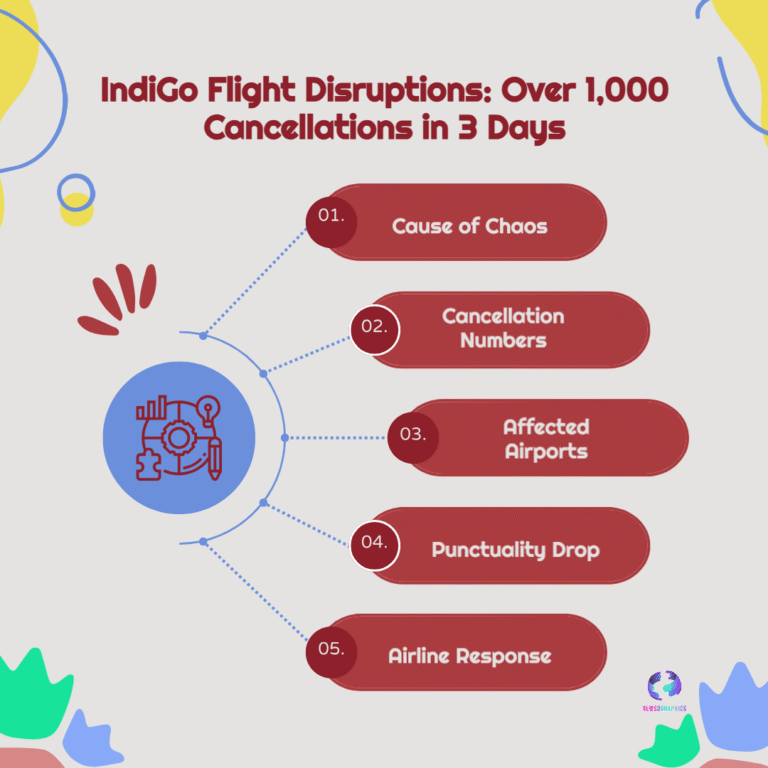
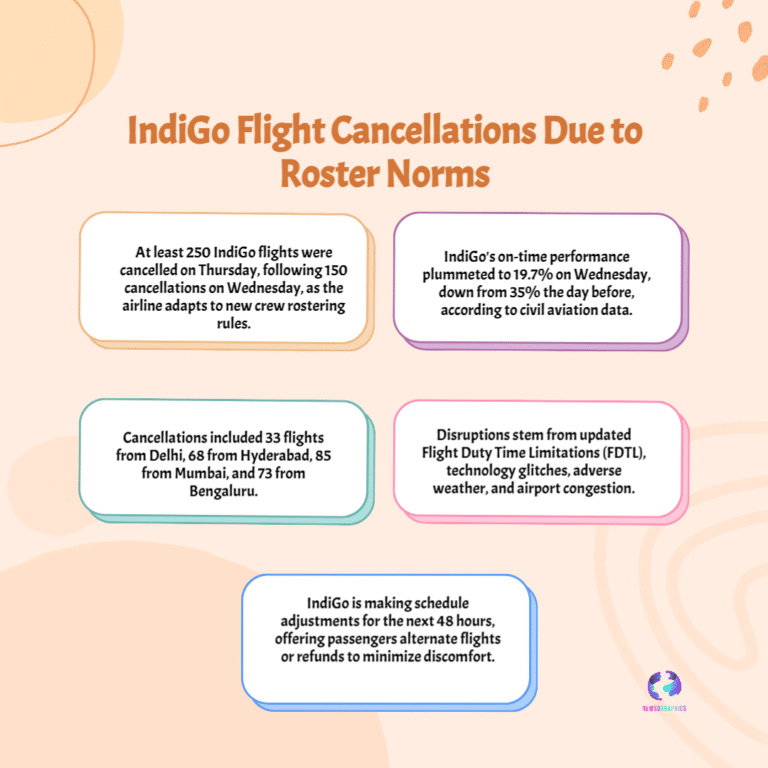
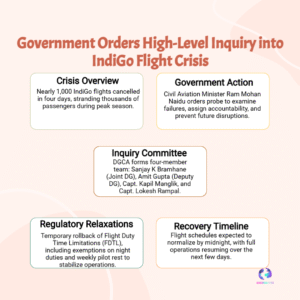
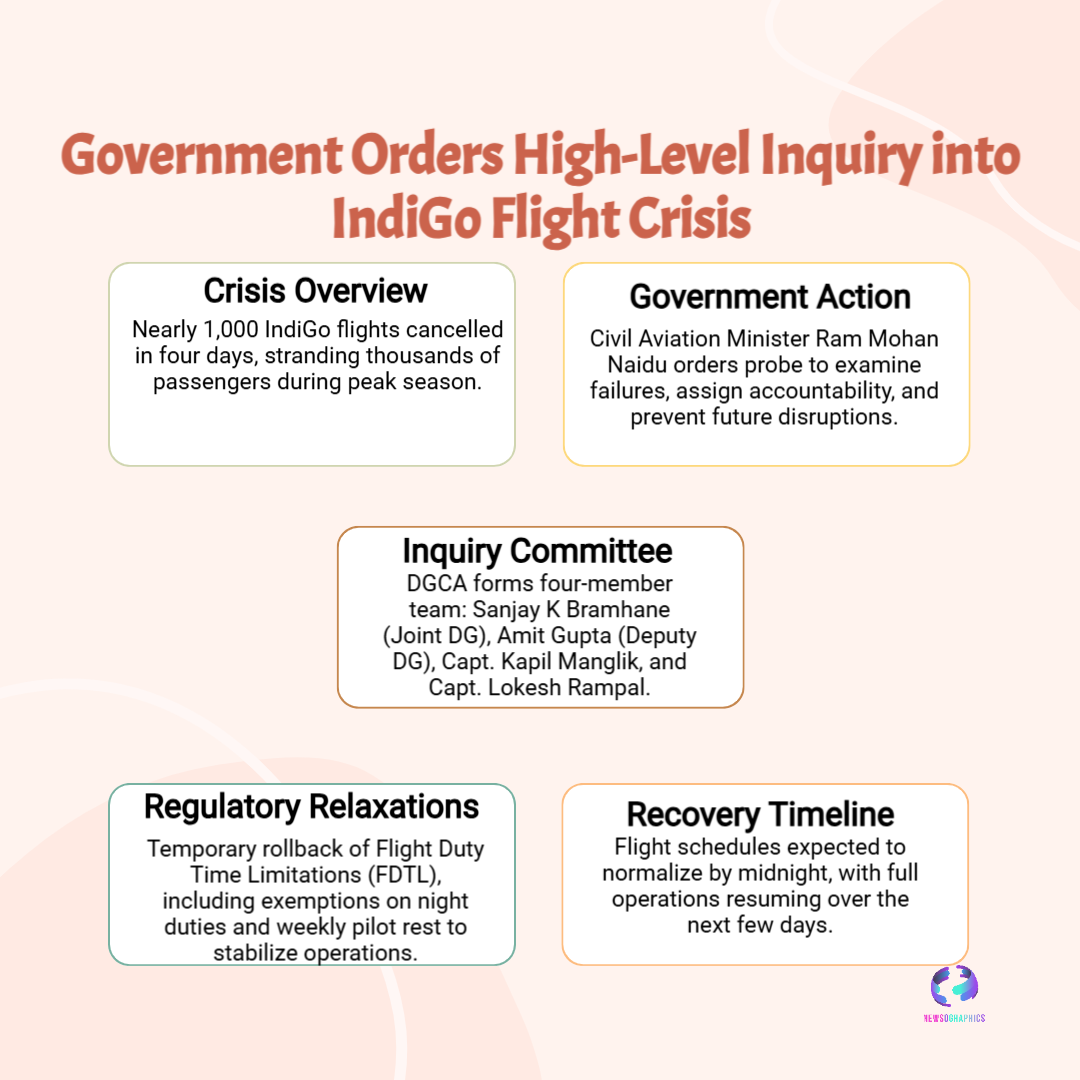
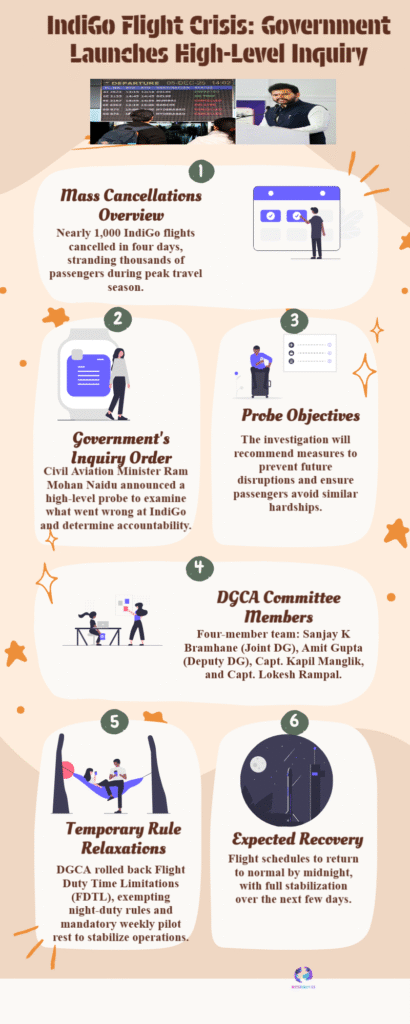
The crisis at IndiGo — with hundreds of flights cancelled nationwide over consecutive days — triggered a severe travel disruption across India. In response, the government has ordered a high-level inquiry to “examine what went wrong” and to “determine accountability wherever required.”
The move aims not only to understand the operational failure but to ensure such massive disruptions don’t repeat and that affected passengers aren’t left stranded.
Who’s Investigating — The Probe Committee
A four-member committee under the Directorate General of Civil Aviation (DGCA) will conduct the investigation. The panel members are:
- Sanjay K Bramhane — Joint Director General
- Amit Gupta — Deputy Director General
- Capt. Kapil Manglik — Senior Flight Operations Inspector
- Capt. Lokesh Rampal — Flight Operations Inspector
The committee’s mandate: review crew rostering and manpower planning, assess compliance with new rules (the revised duty-time norms), identify lapses or mismanagement, and recommend corrective measures.
What the Inquiry Will Focus On
Crew Planning & Rostering Mis-management
The heart of the crisis appears to be a mismatch between flight schedules and crew availability after the enforcement of stricter duty-time rules for pilots. Despite repeated warnings, the airline allegedly failed to align staffing and rostering to meet the new norms — leading to acute crew shortages.
Compliance With Safety & Duty-Time Regulations
The probe will examine whether the airline’s implementation of the new Flight Duty Time Limitations (FDTL) norms complied with regulatory expectations. It will investigate if regulatory guidance was ignored, or if there were procedural failures in adapting rosters for fatigue-management rules.
Operational Oversight, Contingency Planning & Risk Assessment
Beyond crew shortage, the inquiry will also look at whether the airline had adequate contingency plans — considering technical issues, seasonal/weather disruptions, and winter-season pressures. It will assess oversight failures and risk-management systems within the airline’s operations.
Passenger Safety and Disruption Management
Given the scale of cancelled flights and passenger hardship (stranding, delays, baggage issues), the probe is likely to evaluate how the airline responded to the crisis in terms of passenger support, refund policies, communication, and safety — making sure customer welfare was prioritised.
What the Government & Regulator Have Already Done
- The new FDTL rules have been temporarily relaxed for the airline’s affected fleet, giving some breathing space to restore operations.
- The Ministry of Civil Aviation (MoCA) has set up a 24×7 control room to oversee ongoing operations and monitor corrective steps being taken.
- The airline has been instructed to submit a detailed remediation plan — including revised crew recruitment, better scheduling aligned with aircraft induction, and safety-risk assessment.
What This Means for Travellers — And Indian Aviation
- The inquiry may lead to accountability for failures, possibly resulting in regulatory penalties, changes in license conditions, or mandated reforms in operational planning for airlines.
- It signals that large-scale disruption won’t be ignored — putting pressure on airlines to improve crew management, contingency planning, and customer communication.
- For passengers, this could (if the probe and reforms succeed) lead to more reliable flight scheduling, better protection against mass cancellations, and stronger safety protocols.
- For the aviation sector, the probe underscores systemic weaknesses — driving a rethink on how duty norms, crew planning, and airline growth are managed together.