

IndiGo’s nationwide flight disruption leaves thousands stranded. A breakdown of how the airline’s crew-scheduling failure, new duty-time norms and operational gaps triggered mass cancellations — and what it means for travellers.
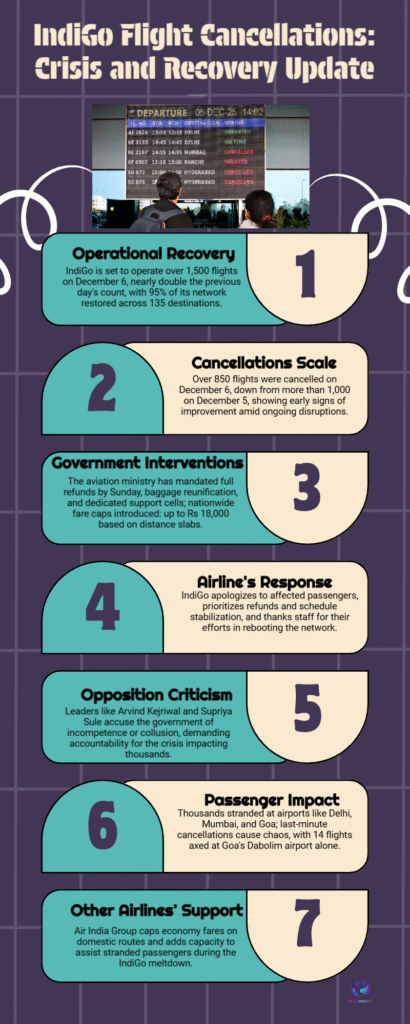
What’s Going On — Scale & Scope of the Disruptions
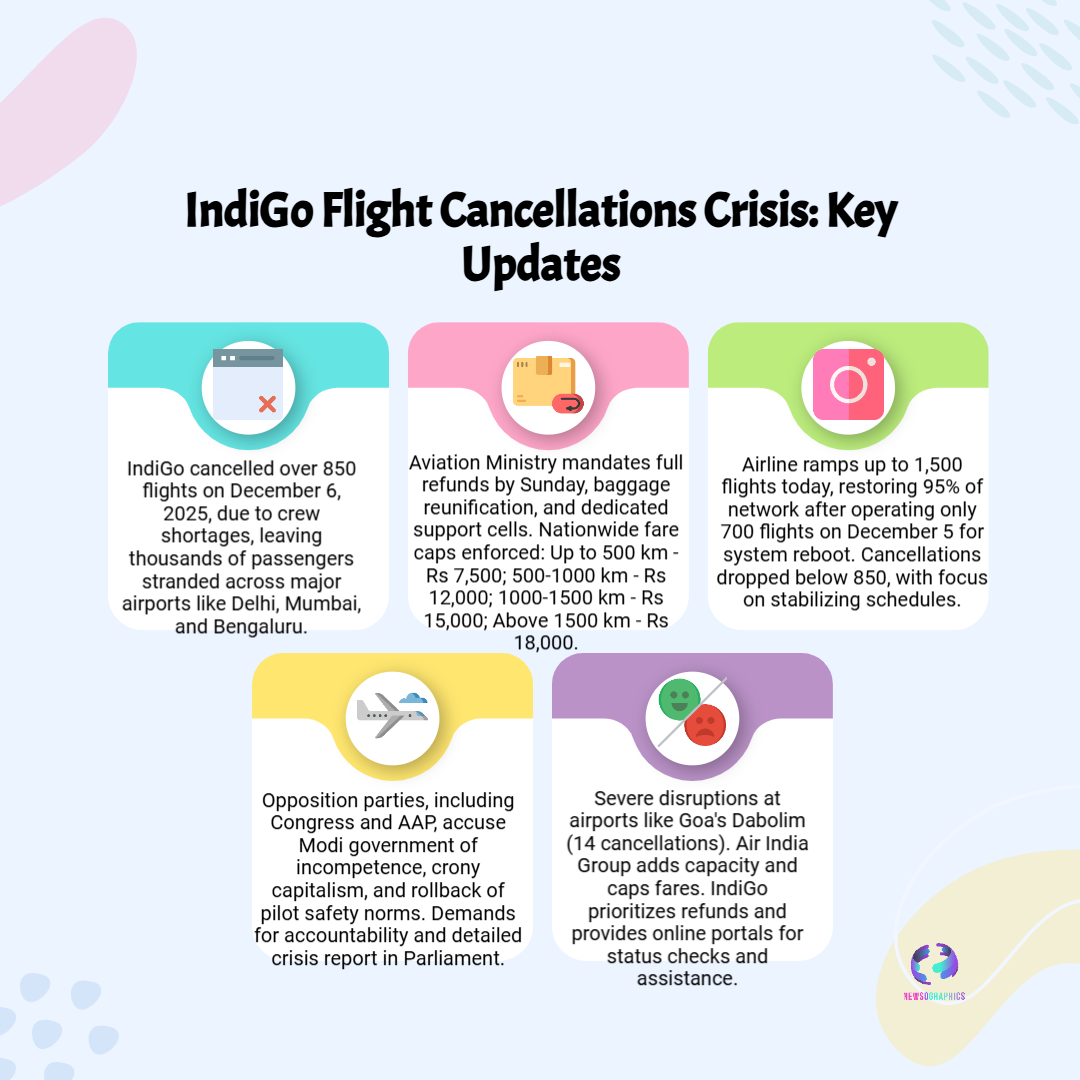
- By early December 2025, IndiGo cancelled hundreds of flights per day. On one particularly bad day, it cancelled well over 1,000 flights nationwide — amounting to roughly half of its daily scheduled services.
- The fallout has hit major airports hard: all domestic departures from Indira Gandhi International Airport (Delhi) were cancelled for a day, and cancellations impacted hubs such as Mumbai, Bengaluru, Hyderabad, Pune, and more.
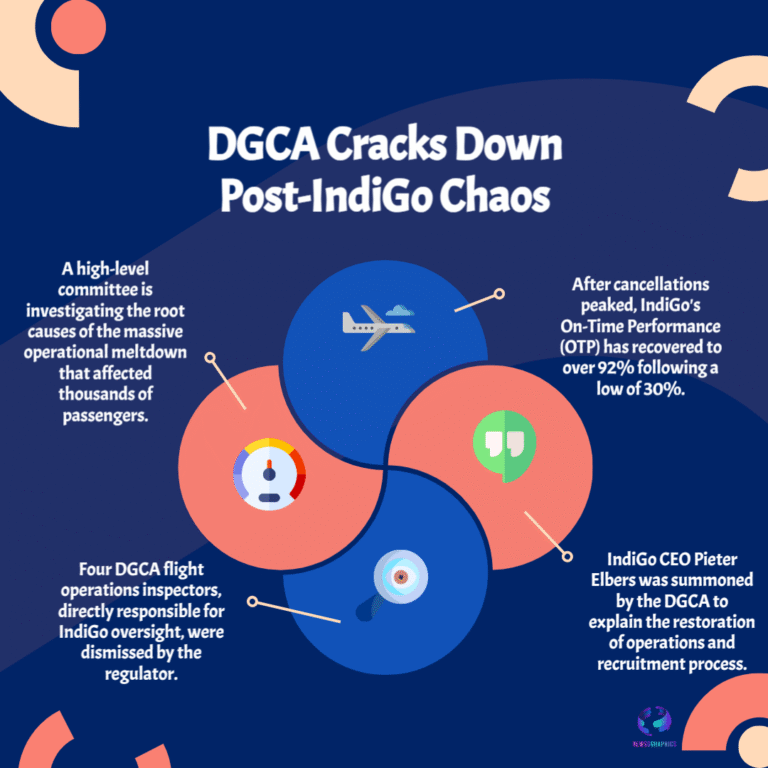
- On-time performance plummeted sharply: at several major metro airports, punctuality dropped to just ~8.5%.
Why This Happened — Behind the Crew Shortage & Systemic Breakdown
🔹 New Rules, Poor Preparedness
The root cause lies in the rollout of stricter crew work/rest regulations under Directorate General of Civil Aviation (DGCA)’s Flight Duty Time Limitations (FDTL) norms. These rules — intended to curb pilot fatigue by increasing rest periods and limiting night flights — took effect recently.
Despite advance notice, the airline reportedly underestimated the manpower needed to comply. A shortfall in available crew — pilots and related staff — meant IndiGo could not maintain its usual flight schedules.
🔹 Domino Effect in a Hub-and-Spoke Network
Because IndiGo operates an interlinked “hub-and-spoke” network, disruption in one major hub (e.g., a cancelled flight from Delhi) cascades across multiple cities — removing crews and aircraft needed for later flights across the country. That magnified the impact beyond just one airport.
🔹 Operational & Technical Headwinds
Industry-wide stressors — including winter-time schedule changes, increased seasonal demand, airport and airspace congestion, and reportedly some last-minute software patches — compounded the problem.
How IndiGo & Authorities Reacted — Damage Control and Relief Measures
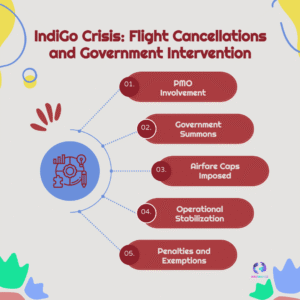
- IndiGo publicly apologized and said it initiated a full “system reboot” of schedules and crew rosters, aiming to gradually restore operations.
- A four-member panel under DGCA was constituted to investigate root causes — including crew-planning failure and compliance with duty norms.
- The airline committed to processing full refunds for all cancelled flights (for travel between December 5–15, 2025) and waived rescheduling or cancellation fees during the disruption window.
What’s the Risk for Travellers — Why It Still Matters
- Many passengers remain stranded with flights cancelled at short notice — some even stuck overnight or facing lost/misplaced baggage with limited recourse.
- Even as cancellations drop from their peak, travel remains uncertain. Rebooking with IndiGo may come with long delays; alternative bookings (on other airlines/ rail) may incur steep price hikes or limited availability.
- The disruption also exposes vulnerability inherent in airline networks that depend heavily on single carriers — when one airline fails to plan, the impact becomes systemic.
What’s Next — Looking Ahead
- IndiGo hopes operations will stabilise in the next few days to a week — but some analysts caution that full recovery could take longer, given crew shortages and regulatory constraints.
- DGCA’s investigation may lead to regulatory or punitive action if misplanning or non-compliance is confirmed — which may ripple across airline operations and future policy enforcement.
- For passengers: remain vigilant — always confirm flight status before travelling, check for refund/rescheduling eligibility, and consider alternatives if possible.
The IndiGo disruption highlights a fundamental challenge in India’s aviation sector: policy changes aimed at improving safety (like rest-time norms) — though sensible — can trigger major disruption if implemented without adequate personnel planning or operational flexibility. For now, travellers must brace for continued uncertainty while the airline and regulators work to restore normalcy.