India’s Winter Session turns explosive as Parliament confronts the Vande Mataram debate, IndiGo flight chaos, and the controversial SIR voter‑roll overhaul. Here’s a deep dive into the politics, tensions, and national stakes.
Why India’s Winter Parliament Session Has Turned Into a Political Pressure Cooker
The Winter Session of Parliament was expected to be routine. Instead, it has erupted into one of the most ideologically charged meetings in recent years — where cultural identity, administrative accountability, and electoral transparency have collided in full public view.
With simultaneous uproar over the Vande Mataram debate, the IndiGo airline disruptions, and the contentious Special Intensive Revision (SIR) of electoral rolls, Parliament has become a battleground for India’s most defining narratives: nationalism, governance, and democratic fairness.
A 150‑Year Legacy Returns to Centre Stage
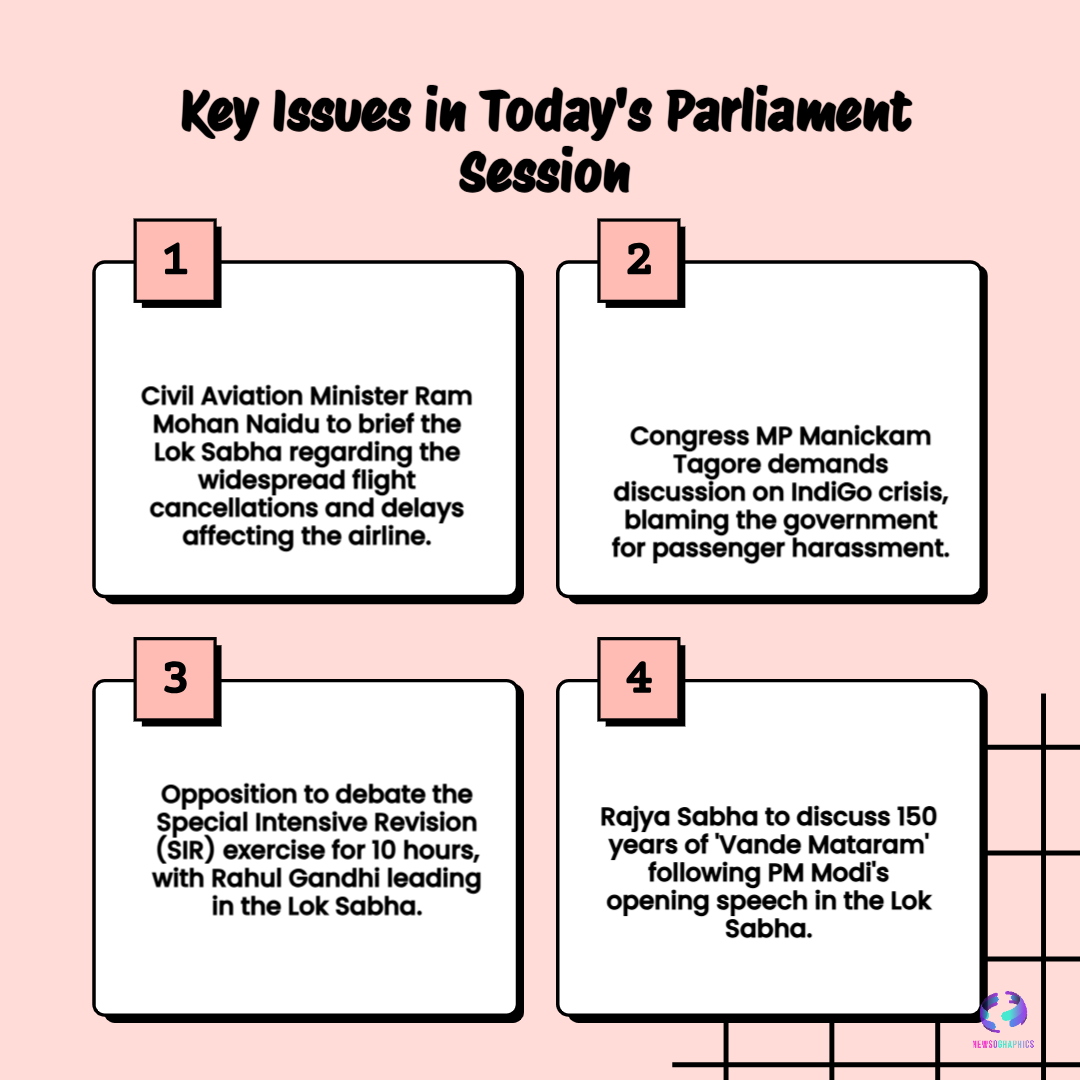
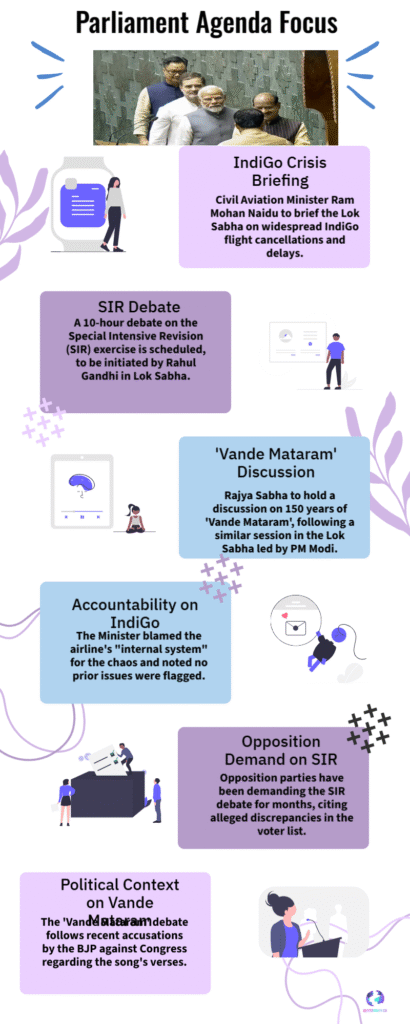
The government’s decision to allocate hours of parliamentary time to the national song’s 150‑year commemoration has ignited a storm of political interpretation.
Supporters argue the debate honours a symbol of India’s freedom struggle — a cultural anchor worth revisiting. But opposition parties view the timing with suspicion, coming as the public grapples with airline chaos and rising questions around electoral roll accuracy.
The Ideological Fight Beneath the Surface
The debate has quickly expanded beyond history and heritage. Accusations have resurfaced over past political decisions on how Vande Mataram was adopted and recited, prompting a fresh round of blame‑trading between the BJP and Congress.
For the ruling party, the conversation is about unity and national identity. For the opposition, it’s about political optics overshadowing urgent governance failures.
IndiGo Chaos Adds Fuel to the Fire
Why Aviation Woes Became a Political Flashpoint
As IndiGo flight disruptions stranded passengers, triggered emergency cancellations, and pushed airline operations into disarray, Parliament found itself pulled into public frustration.
Opposition leaders argue that while citizens were stuck at terminals and families faced travel uncertainty, the government fixated on symbolic debates instead of addressing systemic aviation issues.
The Broader Governance Question
The IndiGo episode has resurfaced concerns about:
- pilot and crew shortages,
- regulatory oversight,
- passenger rights, and
- operational accountability in India’s expanding aviation sector.
By the time the issue reached Parliament’s steps, it had already become more than a logistical problem — it was a governance test.
SIR Debate: The Fight Over India’s Electoral Spine
Why the Special Intensive Revision Has Sparked Alarm
The nationwide voter‑roll overhaul under SIR has emerged as one of the most contentious elements of the session. Opposition leaders claim the process has led to large‑scale errors, misplaced deletions, and undue pressure on election staff.
For critics, SIR isn’t a reform — it’s a destabilising force in voter access.
The Government’s Counterargument
Officials defend SIR as a necessary exercise to:
- eliminate duplicates,
- modernise electoral records,
- correct outdated entries, and
- enhance transparency.
But the volume of complaints and the proximity to major upcoming elections ensure the debate remains politically charged.
Amit Shah, Rahul Gandhi, and the Parliament Showdown
The Personalities Driving the Narrative
As Home Minister Amit Shah delivers sharp counters and defends the government’s cultural and administrative agenda, Rahul Gandhi has positioned himself as a challenger spotlighting institutional weaknesses and citizen‑facing failures.
Their exchanges — both direct and symbolic — have shaped the tone of the Winter Session.
Beyond the Headlines: What Their Positions Signal
- Amit Shah emphasises continuity of national identity, internal security, and administrative reform.
- Rahul Gandhi stresses accountability, economic distress, and democratic stability.
These contrasting frames aren’t just political theatre — they reflect competing visions for India’s present and future.
Why This Winter Session Matters More Than Most
A Mirror to India’s Political Climate
The convergence of cultural debate, aviation crisis, and electoral integrity concerns has transformed the Winter Session into a snapshot of India’s evolving political landscape.
It highlights how quickly national sentiment can shift when symbolism, governance, and citizen experience collide.
What’s at Stake
- Public trust in electoral processes
- The government’s administrative credibility
- The opposition’s ability to mobilise sentiment
- National identity debates shaping voter perception
In essence, the session is not just a collection of speeches — it is a rehearsal for the political narratives that will dominate the months ahead.
Final Thoughts
The Winter Session has proved that Parliament is not merely a legislative arena — it is a cultural thermometer and a political amplifier. From the emotional legacy of Vande Mataram to the logistical chaos of IndiGo and the procedural controversy of SIR, the session reflects the tensions and aspirations shaping India right now.
As debates stretch into hours and leaders clash over what defines the nation, one thing is clear: the questions raised this winter will continue echoing into the next electoral cycle.