


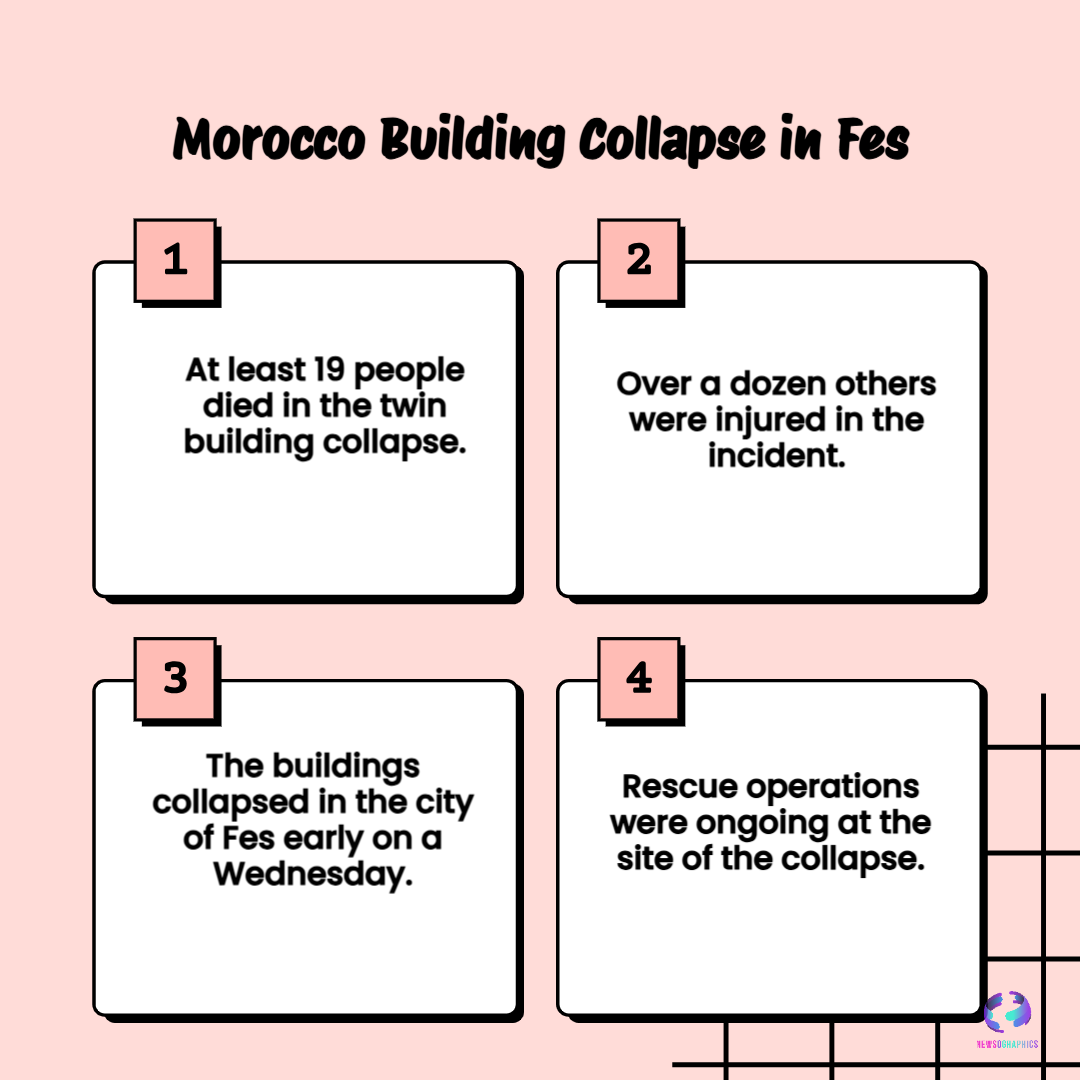
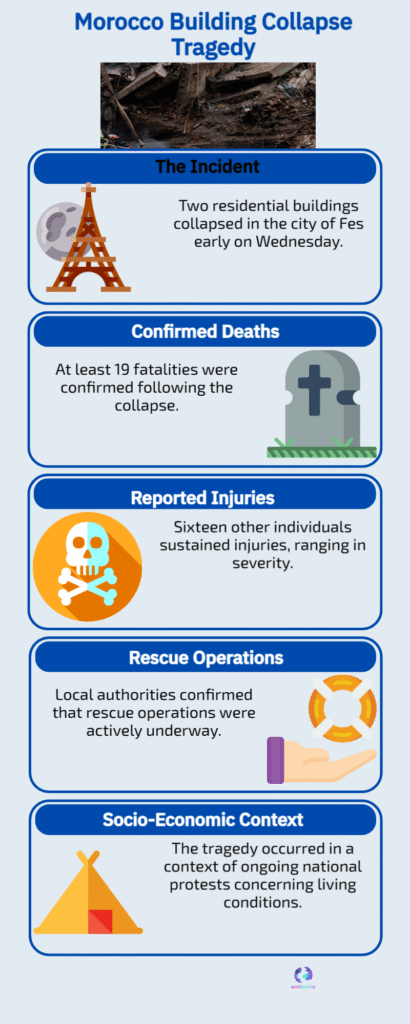
Two residential buildings collapsed in Fez, Morocco, killing multiple people and injuring several others. This editorial examines the causes, rescue response, structural vulnerabilities and what the tragedy signals about Morocco’s urban safety challenges.
A Deadly Morning in Fez: What Happened
The city of Fez was struck by tragedy when two adjacent residential buildings collapsed suddenly in the Bab al-Hadid area, killing multiple people and leaving several others trapped beneath the debris. The incident occurred in a densely populated neighborhood where many of the structures are decades old and built close together.
Local authorities confirmed deaths and injuries, while rescue teams worked through the rubble to locate survivors. The collapse sent shockwaves across Morocco, prompting renewed scrutiny of the country’s building safety standards and emergency protocols.
Early Clues Point to Structural Weakness
Ageing buildings under mounting pressure
Many residential quarters in Fez consist of older, poorly reinforced structures. Wear and tear, foundation weakening, and lack of regular maintenance are recurring problems in these districts. The collapsed buildings were reportedly multi-storey and occupied, indicating that stress on the structures had likely accumulated over many years.
Possible illegal modifications
Residents in similar neighbourhoods have long voiced concerns over unregulated renovations, added floors, and structural adjustments that often bypass formal safety inspections. While investigations are ongoing, early speculation points to the possibility that modifications or lack of upkeep may have played a role in the collapse.
Environmental factors
Morocco has experienced fluctuating weather patterns in recent years — sudden rainfall, humidity shifts and soil instability — all of which may accelerate deterioration in older infrastructure. While no direct weather trigger has been confirmed, environmental impact remains under review.
The Rescue Operation: Race Against Time
Emergency crews mobilised immediately
Civil protection units, firefighters, police forces and medical response teams rushed to the scene, navigating narrow lanes and unstable debris to extract survivors. The complexity of the collapse — with two adjoining buildings falling almost simultaneously — created hazardous conditions for rescuers.
Human chains and manual clearing
Given the instability of the remaining structures, heavy machinery was used cautiously. Much of the early rescue work was done manually, with teams forming human chains to move rubble piece by piece. This is a common challenge in older Moroccan cities, where tightly packed neighbourhoods restrict equipment access.
Community response
Local residents joined rescue teams, offering tools, water and immediate support. Such community participation has been a consistent feature in Moroccan urban crises, often bridging gaps before full official deployment arrives.
Why Fez — and Morocco at Large — Faces Repeated Structural Disasters
Urban expansion outpacing oversight
Like several North African nations, Morocco has witnessed rapid urbanisation. Cities such as Fez, Casablanca and Rabat continue to grow vertically and horizontally, often faster than regulatory agencies can manage.
Mixed construction standards
Diverse architecture — from heritage structures to modern buildings — coexists within tight spaces. However, not all structures follow contemporary engineering norms. The mix of outdated materials, partial repairs and informal construction practices increases collapse risk.
Insufficient building audits
Routine inspections, mandated on paper, are irregular in practice. Older neighbourhoods, especially in historical cities, often escape systematic review due to bureaucratic, logistical or financial constraints.
Socioeconomic pressures
Many families rely on low-cost housing in old buildings, where maintenance is expensive and often deferred. Owners and tenants may lack the resources to reinforce structures or bring them into compliance.
Government Response: Investigation and Calls for Reform
Authorities have launched a formal inquiry to determine the exact cause of the collapse and identify liability, including whether construction violations or negligence contributed to the tragedy.
Officials also signaled the need for:
- Comprehensive structural audits of older residential districts
- Stricter enforcement of building codes and renovation permits
- Rehousing programs for families living in unsafe structures
- Community awareness campaigns on reporting cracks, instability or illegal modifications
This tragedy may accelerate longstanding proposals for national-level reforms in construction oversight.
The Human Toll: Families Displaced, Lives Lost
Beyond the numbers, the Fez collapse has devastated families and fractured a community. Several victims were trapped inside their homes during morning routines — preparing meals, getting children ready, or resting.
For survivors, the trauma of losing neighbours, possessions and a sense of security will linger long after rescue operations end.
What This Incident Signals for the Future of Urban Safety
The Fez building collapse is not an isolated event — it is part of a wider pattern of infrastructure stress across fast-growing urban regions. The tragedy underscores the urgent need for structural renewal, transparent inspections and stricter enforcement of safety norms.
If Morocco acts decisively now, it could prevent similar disasters in the future and restore public confidence in urban planning and housing safety.
Conclusion
The collapse of two residential buildings in Fez stands as a painful reminder of the vulnerabilities hidden within rapidly expanding cities. While rescue teams continue their work and investigations proceed, the larger challenge is clear: Morocco must confront its ageing urban infrastructure and strengthen regulatory vigilance.
For the families affected, justice and safety reforms cannot arrive soon enough.