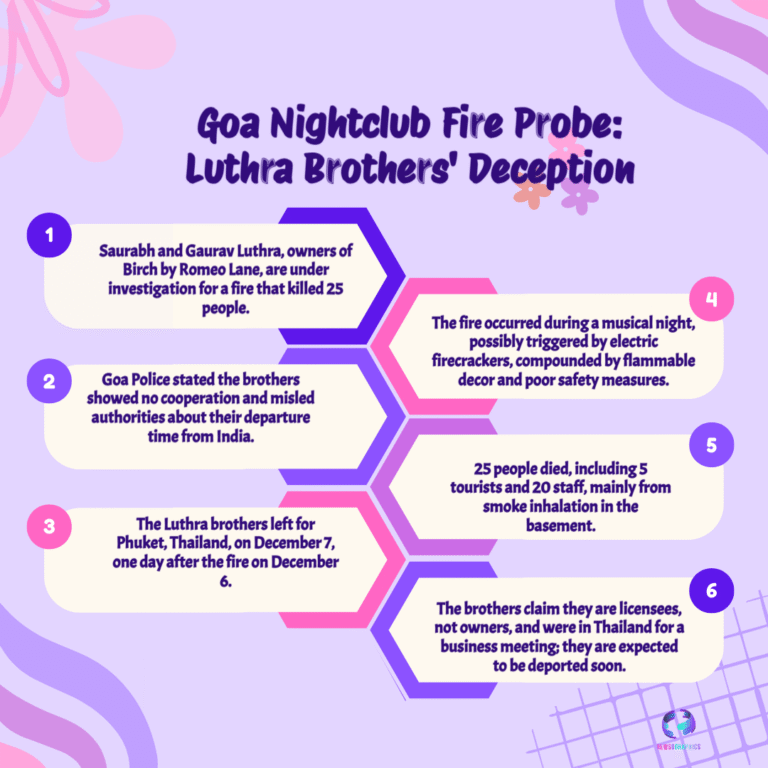

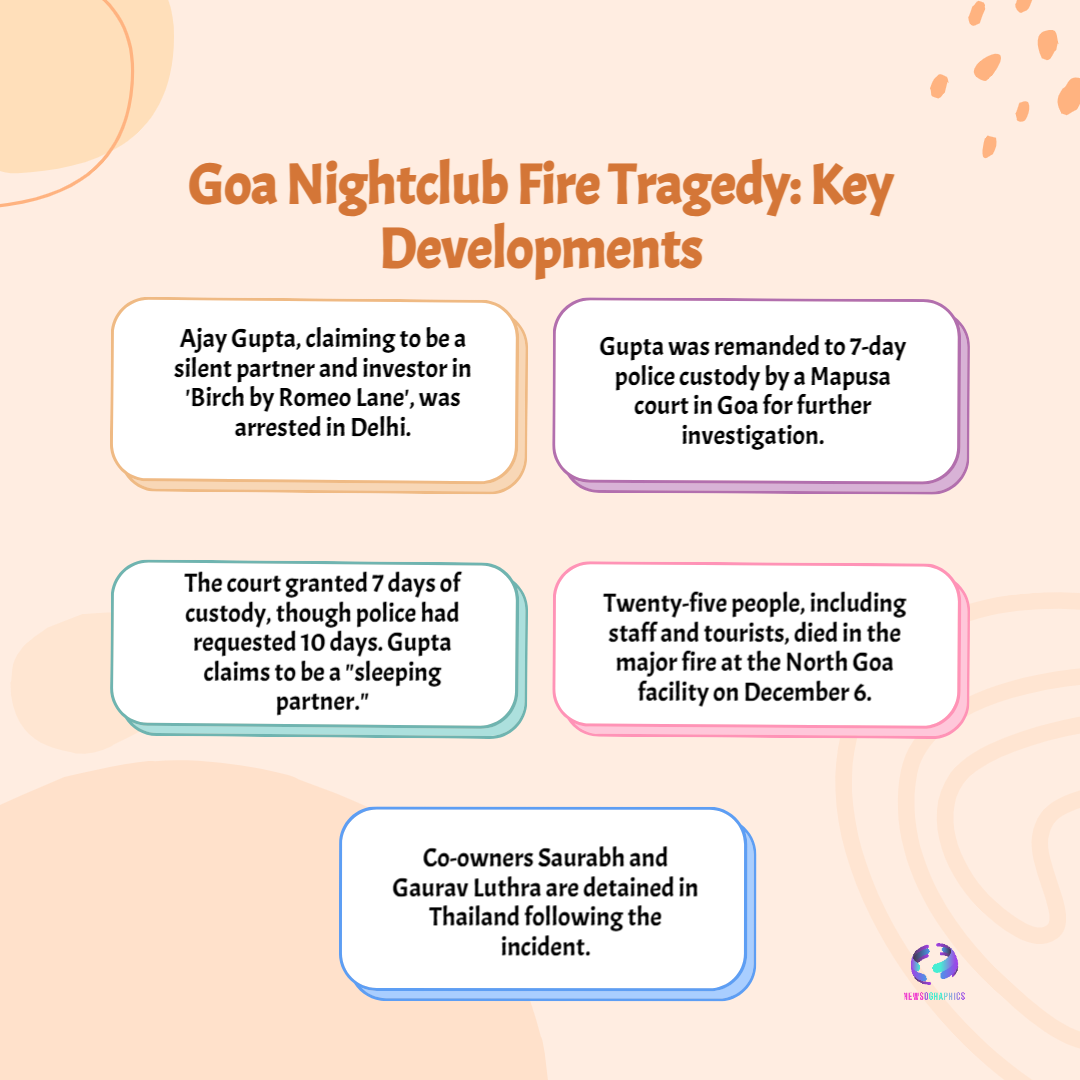
Ajay Gupta, co-owner of the Goa nightclub under investigation for a deadly fire incident, has been sent to 7-day police custody. Explore what this means for the probe, the questions investigators are pursuing, and the wider implications for safety and accountability.
The Latest Break in the Case: Ajay Gupta Remanded
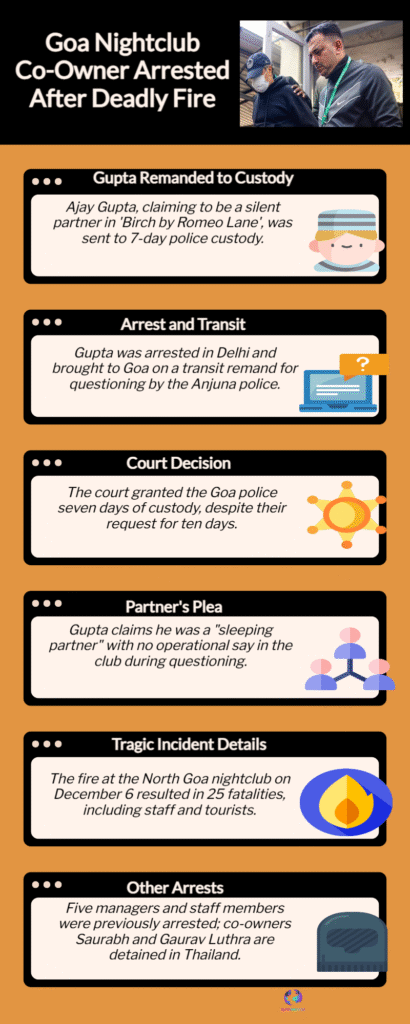
The investigation into the Goa nightclub fire intensified with co-owner Ajay Gupta being remanded to seven days of police custody. This judicial decision allows investigators expanded access to interrogate Gupta, examine his role in the nightclub’s operations, and reconstruct the chain of events that led to the tragic incident.
Police custody at this stage signals that investigators believe Gupta’s questioning is essential for clarifying operational lapses, potential violations, and responsibilities tied to safety failures.
Why Investigators Sought Extended Custody
Establishing Operational Responsibility
As a co-owner, Gupta’s involvement in decisions related to licensing, safety compliance, structural modifications, and staffing becomes central to understanding how the nightclub functioned. Investigators are likely probing:
- oversight of fire safety systems,
- emergency preparedness measures,
- compliance with regulatory protocols,
- internal communication regarding earlier warnings or violations.
Connecting the Dots Between Owners and Management
Large establishments often have layered management structures. Extended custody helps investigators assess where accountability lies across ownership, day-to-day managers, and third-party vendors.
Tracking Financial and Administrative Records
Custodial interrogation offers access to documentation that may clarify:
- expenditure on safety equipment,
- contractual relationships,
- permits and renewal processes,
- any discrepancies in submitted records.
Given the seriousness of the incident, the court’s decision reflects the importance of securing thorough answers.
What Police Hope to Learn Through Interrogation
Clarification of Safety Protocol Failures
Investigators must identify how critical safety mechanisms—exit pathways, fire alarms, extinguishers, crowd-control systems—were maintained and monitored. Gupta’s responses may help establish whether lapses were systemic or isolated.
Whether Prior Warnings or Violations Were Ignored
Key questions include:
- Were authorities’ past notices acted upon?
- Did employees raise safety concerns?
- Were any shortcuts taken to enhance capacity or profitability?
Assessing Knowledge and Decision-Making
Police will examine whether Gupta personally approved or was aware of actions that potentially increased risk, such as overcrowding or use of flammable materials.
The Court’s Reasoning: Why Seven Days
A week-long custody window suggests that the court recognized the investigative need for:
- detailed custodial interrogation,
- recovery of records or digital evidence,
- cross-verification of statements from other accused persons,
- examination of the nightclub’s operational environment.
The period also gives police time to corroborate Gupta’s statements with forensic and structural assessments already underway.
How This Development Shapes the Investigation
Intensifying the Accountability Chain
With multiple stakeholders already under scrutiny, Gupta’s custody brings the focus squarely onto ownership-level decisions. This could accelerate the process of identifying primary responsibility.
Strengthening the Narrative for Prosecutorial Action
Statements, recovered evidence, and cross-examinations from this period may lay the groundwork for formal charges and determine the degree of culpability attributed to each individual involved.
Broadening the Investigation’s Scope
Custodial interrogation can reveal auxiliary leads—contractors, suppliers, builders, or consultants—whose actions may also be relevant to the probe.
The Wider Implications for Goa’s Nightlife and Safety Standards
Renewed Focus on Regulatory Compliance
The nightclub fire has drawn scrutiny to safety standards across Goa’s nightlife sector. The incident, followed by high-profile arrests and remands, underscores the urgent need for consistent enforcement of:
- fire safety audits,
- capacity controls,
- construction and renovation approvals,
- licensing norms.
Impact on Hospitality Businesses
Establishments across Goa may now face:
- stricter inspections,
- updated compliance mandates,
- penalties for minor lapses previously overlooked.
Public and Legal Pressure for Structural Change
Incidents of this scale often catalyse policy revisions, stronger oversight mechanisms, and heightened judicial expectations for accountability.
What Comes Next
The week ahead is likely to shape the narrative of the case significantly. Key developments to watch include:
- the evidence recovered during Gupta’s custody,
- any new arrests or custodial extensions,
- potential revelations about operational negligence,
- the direction the case takes once the remand period concludes.
The coming days will be crucial in determining how responsibility is apportioned and what long-term reforms the tragedy may catalyse across Goa’s nightlife and entertainment industry.