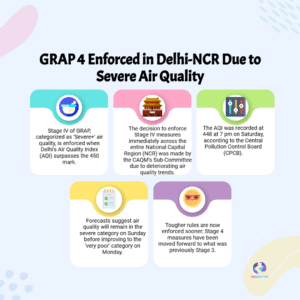
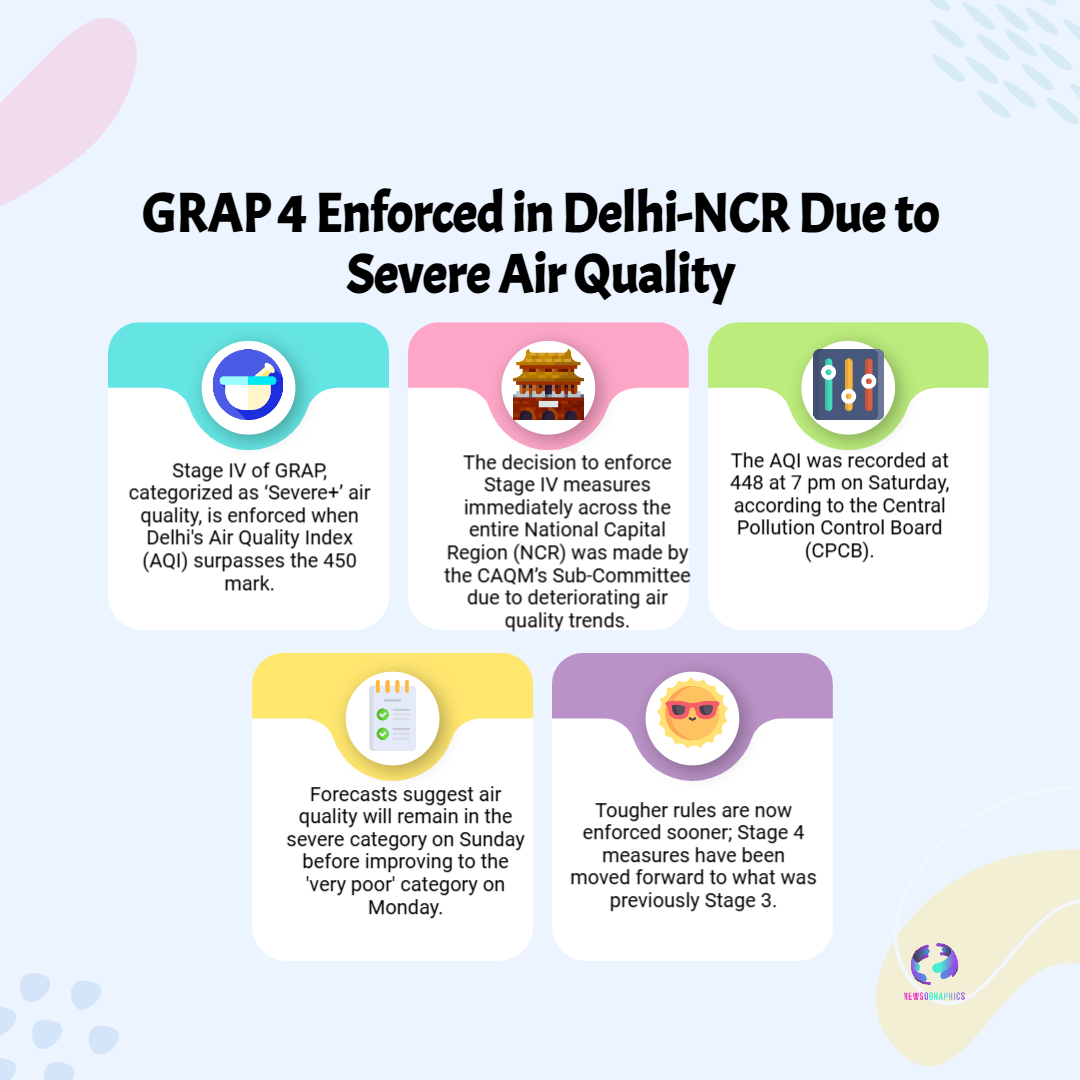
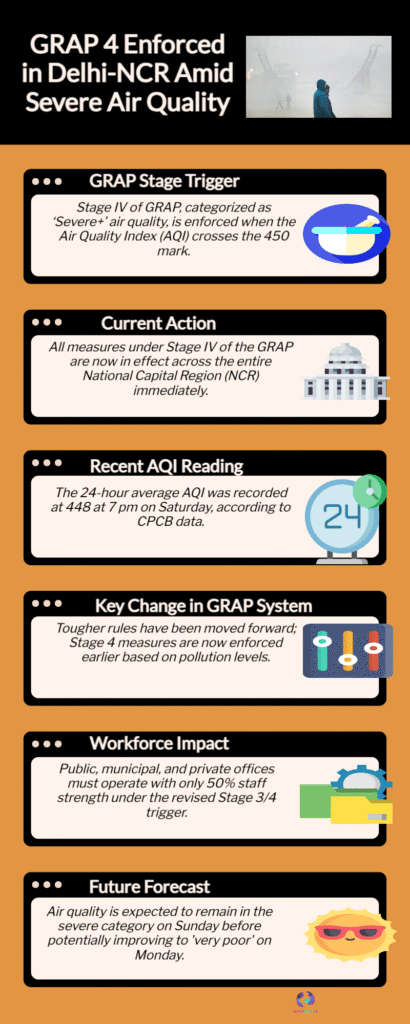
Delhi-NCR enforces GRAP-4 restrictions after air quality deteriorates to the severe category, triggering emergency pollution control measures across the region.
Air Pollution Reaches Critical Levels in the Capital Region
Delhi-NCR has once again entered a phase of acute air pollution as air quality readings slipped into the ‘severe’ category, prompting authorities to enforce Stage 4 of the Graded Response Action Plan (GRAP). The move reflects escalating concern over deteriorating atmospheric conditions and the health risks associated with prolonged exposure to polluted air.
The enforcement of GRAP-4 signals that pollution levels have crossed thresholds considered dangerous for the general population, not just vulnerable groups.
What GRAP-4 Signifies in the Pollution Control Framework
The Graded Response Action Plan is designed as a structured emergency framework, with escalating measures triggered by worsening air quality. GRAP-4 represents the most stringent stage, activated only when pollution levels breach critical limits.
At this stage, authorities focus on aggressive curbs across sectors contributing to emissions, including construction activity, vehicular movement, and industrial operations, in an effort to prevent further deterioration.
Factors Behind the Sudden Deterioration
The slide into the severe category has been driven by a combination of meteorological and human factors. Low wind speeds and unfavourable weather conditions have limited pollutant dispersion, allowing particulate matter to accumulate near the ground.
Seasonal contributors such as stubble burning in neighbouring regions, vehicular emissions, dust from construction sites, and industrial output have compounded the problem, creating a dense pollution blanket over Delhi-NCR.
Impact on Daily Life and Urban Functioning
As GRAP-4 comes into force, the effects extend beyond environmental metrics and into everyday urban life. Reduced visibility, respiratory discomfort, and heightened public anxiety often accompany such pollution episodes.
Educational institutions, workplaces, and public spaces are closely monitored during these periods, as authorities attempt to balance routine activity with public health concerns. The situation also places additional pressure on healthcare systems, which typically see a rise in pollution-related complaints.
Administrative Response and Enforcement Challenges
Implementing GRAP-4 across a sprawling region like Delhi-NCR requires coordination between multiple state governments, civic agencies, and enforcement bodies. Ensuring compliance, especially in sectors like construction and transportation, remains a persistent challenge.
Officials are tasked not only with issuing directives but also with monitoring adherence on the ground, a process that often reveals gaps between policy intent and real-world execution.
A Recurring Crisis in the Capital’s Calendar
Severe air pollution episodes have become an almost annual feature of Delhi-NCR’s winter months. Each recurrence renews debates around long-term solutions versus short-term emergency measures.
While GRAP provides an immediate response mechanism, the repeated need for Stage 4 interventions underscores deeper structural issues related to urban planning, energy use, transport patterns, and regional coordination.
The Broader Implications for Environmental Governance
The enforcement of GRAP-4 is a reminder that air pollution in Delhi-NCR is not an isolated phenomenon but a regional challenge requiring sustained policy attention. Temporary restrictions, though necessary during emergencies, highlight the limitations of reactive approaches.
As the capital region navigates yet another severe pollution phase, the focus remains on containment in the short term, even as broader questions about long-term environmental resilience continue to loom large.