


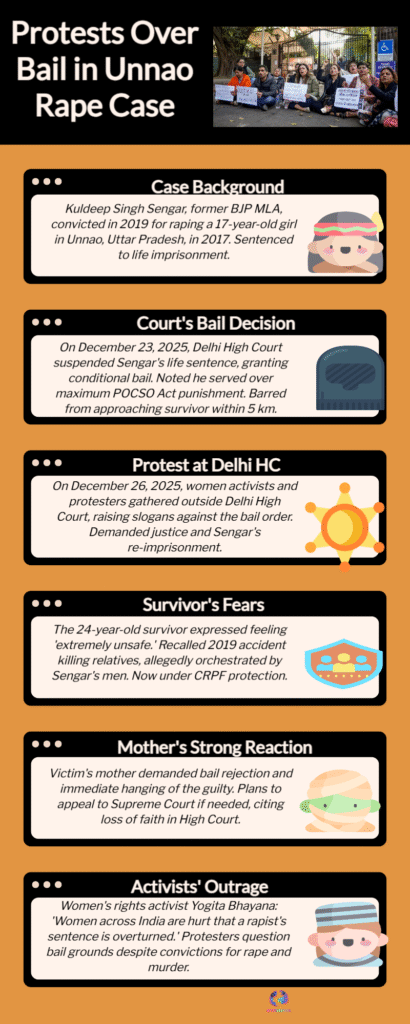
Large-scale protests in Delhi over bail granted in the Unnao rape case have reignited national debate on justice delivery, survivor dignity, and accountability in crimes of sexual violence.
A Verdict That Reignited Public Anger
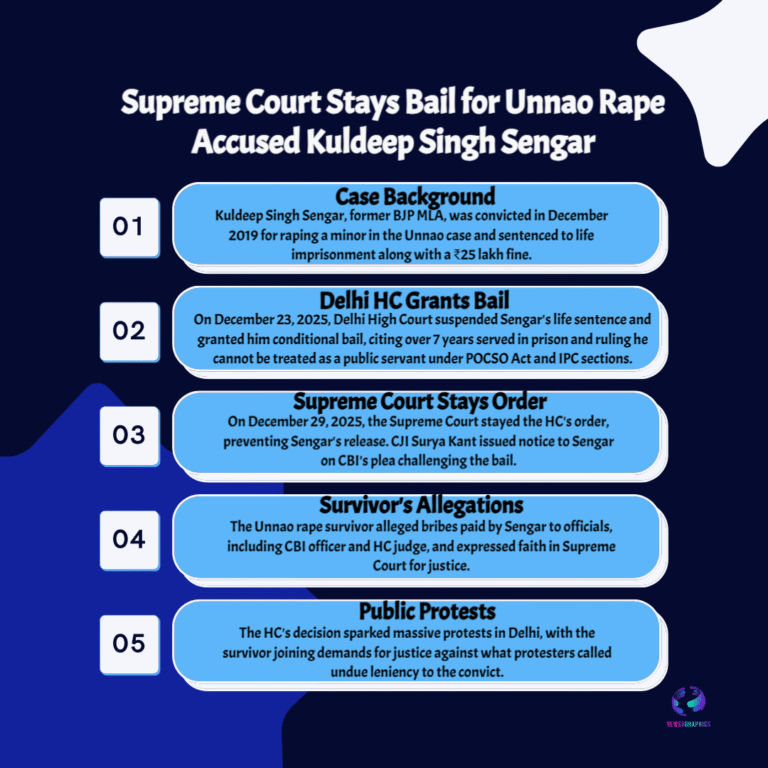
The streets of Delhi once again became a site of collective outrage as protesters gathered in response to bail granted in the Unnao rape case. The development has stirred deep emotional and political reactions, cutting across social groups and ideologies. For many, the decision symbolised not just a legal outcome but a broader crisis of faith in the justice system’s ability to protect survivors of sexual violence.
Public demonstrations reflected a sense that judicial processes, while procedural, can feel disconnected from lived trauma when outcomes appear misaligned with public expectations of accountability.
The Unnao Case and Its Long Shadow
A Case That Defined an Era of Reckoning
The Unnao rape case has occupied a singular place in India’s contemporary legal and political memory. Its trajectory—marked by allegations of power misuse, institutional delay, and intimidation—transformed it into more than a criminal proceeding. It became a symbol of how authority can distort justice when safeguards fail.
Each new legal development in the case continues to resonate widely, reopening unresolved questions about influence, fairness, and survivor protection.
Bail as a Flashpoint
The grant of bail emerged as a flashpoint not because of its procedural legality alone, but due to its emotional and symbolic weight. For survivors and their families, bail can feel like an erosion of safety and closure. For protesters, it represented a moment where the balance between legal rights and moral accountability appeared sharply contested.
Voices From the Streets
Grief, Rage, and the Language of Protest
Protesters in Delhi expressed anger in stark terms, reflecting years of accumulated frustration over sexual violence cases perceived to end without adequate deterrence. Slogans, placards, and speeches conveyed grief as much as rage, revealing how public demonstrations often serve as outlets for collective trauma.
The language of protest, though emotionally charged, underscored a deeper demand for dignity and justice rather than spectacle.
Survivor-Centric Narratives
At the heart of the protests were survivor-centric narratives that challenged the system to look beyond files and verdicts. These voices emphasised lived consequences—fear, stigma, and prolonged uncertainty—that legal timelines rarely capture.
Judicial Process and Public Trust
The Tension Between Law and Perception
Bail decisions operate within defined legal frameworks, yet public perception often judges them through ethical and emotional lenses. This tension becomes especially pronounced in cases involving sexual violence, where delays or interim reliefs can be interpreted as systemic indifference.
The protests highlighted how gaps between legal reasoning and public understanding can erode trust, even when procedures are followed.
Accountability Beyond the Courtroom
The Unnao case has consistently raised questions about accountability extending beyond individual guilt. Institutional responses, political responsibility, and administrative oversight have all come under scrutiny, suggesting that justice is seen as a collective obligation rather than a courtroom outcome alone.
Political and Social Reverberations
Power, Politics, and Public Memory
Given the political associations linked to the case, every judicial development carries political reverberations. Protesters framed their demands not merely as legal grievances but as challenges to entrenched power structures perceived to shield the influential.
Public memory of earlier stages of the case continues to inform how current decisions are interpreted and contested.
Sexual Violence and the National Conscience
The protests in Delhi reaffirmed that sexual violence cases occupy a unique moral space in India public discourse. They are not viewed in isolation but as part of a broader pattern that tests the nation’s conscience, especially when outcomes appear to fall short of collective expectations for justice.
A Continuing Struggle for Credibility
The demonstrations sparked by the Unnao bail decision illustrate a justice system under intense public gaze. They reflect a society unwilling to disengage from cases that have come to symbolise deeper structural failures. While legal processes move forward within their own logic, public response reveals an enduring demand for transparency, empathy, and accountability.
As the Unnao case continues its legal journey, its impact extends far beyond courtrooms, shaping how justice, power, and survivor dignity are debated in the public sphere.