



New revelations in a Bangladesh lynching case suggest a workplace promotion dispute—not blasphemy—triggered the killing, exposing deep fault lines of misinformation, mob violence, and minority vulnerability.
A Disturbing Case Reframed by New Details
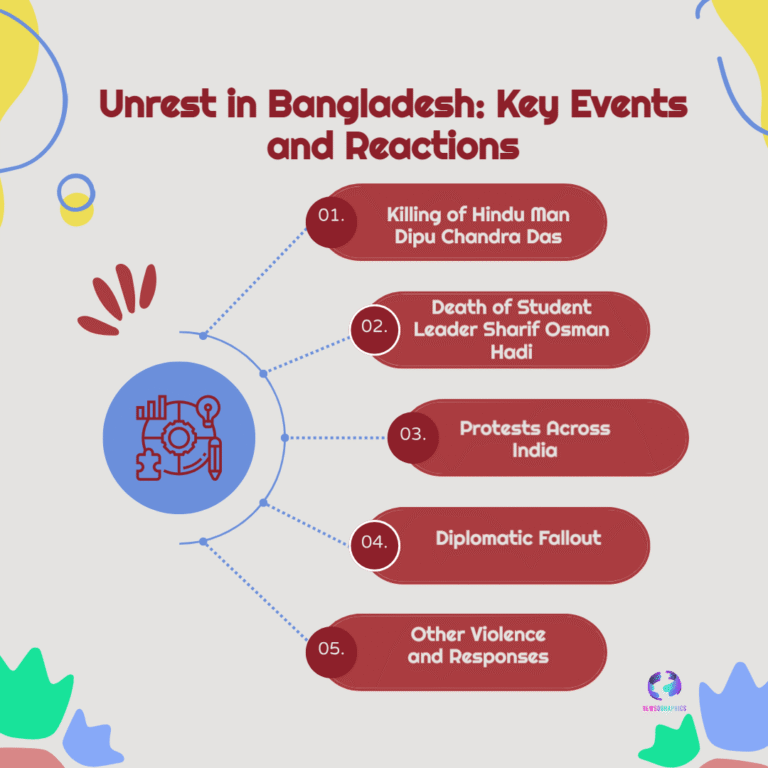
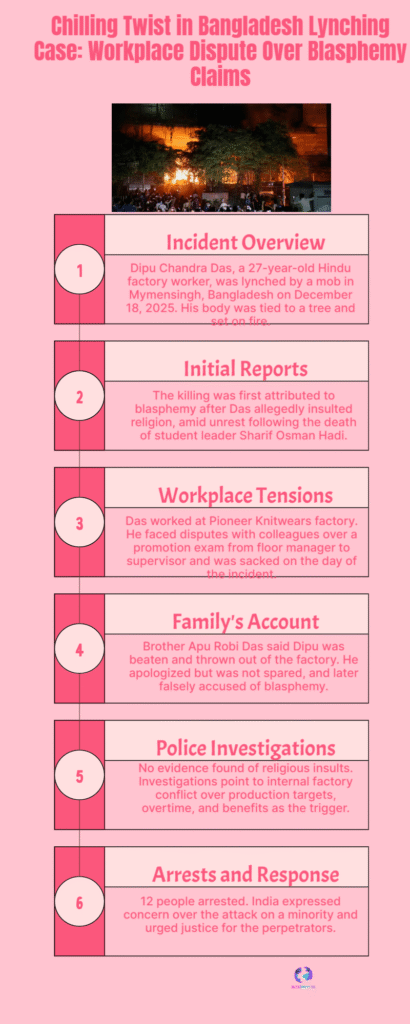
A lynching in Bangladesh that initially sent shockwaves due to alleged blasphemy accusations has taken a darker and more complex turn. Investigative findings now indicate that the killing of Dipu Chandra Das, a Hindu man, stemmed from a workplace dispute over promotion rather than any religious provocation.
The reframing of the Lynching case has reignited concerns about how misinformation, personal rivalries, and communal fault lines can converge into lethal violence.
From Workplace Rivalry to Fatal Rumour
Promotion Dispute as the Flashpoint
According to emerging accounts, the conflict began within a professional setting, where competition for advancement bred resentment. What might have remained an internal dispute instead escalated when false narratives were allowed to circulate unchecked.
The transformation of a workplace grievance into a public accusation highlights how quickly private conflicts can metastasize in fragile social environments.
Weaponisation of Blasphemy Allegations
Blasphemy claims, even when baseless, carry explosive potential in parts of South Asia. In Lynching case, the allegation functioned less as a cause and more as a catalyst—used to mobilise anger and legitimise violence against an individual already marked by vulnerability.
Mob Violence and the Collapse of Due Process
The lynching underscores a recurring pattern where mob justice overrides legal mechanisms. Once the rumour gained traction, the crowd’s response became swift and brutal, leaving no space for verification or restraint.
Such incidents reveal how collective violence often feeds on fear and outrage rather than facts, eroding the foundational principles of rule of law.
Minority Vulnerability in Communal Flashpoints
Identity as an Aggravating Factor
Dipu Chandra Das’s religious identity amplified the risk once false allegations emerged. Minority communities in Bangladesh frequently find themselves exposed when disputes intersect with communal narratives, regardless of the original trigger.
This case illustrates how identity can be exploited to escalate otherwise unrelated conflicts into acts of collective punishment.
A Broader Pattern of Insecurity
While Bangladesh constitutionally upholds secular values, sporadic episodes of communal violence continue to challenge that ideal. Each incident deepens anxiety among minorities and reinforces perceptions of unequal protection.
The Role of Misinformation and Silence
The rapid spread of unverified claims played a decisive role in shaping the outcome. In the absence of timely intervention or authoritative clarification, rumours acquired the weight of truth.
Equally troubling is the silence that often surrounds such escalations—whether due to fear, indifference, or institutional delay—allowing violence to proceed unchecked.
Accountability and the Search for Justice
Authorities now face scrutiny not only over the crime itself but also over the systemic failures that allowed it to happen. The distinction between blasphemy and a workplace dispute reshapes the legal and moral dimensions of the case, demanding accountability beyond individual perpetrators.
Justice, in this context, extends beyond arrests to addressing how easily narratives can be manipulated to justify brutality.
Conclusion: A Case That Exposes Deeper Fault Lines
The Bangladesh lynching case of Dipu Chandra Das stands as a grim reminder that violence is often rooted in mundane disputes, inflamed by misinformation and enabled by communal tensions. The revelation that a promotion dispute—not blasphemy—was at its core strips away any false moral justification.
What remains is a stark portrait of how fragile social trust can be, and how urgently institutions must respond when rumours, identity, and power collide with deadly consequences.