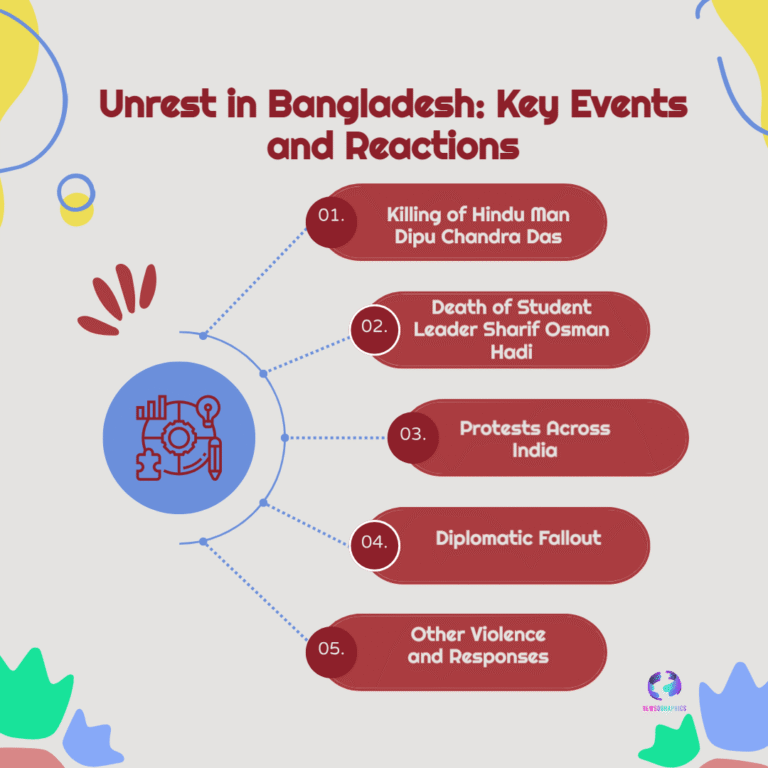



A Dhaka explosion amid rising unrest in Bangladesh highlights deepening political instability, security concerns, and shifting dynamics around BNP leadership and opposition mobilisation.

A Nation Gripped by Renewed Turbulence
Bangladesh is witnessing a fresh surge of unrest as reports of an explosion in Dhaka intersect with an already volatile political environment. The incident has intensified anxieties in the capital, where simmering tensions between the ruling establishment and opposition forces have repeatedly spilled onto the streets. Beyond the immediate security implications, the blast has amplified uncertainty at a moment when Bangladesh’s political trajectory appears increasingly fragile.
The atmosphere in Dhaka reflects a convergence of public unease, heightened vigilance, and political maneuvering, with developments unfolding rapidly across institutional and grassroots levels.
The Dhaka Blast and Its Immediate Impact
Shockwaves Across the Capital
The explosion in Dhaka sent shockwaves through surrounding areas, disrupting daily life and prompting swift action from security agencies. Roads were sealed, surveillance was intensified, and emergency services were deployed to secure the site. While investigations continue, the incident has underscored the persistent vulnerability of urban spaces amid political strain.
For residents, the blast reinforced a sense of unpredictability that has accompanied periods of unrest in the past, where isolated incidents quickly assume wider political significance.
Security Response and Heightened Alert
Authorities responded with tightened security measures across sensitive zones, including political offices and public gathering points. The visible presence of law enforcement signaled an attempt to deter escalation while reassuring citizens. At the same time, the expansion of security protocols reflects concerns that unrest could spread or be exploited by destabilizing elements.
Political Undercurrents Driving the Unrest
Opposition Mobilisation and Leadership Focus
The broader unrest cannot be separated from the evolving dynamics within the opposition Bangladesh Nationalist Party. Leadership questions, strategic recalibration, and renewed public messaging have contributed to an atmosphere of anticipation and friction. Developments surrounding prominent BNP figures have become focal points for supporters and critics alike, sharpening political divisions.
This phase of mobilisation carries symbolic weight, as opposition narratives increasingly frame current conditions as a decisive moment for Bangladesh’s political future.
Government Position and Institutional Strain
The ruling establishment has maintained a firm stance, emphasizing stability, order, and continuity. However, repeated episodes of unrest place pressure on institutions tasked with balancing civil order and political expression. The challenge lies in managing dissent without deepening grievances that could further polarize society.
Public Sentiment and Social Ripples
Fear, Fatigue, and Political Polarisation
For ordinary citizens, the combination of security incidents and political uncertainty has bred both fear and fatigue. Markets, transport networks, and workplaces operate under a cloud of caution whenever unrest intensifies. Over time, such conditions risk normalising disruption, reshaping public expectations and trust in governance.
Political polarisation has also seeped into everyday discourse, with competing narratives dominating social spaces and media platforms.
Media, Messaging, and Perception
Information flow during periods of unrest plays a crucial role in shaping public perception. Competing claims, rapid updates, and speculative commentary often blur lines between verified developments and political messaging. In this environment, incidents like the Dhaka blast take on amplified meaning, becoming symbols within larger political narratives.
Regional and International Attention
Bangladesh in the South Asian Context
Bangladesh’s internal stability holds significance beyond its borders, given its economic growth trajectory and strategic position in South Asia. Episodes of unrest draw regional attention, particularly when they involve security threats in the capital. Observers monitor how political actors navigate crises, assessing implications for governance, investment, and regional cooperation.
Long-Term Implications of Prolonged Unrest
Sustained instability risks eroding institutional credibility and public confidence. While Bangladesh has demonstrated resilience through previous political cycles, recurring unrest introduces cumulative strain. The interplay between security incidents and political contention may shape the country’s path in the months ahead, influencing both domestic governance and its external image.
An Unsettled Moment in Bangladesh’s Political Journey
The Dhaka blast amid escalating unrest marks another critical juncture for Bangladesh. Beyond the immediate shock, it highlights the depth of political contestation and the challenges of maintaining stability in a polarized environment. As events continue to unfold, the episode stands as a reminder of how security, politics, and public sentiment intertwine, shaping the nation’s evolving political landscape.