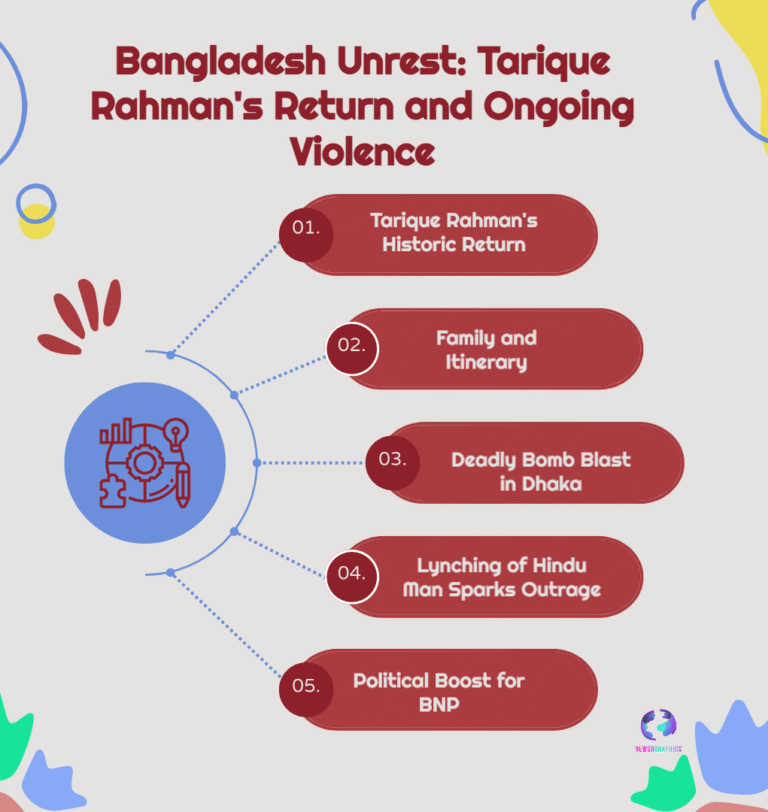


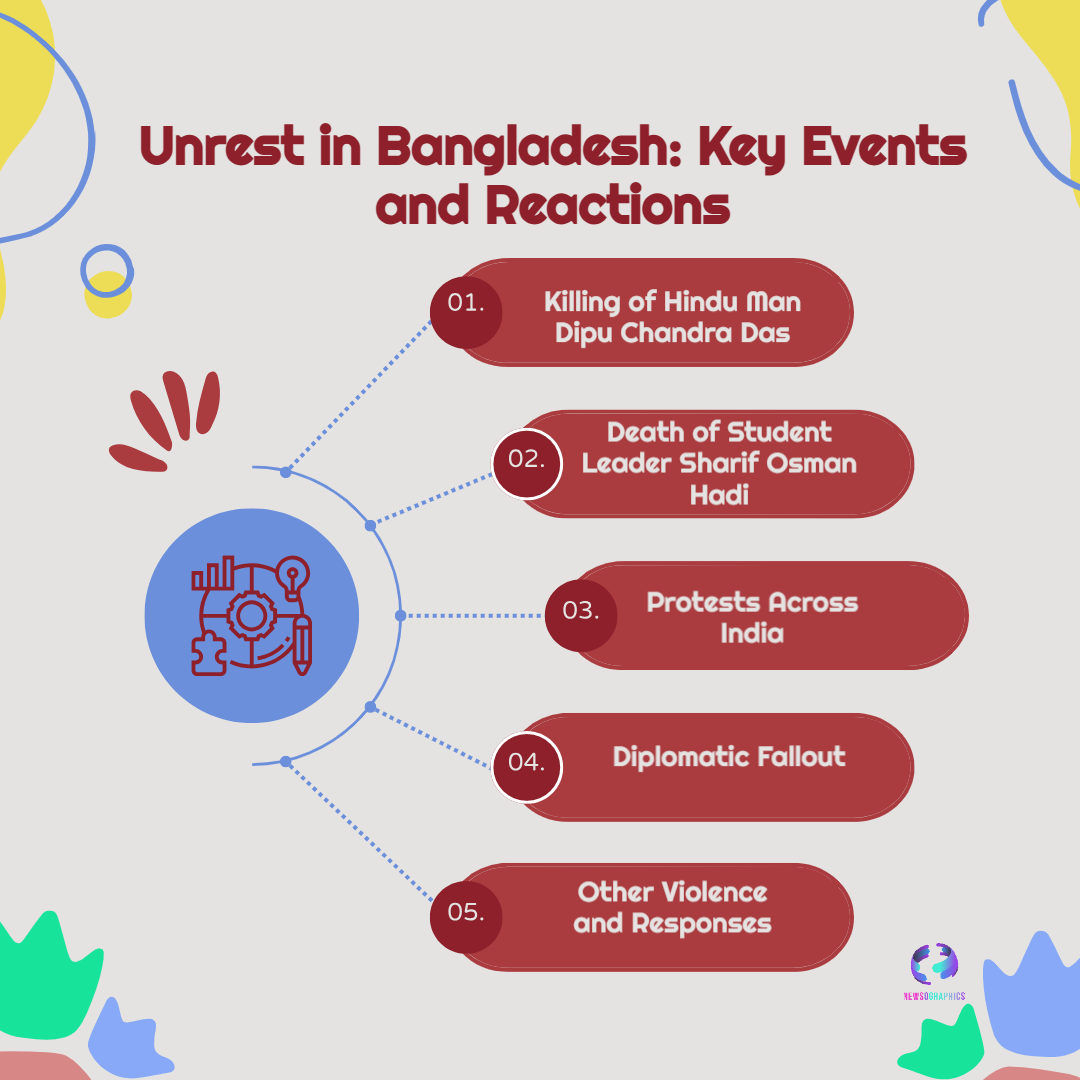
Political unrest in Bangladesh intensifies following the death of Motaleb Sikdar, sparking diplomatic unease, Indian visa concerns, and renewed debate over minority safety.
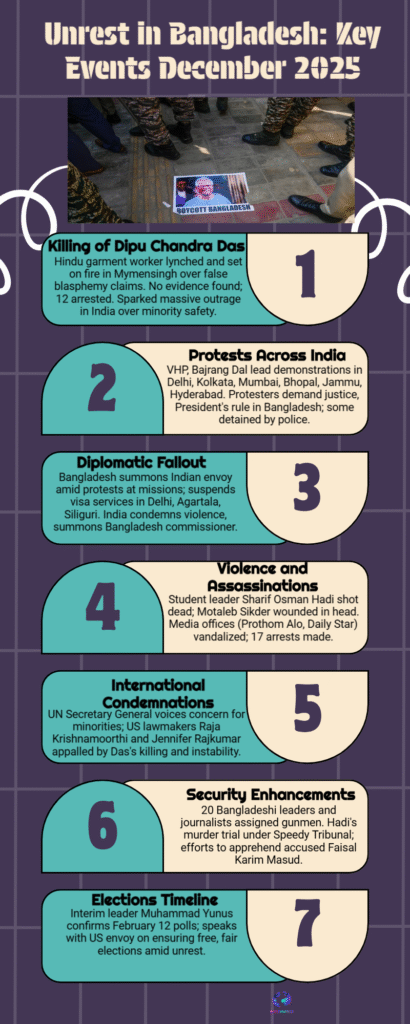
A Nation on Edge Amid Renewed Political Turmoil
Bangladesh has once again slipped into a phase of heightened uncertainty, marked by protests, counter-allegations, and mounting international attention. The reported death of Motaleb Sikdar has emerged as a flashpoint in an already volatile environment, amplifying tensions across political, social, and diplomatic spheres. Streets in Dhaka and other urban centres have reflected this unease, with demonstrations intersecting with security clampdowns and public anxiety.
The current unrest does not exist in isolation. It draws from a deeper reservoir of political distrust, institutional strain, and unresolved grievances that have periodically surfaced over the years. What distinguishes this phase is the convergence of domestic instability with regional diplomatic sensitivities.
The Death That Altered the Discourse
Circumstances and Immediate Fallout
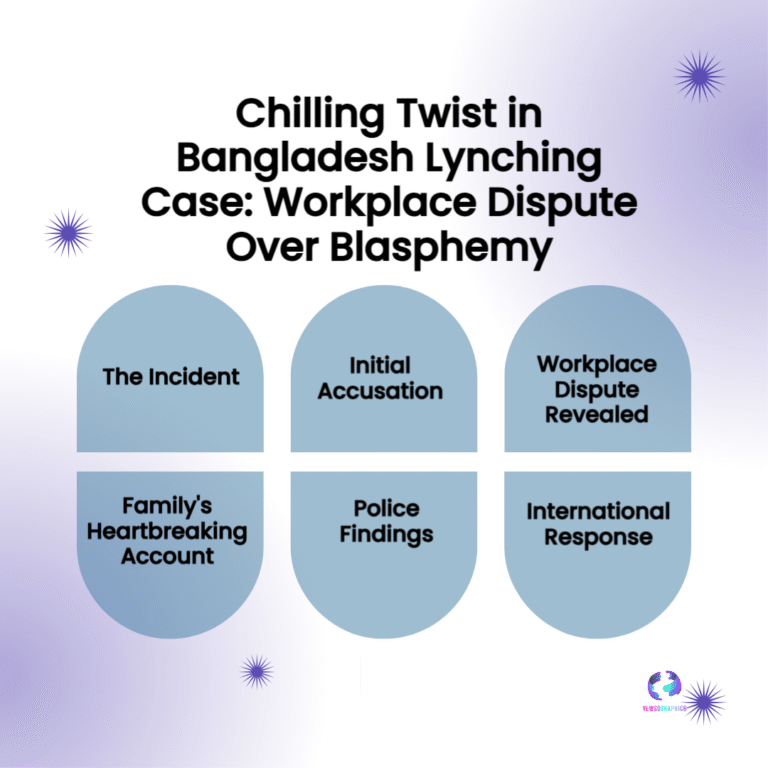
The death of Motaleb Sikdar has rapidly moved from a localised incident to a symbolically charged episode. Conflicting narratives around the circumstances of his death have circulated widely, fuelling suspicion and anger among different sections of society. As details remain contested, the incident has intensified criticism of state responses and law enforcement conduct.
Public reaction has been swift and emotional, with calls for accountability resonating across political lines. For many, the episode underscores long-standing concerns about transparency and due process during periods of unrest.
Political Reactions and Polarisation
Political actors have seized upon the incident to reinforce existing positions. Opposition voices have framed the death as emblematic of systemic failures, while authorities have urged restraint and warned against misinformation. This divergence has further polarised public discourse, narrowing the space for consensus or de-escalation.
Minority Insecurity and the Revival of Old Fears
Hindu Community Under Scrutiny
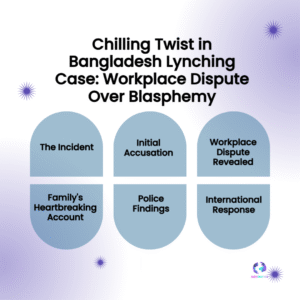
Alongside political unrest, reports and allegations of violence targeting Hindu communities have re-entered national and international conversations. Even isolated incidents, when viewed against a backdrop of instability, tend to acquire amplified significance, reviving historical anxieties around minority safety in Bangladesh.
Community leaders have expressed concern over social media narratives that risk inflaming communal sentiments. The situation illustrates how political instability often spills into social fault lines, making minorities more vulnerable to both real and perceived threats.
Social Fabric Under Pressure
Beyond any single community, the broader social fabric is experiencing strain. Trust deficits, rumour cycles, and heightened fear have created an atmosphere where everyday interactions are coloured by uncertainty. Such conditions complicate governance and deepen the challenges of restoring normalcy.
Diplomatic Undercurrents and the India Factor
Visa Concerns and Cross-Border Anxiety
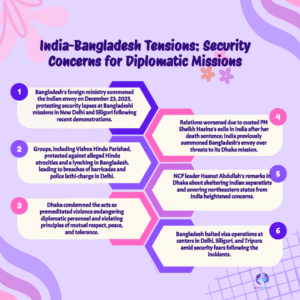
India’s role inevitably looms large in moments of Bangladeshi instability. Developments surrounding Indian visas, travel concerns, and cross-border movement have added a diplomatic layer to the crisis. For many Bangladeshis, uncertainty around visas is not merely administrative but symbolic of broader regional unease.
The situation has also drawn attention within India, particularly in eastern states with close cultural and economic ties to Bangladesh. Kolkata, often a barometer of cross-border sentiment, has closely followed developments.
Bilateral Relations in a Sensitive Phase
India-Bangladesh relations have historically balanced cooperation with periodic friction. Episodes of unrest test this balance, as domestic developments in Dhaka intersect with regional security, migration, and minority protection narratives. Diplomatic caution currently defines official responses, reflecting an awareness of the stakes involved.
Media, Information, and the Battle of Narratives
Information Overload in Times of Crisis
As unrest unfolds, media coverage and digital platforms play a decisive role in shaping perceptions. Rapid updates, unverified claims, and emotionally charged commentary have blurred lines between fact and speculation. In such environments, public opinion can shift quickly, sometimes independent of confirmed developments.
The challenge lies in maintaining informational clarity while emotions run high. The Motaleb Sikdar episode illustrates how individual incidents can be rapidly woven into larger political narratives.
Long-Term Impact on Public Trust
Repeated cycles of unrest and contested narratives risk eroding public trust in institutions, media, and even community bonds. Restoring credibility becomes harder with each episode, particularly when investigations and official communication are perceived as delayed or opaque.
A Fragile Moment with Regional Implications
Bangladesh stands at a delicate juncture where political stability, social cohesion, and diplomatic equilibrium intersect. The death of Motaleb Sikdar has acted as a catalyst, intensifying existing pressures rather than creating them anew. How authorities, political actors, and civil society navigate this phase will shape not only immediate outcomes but also the country’s trajectory in the months ahead.
In South Asia’s tightly interlinked political landscape, Bangladesh’s internal stability carries implications beyond its borders. The current unrest serves as a reminder that in times of crisis, individual events can quickly evolve into broader tests of governance, unity, and regional trust.