




A 21-year-old former printing press worker in Bhopal was caught with over ₹2 lakh in counterfeit currency after learning advanced techniques from YouTube videos. We analyze how he printed and successfully circulated lakhs of fake ₹500 notes, revealing the shocking rise of digital-age fraud.
Bhopal Counterfeiting YouTube Tutorial Fraud
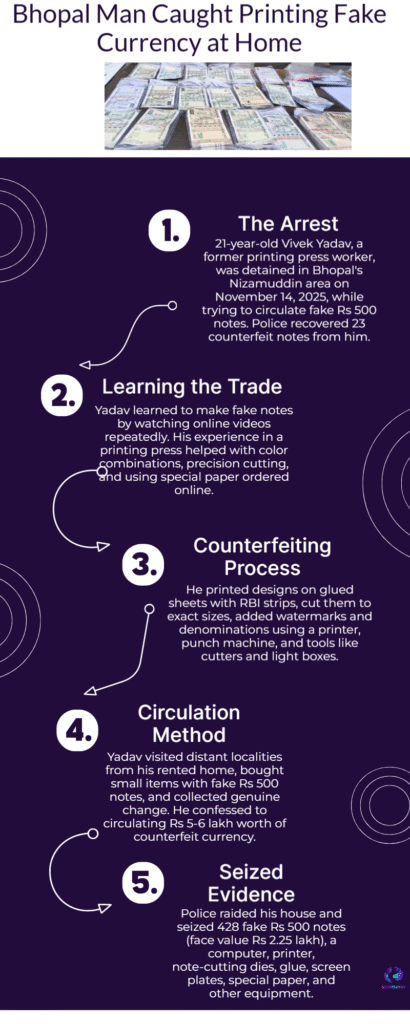
The arrest of a 21-year-old Bhopal man for operating a sophisticated counterfeit currency racket from his home has exposed a startling reality: the digital age is rapidly lowering the barrier to entry for complex financial crimes. The accused, identified as Vivek Yadav from Karond, was caught with a haul of equipment and fake currency worth over ₹2 lakh, but his confession revealed he had successfully circulated approximately ₹5–6 lakh worth of fake ₹500 notes into the market. His instruction manual? YouTube videos and the practical expertise gained from his previous job at a legitimate printing press.
According to the police, Yadav’s operation was not based on any traditional criminal network but on sheer initiative guided by online tutorials. During interrogation, he disclosed that he watched numerous videos that detailed the processes for producing convincing counterfeit money. He utilized his prior experience working in a printing press to accurately grasp the nuances of color combinations, paper textures, and, crucially, precision cutting—elements that often trip up amateur criminals.
This unique combination of a technical background and readily available online instruction allowed him to execute a highly detailed process that gave his fake notes a shocking resemblance to genuine currency. Yadav meticulously ordered specialized paper online, which he then cut to the exact dimensions of a ₹500 note. He employed a common computer and color printer, but the finishing touches were critical.