

BJP launches a sharp political offensive against Mamata Banerjee following alleged mismanagement and controversy surrounding the Messi-linked Kolkata event.
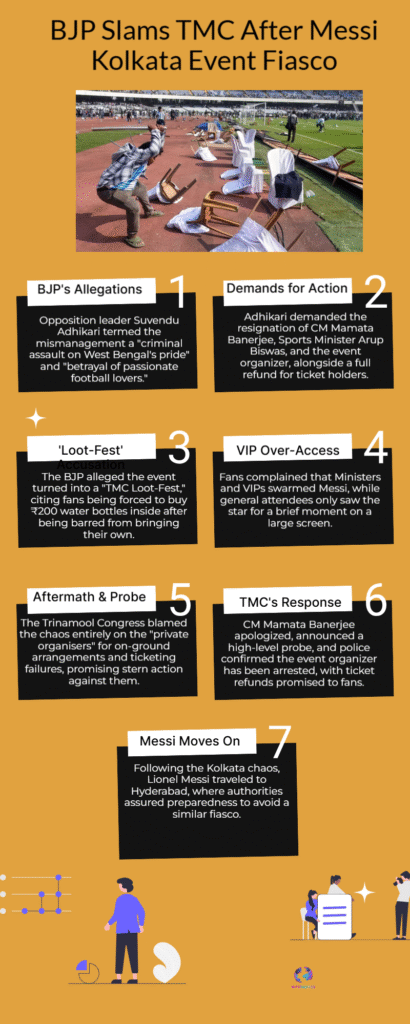
A Sporting Event That Turned Political
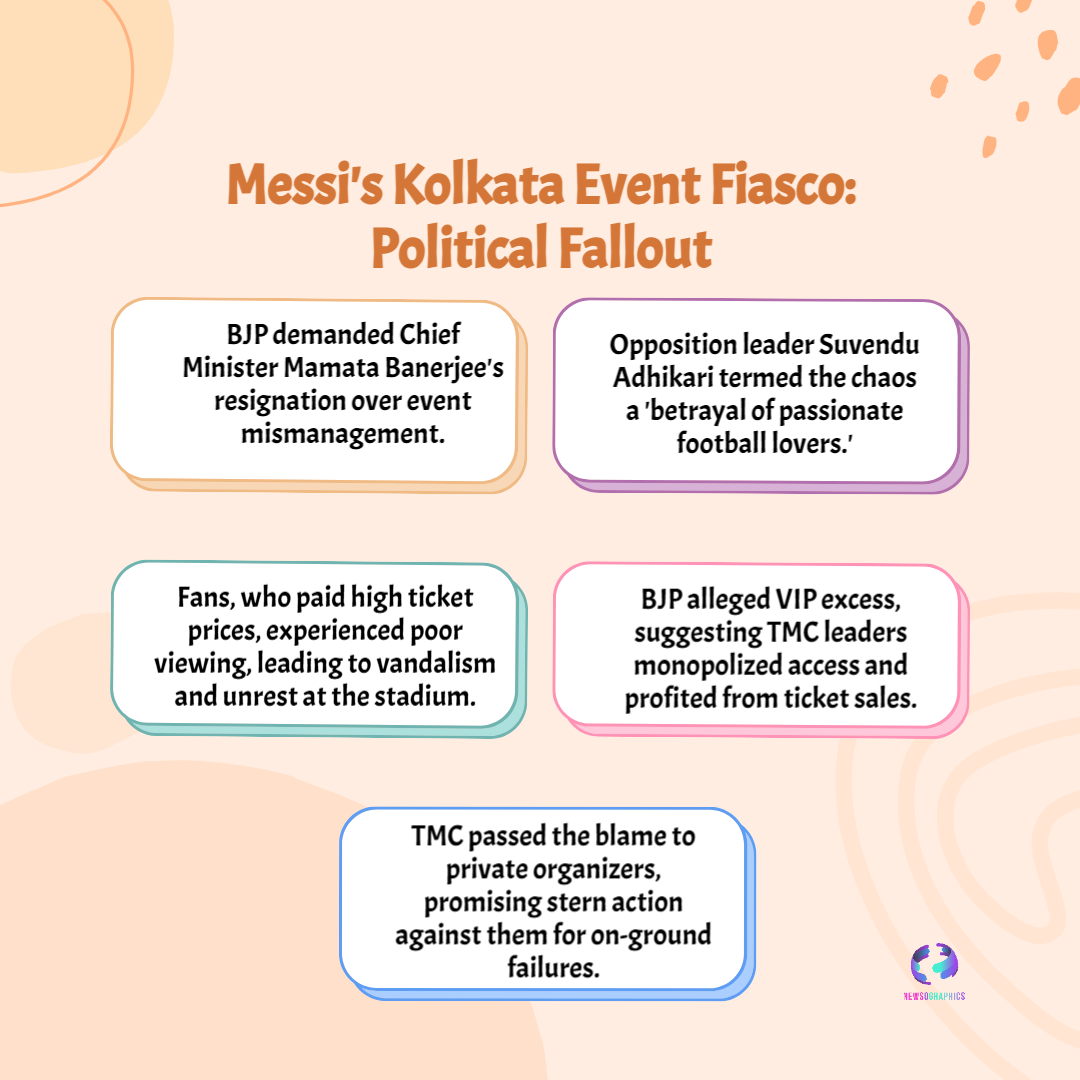
What was projected as a high-profile Football-linked event connected to Lionel Messi in Kolkata has rapidly escalated into a full-blown political controversy. Allegations of mismanagement and unmet expectations have shifted the narrative from sports celebration to political accountability, drawing sharp reactions from opposition parties.
At the centre of the storm is the Trinamool Congress-led West Bengal government, with the Bharatiya Janata Party accusing it of turning a globally visible occasion into an example of administrative failure.
BJP’s Offensive and the Language of Accusation
The BJP has launched a pointed attack on Chief Minister Mamata Banerjee, using unusually strong language to describe the episode. Party leaders have framed the incident as symbolic of deeper governance issues, alleging misuse of public platforms, lack of transparency, and betrayal of public trust.
By characterising the episode as “complete looting” and “betrayal,” the BJP has sought to elevate the issue beyond an isolated event, positioning it as evidence of systemic problems under the current state administration.
The Kolkata Event Fiasco and Public Discontent
The controversy stems from confusion surrounding the Messi-linked programme in Kolkata, which had generated significant anticipation among football fans. Unclear communication, alleged logistical lapses, and unmet expectations reportedly led to widespread disappointment.
For many supporters, the event represented a rare opportunity to connect with a global football icon. The failure to deliver on that promise has fuelled frustration, which opposition parties have been quick to amplify.
TMC’s Position and Political Pushback
The Trinamool Congress has pushed back against the allegations, dismissing the BJP’s attack as politically motivated. Party leaders have argued that the opposition is exploiting a sporting event to manufacture outrage and score political points.
Within the ruling camp, the controversy is being framed as an exaggerated narrative designed to distract from governance issues at the national level, while deflecting attention from the cultural and sporting initiatives undertaken by the state.
Sports, Symbolism, and Political Optics
In West Bengal, sports events often carry symbolic weight, especially when linked to international figures. The Messi episode highlights how such occasions can quickly become politically charged, particularly in a state marked by intense rivalry between the TMC and BJP.
The optics of a failed or controversial event matter as much as the facts themselves. Images of disappointed fans and unanswered questions have provided fertile ground for political messaging.
A Broader Pattern of Political Confrontation
This episode fits into a broader pattern of escalating confrontation between the BJP and the TMC, where governance, public events, and cultural platforms increasingly become arenas for political combat.
Rather than remaining confined to administrative review, controversies are rapidly absorbed into the state’s polarised political discourse, with each side using sharp rhetoric to consolidate its support base.
What the Controversy Signals Going Forward
The fallout from the Kolkata event is unlikely to fade quickly. For the BJP, it offers an opportunity to question the state government’s competence and accountability. For the TMC, it is a reminder of how high-visibility events carry political risks alongside potential rewards.
As West Bengal’s political climate remains charged, the Messi Kolkata event fiasco underscores how even sports-linked celebrations can become flashpoints in an ongoing battle for narrative control and public perception.