


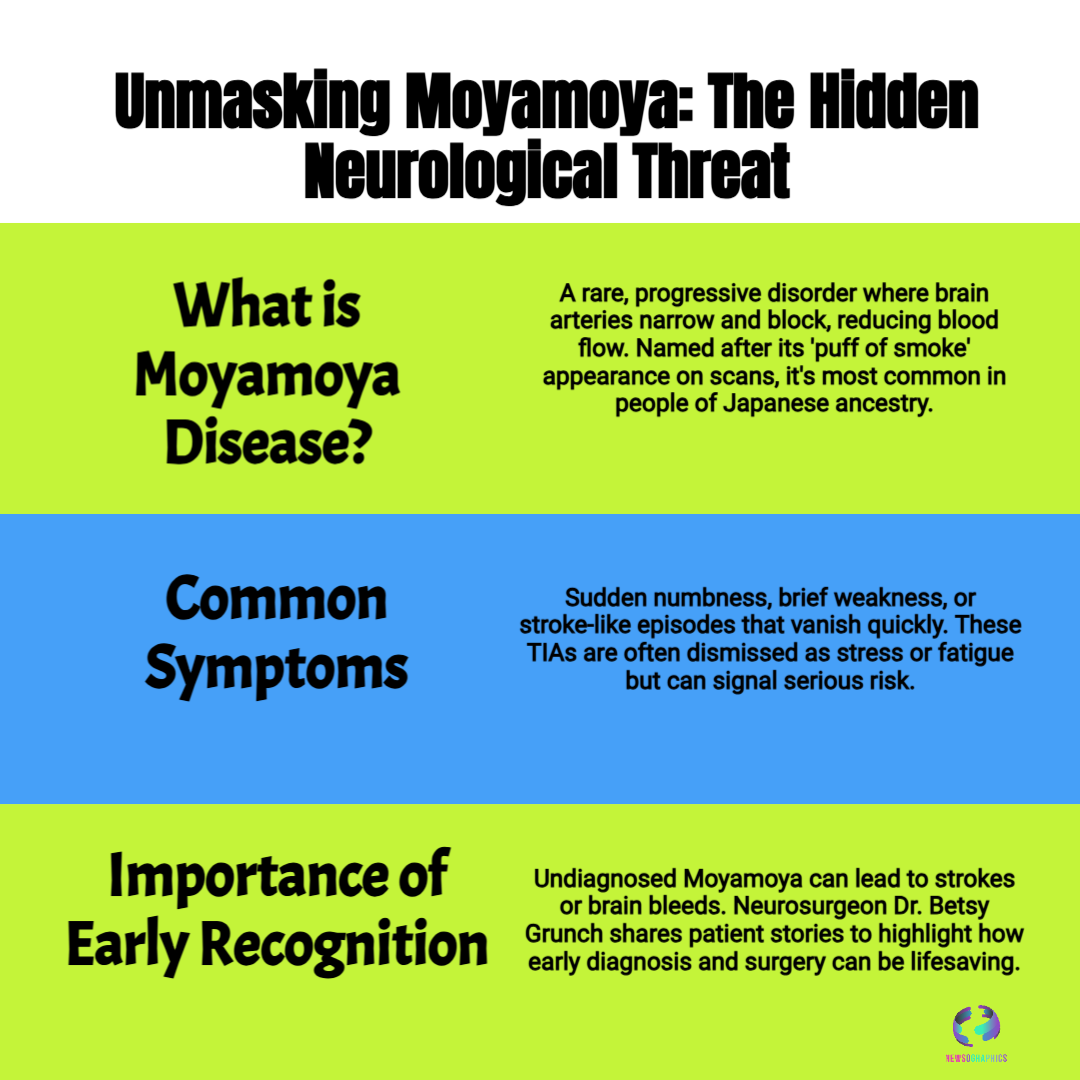
Moyamoya Disease Japanese Genes Stroke Symptoms: A neurosurgeon breaks down this rare, progressive neurovascular disorder common in East Asia. Learn the signs, the unique angiography appearance (the ‘puff of smoke’), and the importance of revascularization surgery to prevent life-threatening ischemic attacks.
Moyamoya Disease Japanese Genes Brain Stroke Symptoms
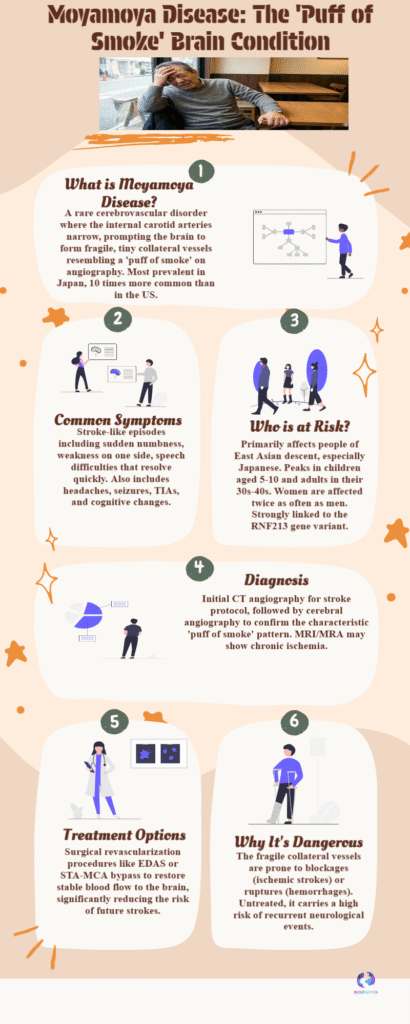
A leading neurosurgeon has recently brought much-needed attention to Moyamoya Disease, a rare, progressive cerebrovascular disorder whose primary presentation often strikingly mimics the symptoms of a stroke or a Transient Ischemic Attack (TIA), commonly known as a mini-stroke. The condition is most notably associated with a strong genetic predisposition in East Asian populations, particularly in Japan, where it was first identified and named. The name itself, Moyamoya, is Japanese for “a hazy puff of smoke,” a vivid and accurate description of how the compensatory blood vessels appear on diagnostic imaging like cerebral angiography.
Moyamoya Disease results from the progressive narrowing or occlusion of the major arteries supplying blood to the brain, specifically the terminal parts of the internal carotid arteries. As these vital vessels narrow over time, the amount of oxygen-rich blood reaching the brain tissue drastically decreases. In a desperate attempt to compensate for this reduced cerebral blood flow, the brain triggers the growth of a tangled, fragile network of tiny collateral blood vessels at its base. It is this disorganized, delicate meshwork of vessels, struggling to keep the brain perfused, that creates the distinctive “puff of smoke” visual on a brain scan.