


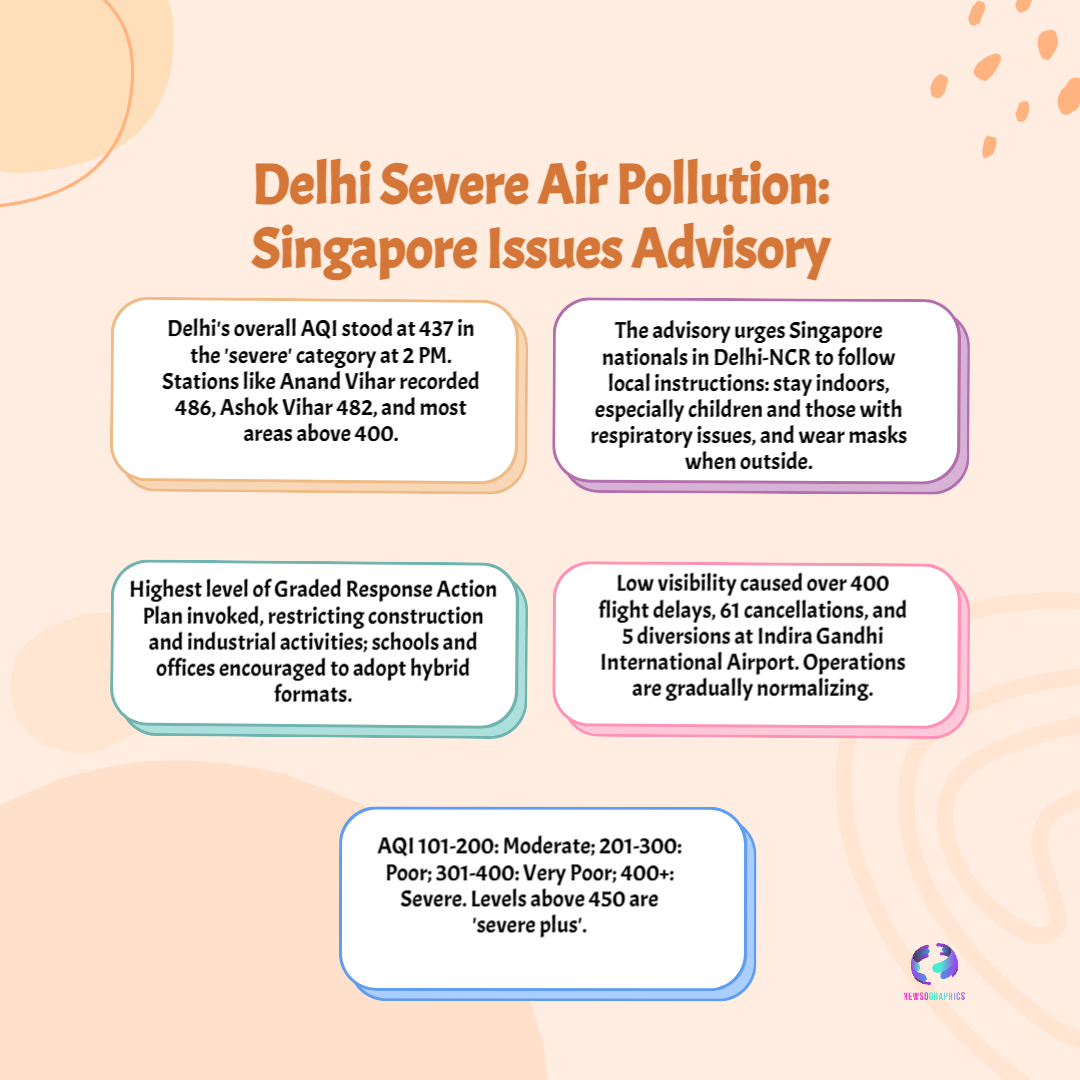
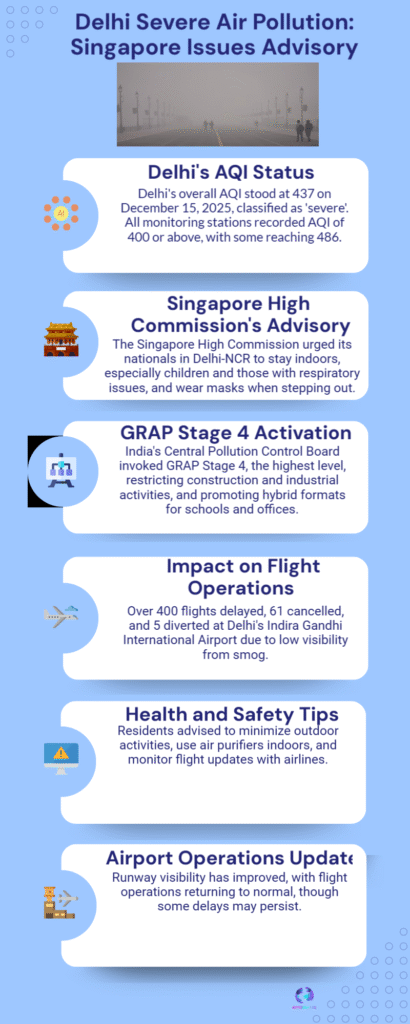
Delhi’s air quality plunged into the severe category, drawing international attention and prompting foreign advisories as pollution risks intensify.
A Capital Under a Cloud of Toxic Air
Delhi once again found itself enveloped in hazardous air, with air quality levels slipping firmly into the severe category. Dense smog reduced visibility across the city, disrupted daily routines, and intensified health concerns for residents. The sharp deterioration underscored how quickly environmental conditions in the capital can spiral during peak pollution periods.
Air quality readings reflected a concentration of harmful particles far above safe thresholds, making the city’s atmosphere among the most polluted urban environments globally at the time. The situation was not merely a local inconvenience but a broader environmental and public health emergency.
International Attention on Delhi’s Pollution Levels
The severity of Delhi’s air crisis drew attention beyond India’s borders. A foreign advisory urging its nationals in the capital region to remain indoors highlighted how the situation had crossed from a domestic issue into an international concern. Such advisories are typically reserved for extreme conditions, underscoring the gravity of the pollution levels.
This development also reflected growing global sensitivity to air quality risks, particularly in major international hubs where large expatriate and tourist populations reside.
Why Air Quality Worsens So Rapidly
Delhi’s air pollution is the result of a complex interaction of factors rather than a single cause. Seasonal weather patterns play a critical role, as cooler temperatures and low wind speeds trap pollutants close to the ground. Vehicular emissions, construction dust, industrial activity, and agricultural residue burning in surrounding regions add to the toxic mix.
During late autumn and early winter, these elements converge, leaving little room for natural dispersion. The result is a rapid escalation in pollutant concentration that can persist for days or even weeks.
Meteorology and Urban Density
The capital’s dense urban landscape amplifies the problem. High traffic volumes and continuous construction activity generate emissions that accumulate quickly when atmospheric conditions are unfavorable. Without sufficient wind or rainfall, pollutants linger, turning the city into a virtual bowl of trapped smog.
Health and Daily Life Under Severe AQI
Severe air quality has immediate and visible impacts on daily life. Schools, workplaces, and transport systems often operate under strain as residents attempt to limit outdoor exposure. Vulnerable groups, including children and the elderly, face heightened risks from prolonged contact with polluted air.
While the health implications are widely understood, the repeated nature of these episodes has led to growing frustration and concern among residents, who see little long-term relief from year to year.
Policy Pressure and Environmental Accountability
Each severe pollution episode renews scrutiny of environmental governance and policy effectiveness. Emergency measures may offer temporary relief, but they also highlight deeper structural challenges related to urban planning, energy use, and regional coordination.
The international spotlight adds another layer of pressure, signaling that Delhi’s air quality is no longer viewed solely as a local or national issue, but as part of a global environmental conversation.
A Recurring Crisis with Global Implications
Delhi’s choking air serves as a stark reminder of the costs of rapid urbanization without adequate environmental safeguards. As severe AQI levels prompt advisories and global concern, the episode reinforces the need for sustained, long-term approaches to air quality management.
Until systemic solutions take hold, Delhi’s winters are likely to remain synonymous with smog, drawing both domestic alarm and international attention to one of the world’s most persistent urban pollution challenges.