



Delhi Air Quality turns Severe with AQI near 430. See the choking hotspots, specific PM2.5 health risks, and the complete GRAP Stage 3 restrictions now imposed.
Delhi Air Quality Severe Health Risk
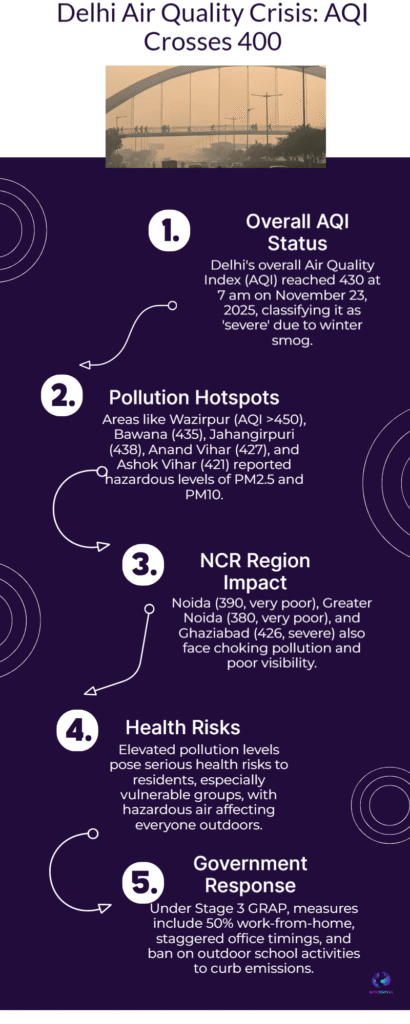
The National Capital Territory of Delhi is once again grappling with a severe environmental emergency as the Air Quality Index (AQI) officially crossed the 400 mark, plunging the city into the critically dangerous ‘severe’ category. This alarming deterioration, driven by unfavorable meteorological conditions and unchecked emissions, has triggered widespread alarm and necessitated the immediate implementation of Stage 3 restrictions under the Graded Response Action Plan (GRAP).
The overall Delhi Air Quality Severe Health Risk is palpable, with the average AQI hovering precariously around 430 during morning hours. This level is categorized as hazardous, directly posing a significant threat to the health of every resident. This is not merely an inconvenience; it is a public health crisis demanding immediate and stringent behavioral changes. The pollution is not evenly distributed, with certain pockets of the capital recording even more worrying figures, marking them as dangerous choking hotspots. Specific areas like Wazirpur and Jahangirpuri reported AQI levels soaring past 450, while Bawana, Anand Vihar, and Ashok Vihar also registered readings firmly entrenched in the ‘severe’ zone.