


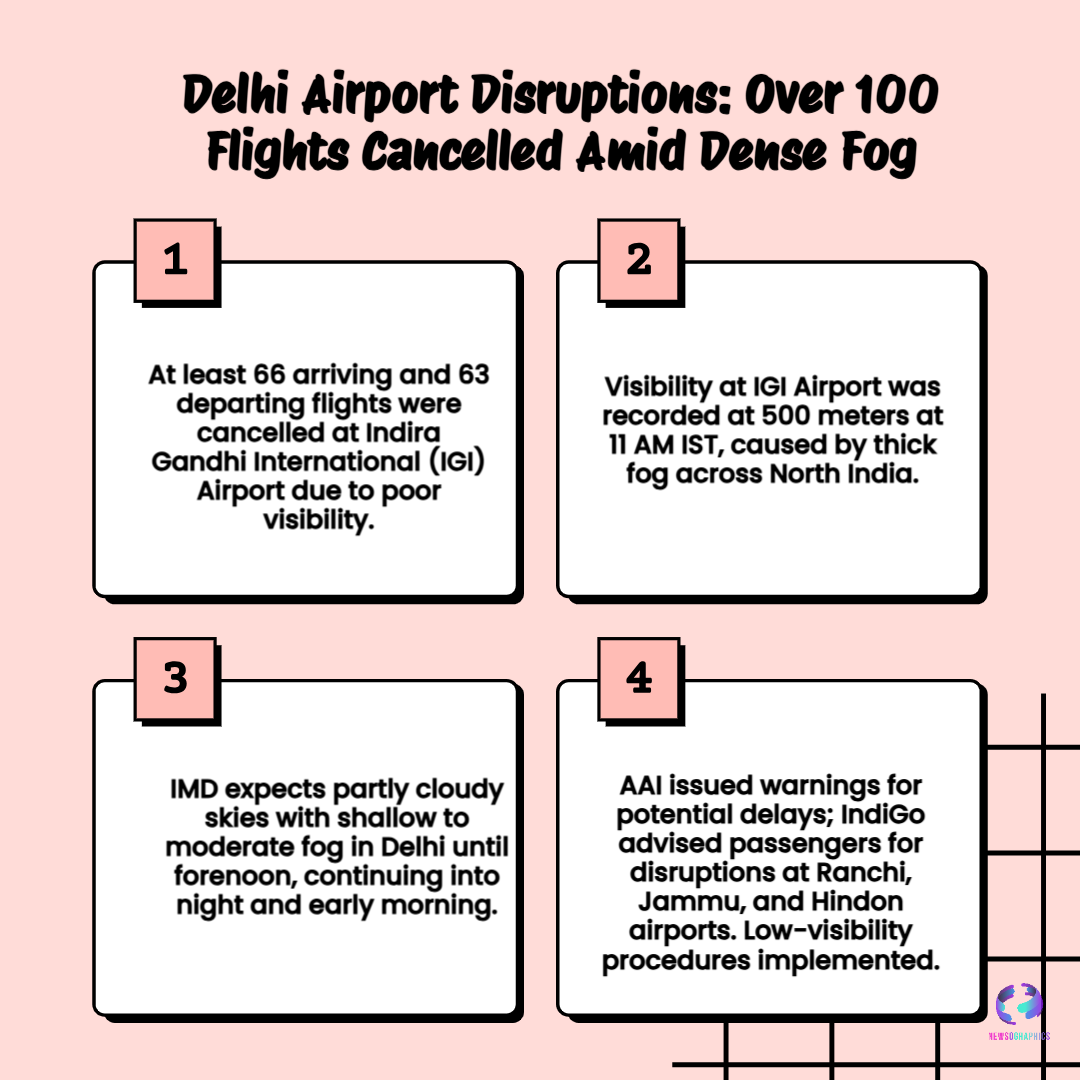
Dense fog and hazardous air quality cripple flight operations at Delhi airport, causing cancellations and delays as winter weather and pollution tighten their grip on the capital.
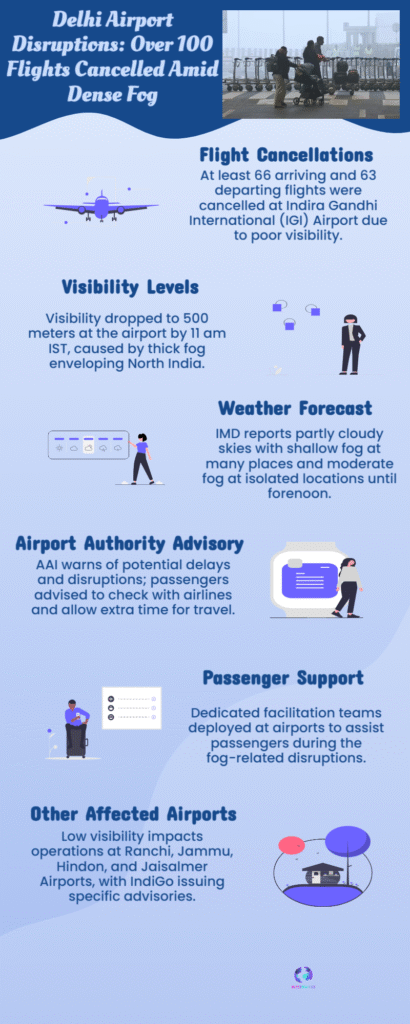
A Foggy Morning in Delhi Airport Brings Air Traffic to a Halt
Delhi woke up to severely reduced visibility as thick fog blanketed the city, disrupting daily life and bringing air traffic at the capital’s airport under strain. Early morning flight operations were hit the hardest, with multiple departures and arrivals cancelled or delayed due to poor runway visibility.
The dense fog combined with high pollution levels created challenging conditions for aviation, particularly during peak morning hours when passenger movement is at its highest.
Flight Cancellations and Delays at the Airport
Several domestic and international flights were either cancelled or rescheduled as airlines adjusted operations to cope with fluctuating visibility. Low-visibility procedures were implemented, slowing down aircraft movement on runways and taxiways.
Passengers reported long waiting times and frequent schedule changes, while airline staff worked to reassign aircraft and manage cascading delays caused by the weather disruption.
Visibility Drops as Pollution Intensifies Fog
The Role of Air Quality in Dense Fog
Delhi’s winter fog is often intensified by particulate pollution suspended in the air. High concentrations of fine particles act as condensation nuclei, thickening fog layers and prolonging low-visibility conditions well into the morning.
On this day, air quality levels remained in the poor to very poor range, worsening visibility and complicating airport operations despite the availability of advanced landing systems.
Seasonal Weather Patterns at Play
Cold temperatures, calm winds, and high humidity created ideal conditions for fog formation. These weather patterns are typical during winter in the National Capital Region, but their impact is magnified when pollution levels remain elevated.
Impact on Passengers and Ground Operations
The disruption extended beyond flight schedules. Airport terminals saw crowding as passengers waited for updates, while ground handling operations slowed due to safety protocols in reduced visibility.
Baggage handling, refuelling, and aircraft towing all faced delays, contributing to longer turnaround times and further compounding the impact on flight schedules.
Low-Visibility Procedures and Aviation Safety
Airports rely on instrument landing systems and trained flight crews to manage operations during fog. However, when visibility drops below prescribed thresholds, safety regulations mandate restrictions regardless of technological support.
Only aircraft and pilots certified for advanced low-visibility operations are permitted to land, limiting the number of flights that can operate during such conditions.
Winter Disruptions Becoming a Pattern
Fog-related disruptions have become a recurring feature of Delhi’s winter calendar. Each year, a combination of meteorological conditions and persistent air pollution leads to repeated cancellations and delays, particularly in December and January.
The growing frequency of these disruptions reflects broader environmental challenges that extend beyond aviation into public health and urban mobility.
Broader Implications for Urban Infrastructure
The morning’s events highlighted the vulnerability of major transport hubs to environmental stress. As passenger volumes increase and climate patterns shift, infrastructure resilience is being tested more frequently.
For Delhi, fog and pollution are no longer isolated inconveniences but systemic issues affecting transport efficiency, economic activity, and daily routines across the city.
A Winter Morning That Set the Tone
The flight cancellations at Delhi airport served as an early reminder of the season’s challenges. With winter conditions tightening their grip, fog and pollution continue to shape how the city functions—slowing movement, testing systems, and underscoring the complex relationship between weather, environment, and urban life.