


The Delhi-NCR winter smog crisis deepens. Ghaziabad records a “Severe” air quality index (AQI 400+), driven by below-average temperatures. Understand the urgent GRAP Stage 3 restrictions and how the toxic air is impacting public health.
Delhi AQI Ghaziabad Severe GRAP Stage 3
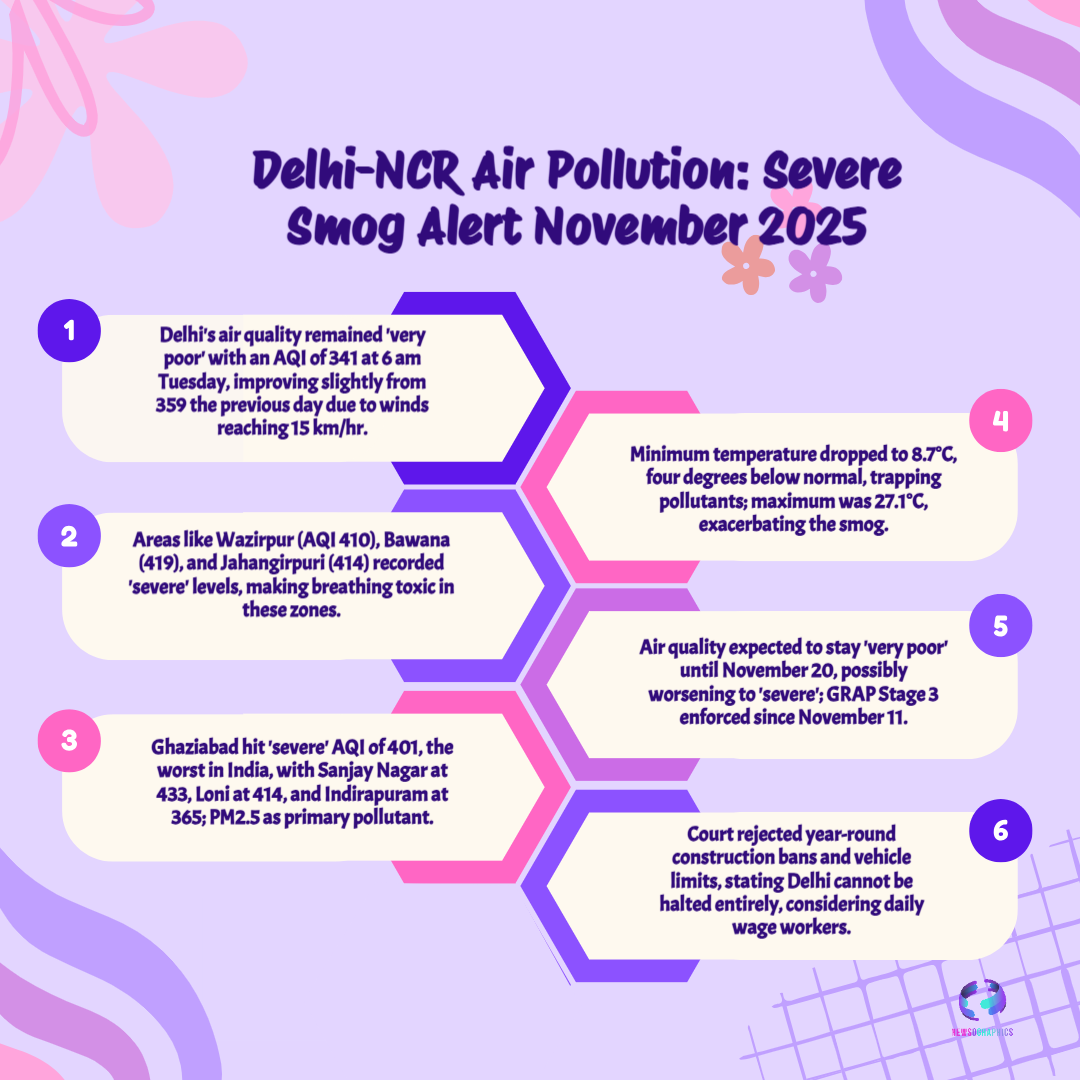
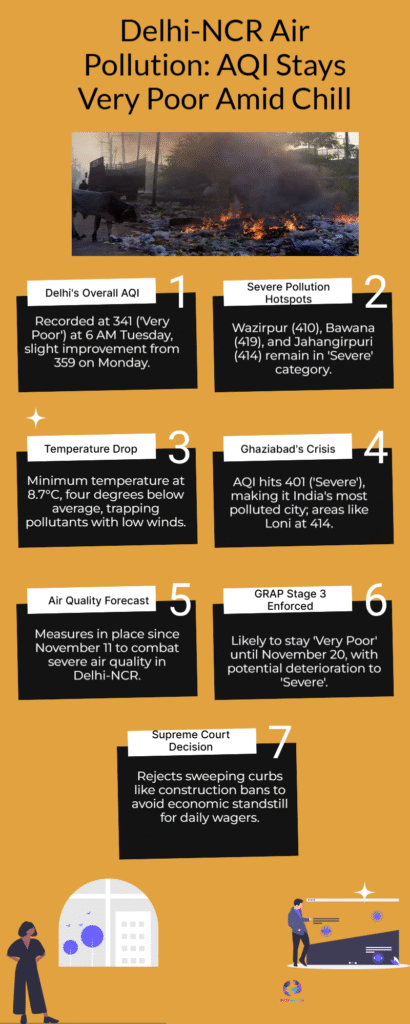
The National Capital Region (NCR) is currently trapped under a dense, toxic blanket of smog, marking a worrying escalation in the annual Delhi-NCR winter smog crisis. While the national capital, Delhi, struggles in the ‘Very Poor’ air quality category, its neighbor, Ghaziabad, has catastrophically slipped into the ‘Severe’ zone, with Air Quality Index (AQI) readings frequently crossing the 400-mark. This dangerous convergence of plunging air quality and unprecedented cold temperatures has forced authorities to enforce stringent measures under the GRAP Stage 3 restrictions.
Experts attribute this rapid deterioration, particularly the spike to Ghaziabad Severe Air Quality, directly to adverse meteorological conditions. The region is experiencing a notable dip in the mercury, with minimum temperatures falling several degrees below the seasonal average, resulting in one of the coldest November periods in recent years. This chilling weather creates a stable, heavy atmosphere. With little to no wind speed—a condition known as calm winds—pollutants like PM2.5 and PM10 are unable to disperse and remain suspended near the ground level, directly in the breathing zone of millions of residents. The trapping effect of this cold wave Delhi phenomenon is essentially turning the atmosphere into an invisible gas chamber.
The overall average Delhi AQI has hovered consistently in the 350-390 range (‘Very Poor’) for several consecutive days, a level that poses a significant health risk even to healthy individuals and can gravely exacerbate existing respiratory conditions. However, pockets within the NCR, most notably Ghaziabad—which has been identified as the most polluted city in the country on multiple days—have seen AQI levels surge above 400. Specific monitoring stations in areas like Loni and Sanjay Nagar have reported AQI figures nearing 450, confirming the immediate toxic smog threat.