


Delhi air quality has shown temporary improvement, prompting the rollback of GRAP-3 restrictions, though experts warn the relief may not last amid winter pollution patterns.
A Short-Lived Improvement in Delhi’s Air Quality
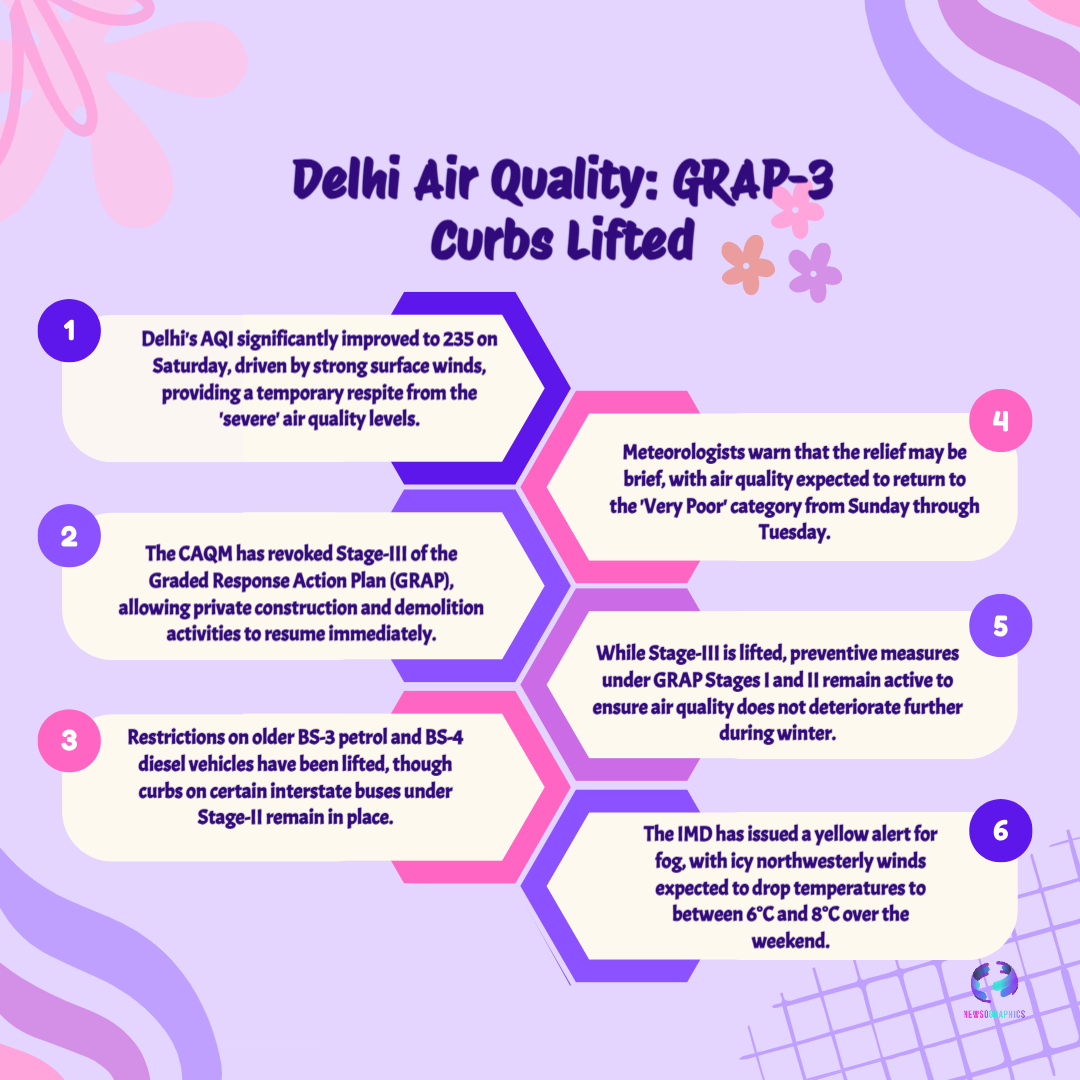
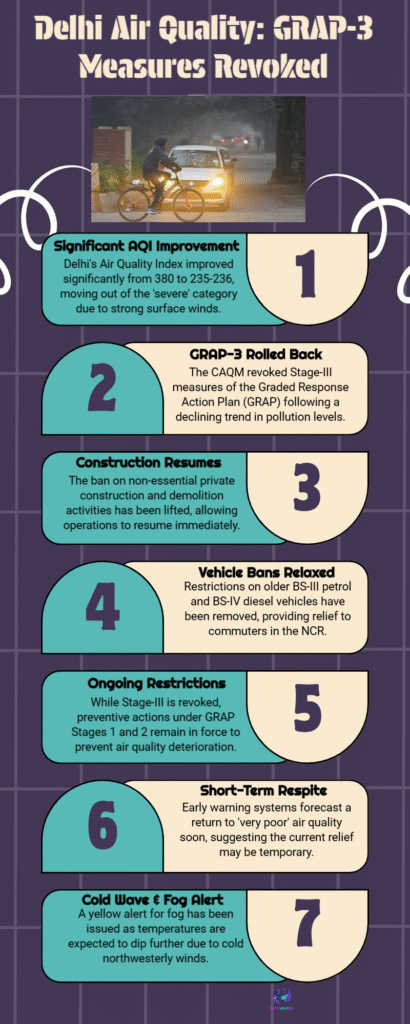
Air quality levels across Delhi have shown a marginal but noticeable improvement, offering residents brief respite from weeks of hazardous conditions. The reduction in particulate concentration has shifted the city’s Air Quality Index away from the most severe category, prompting authorities to ease emergency restrictions.
However, the improvement remains fragile, shaped more by temporary meteorological factors than by sustained emission reduction.
GRAP-3 Rollback and the Lifting of Curbs
Following the improvement, measures under Graded Response Action Plan Stage 3 were rolled back. Restrictions on construction activities, industrial operations, and certain vehicular movements were relaxed, restoring partial normalcy across economic and civic life.
The rollback reflects regulatory thresholds rather than a structural turnaround, underscoring the reactive nature of pollution control during peak winter months.
What the Rollback Means on the Ground
With curbs lifted, stalled construction sites have resumed work and transport movement has eased. The visible clearing of haze in parts of the city has reinforced a perception of improvement, even as pollution levels remain far from safe benchmarks.
Why the Relief Is Expected to Be Temporary
Seasonal dynamics continue to dominate Delhi’s air quality trajectory. Low wind speeds, temperature inversions, and persistent emissions from traffic, construction dust, and surrounding regions remain entrenched.
Without sustained dispersion conditions, pollutant concentrations tend to rebound quickly, often within days of regulatory relaxation.
Meteorology Over Mitigation
The recent AQI dip has coincided with marginal changes in wind patterns and humidity. Such fluctuations have historically produced short-lived improvements, followed by rapid deterioration once atmospheric stability returns.
Structural Pressures on Delhi’s Air Quality
Despite episodic regulatory interventions, the city’s pollution profile remains shaped by structural factors. Vehicular density, urban construction intensity, and regional pollution inflows continue to exert pressure during the winter cycle.
The repeated activation and rollback of emergency measures highlights the limits of episodic controls in addressing chronic air quality challenges.
Public Health Implications of Fluctuating AQI Levels
Even during periods of relative improvement, pollution levels in Delhi often exceed safe exposure limits. Short breaks in smog reduce immediate discomfort but do little to offset cumulative health risks associated with prolonged winter exposure.
The oscillation between severe and moderate pollution categories creates uncertainty for residents, particularly vulnerable groups such as children and the elderly.
A Familiar Pattern in Delhi’s Winter Pollution Cycle
The current episode mirrors a recurring pattern in the capital’s environmental calendar: temporary relief followed by renewed deterioration. While regulatory flexibility allows authorities to respond to changing conditions, the underlying vulnerability of Delhi’s air quality remains unchanged.
As winter progresses, the city’s AQI trajectory is expected to remain volatile, with brief improvements offering momentary clarity before the haze inevitably returns.