



A sharp cold wave, dense fog, and worsening air pollution have converged in Delhi, grounding flights, slowing mobility, and intensifying winter health risks across the NCR.
Winter Intensifies Across Delhi and NCR
A deepening cold wave has settled over Delhi and the surrounding National Capital Region, pushing temperatures downward while visibility collapses under persistent fog and Pollution. Mornings have turned sluggish and silent, with roads, rail corridors, and airports enveloped in thick haze that lingers well beyond sunrise. The winter pattern has shifted from seasonal chill to a prolonged spell of harsh conditions, altering routines across the metropolis.
The cold has arrived with a particular severity this year, marked by biting winds during early hours and a sharp dip in nighttime temperatures. For residents, the combination of low mercury and heavy fog has transformed even short commutes into drawn-out, uncertain journeys.
Dense Fog Paralyzes Transport Networks
Flights Grounded and Delayed
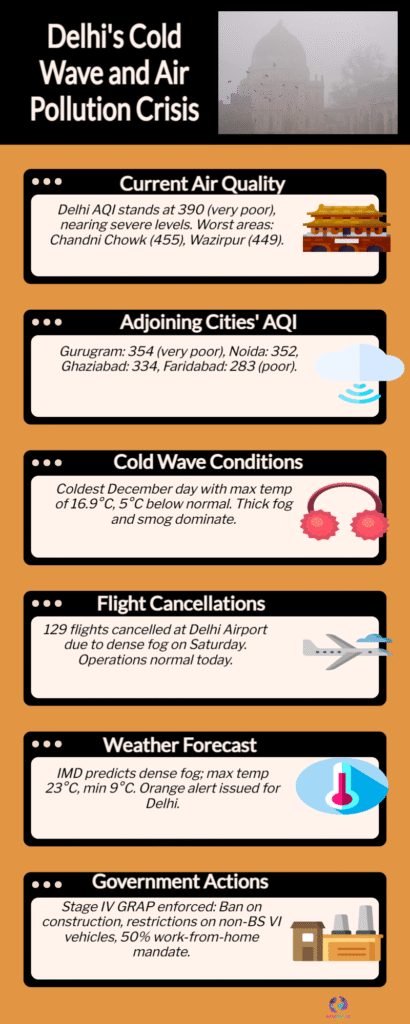
Dense fog has repeatedly disrupted aviation schedules, leading to cancellations and cascading delays at the capital’s airport. Low visibility during critical morning windows has forced airlines to hold departures, divert incoming flights, or cancel operations altogether. Passengers face extended waiting times as safety protocols override timetables.
Rail and Road Movement Slows
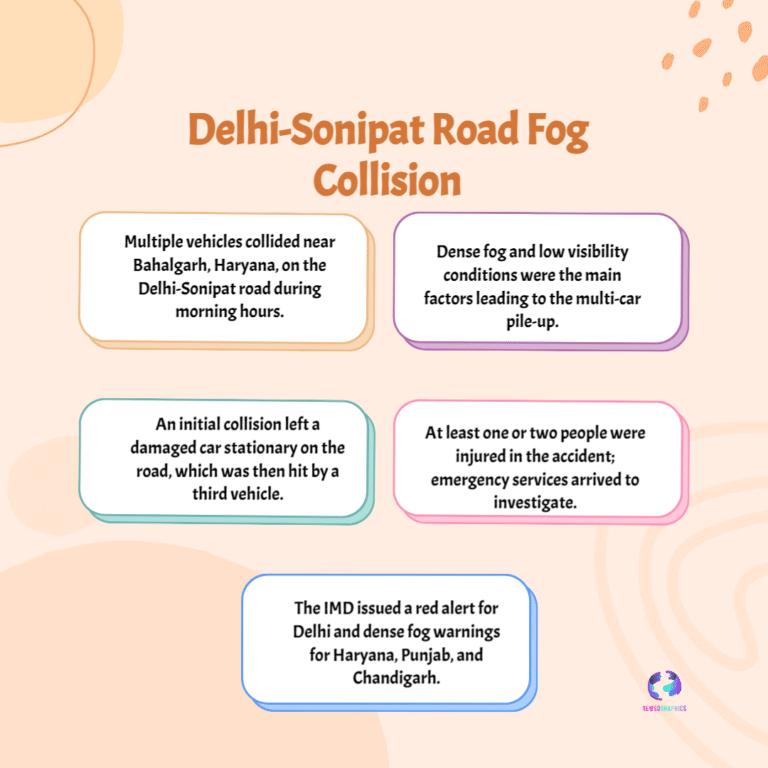
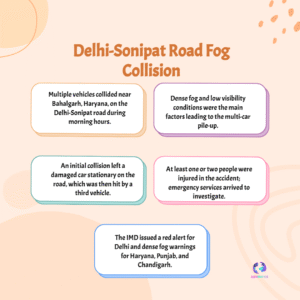
Rail services have also felt the impact, with trains running behind schedule as drivers reduce speeds to navigate fog-laden tracks. On city roads and highways, visibility drops to a few meters at times, increasing the risk of collisions and compelling traffic authorities to impose restrictions on heavy vehicles during peak fog hours.
Air Quality Deteriorates Amid Cold Conditions
AQI Slips Deeper into Poor and Severe Zones
As temperatures fall, air quality has worsened. Calm winds and temperature inversion have trapped pollutants close to the ground, causing particulate matter levels to surge. The Air Quality Index has oscillated between poor and severe categories, turning the winter air dense and acrid.
The cold wave amplifies the pollution crisis by preventing dispersal, allowing emissions from vehicles, construction dust, and regional sources to accumulate. The result is a persistent grey canopy that blurs skylines and strains respiratory health.
Smog Becomes a Daily Reality
The overlap of fog and pollution has produced heavy smog conditions, especially during early mornings and late evenings. This blend reduces visibility further and creates a sense of perpetual dusk, even on days without cloud cover.
Health Strain During the Cold Wave
Cold air combined with high pollution levels poses a dual threat to public health. Respiratory ailments, eye irritation, and throat discomfort have become more common, particularly among children and the elderly. Hospitals report seasonal spikes in patients experiencing breathing difficulties as the cold wave prolongs exposure to polluted air.
Extended indoor confinement, while offering relief from smog, brings its own challenges, underscoring how weather extremes ripple through everyday life in urban environments.
Why This Winter Feels Harsher
Meteorological Factors at Play
The current conditions are shaped by a mix of western disturbances, low wind speeds, and prolonged temperature inversion. These factors work together to sustain cold, fog, and pollution rather than allowing brief spells of relief.
Urban Density and Seasonal Emissions
Winter emissions from traffic, heating, and regional agricultural activity compound the issue. When paired with unfavourable weather patterns, the city’s dense urban fabric struggles to disperse pollutants, making each cold wave more intense than the last.
A City Adapting to Prolonged Winter Stress
Delhi’s cold wave has evolved beyond a short-lived seasonal event into a sustained period of disruption. With dense fog grounding flights, pollution choking the air, and temperatures refusing to rise, winter has asserted itself as a defining challenge of daily life. The convergence of climate, infrastructure, and environmental pressure highlights how vulnerable megacities become when multiple stressors collide at once.