


Dense fog blankets Delhi, causing large-scale flight delays and train disruptions as winter conditions intensify and visibility drops across the national capital.
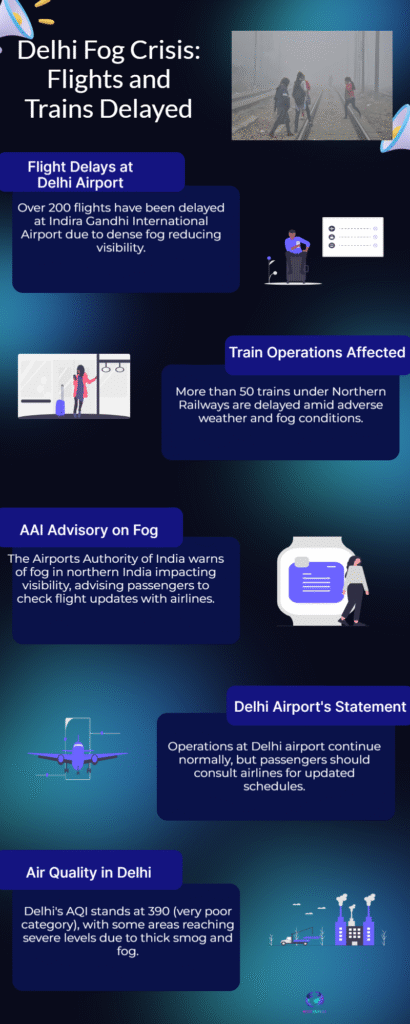
Fog Descends Heavily Over Delhi
A thick blanket of dense fog has once again engulfed Delhi, sharply reducing visibility and bringing the city’s transport systems under strain. Early morning hours have been particularly affected, with the fog settling low and persistent, blurring roads, runways, and rail tracks across the capital.
The weather pattern reflects a familiar winter phenomenon, yet its intensity has amplified the disruption, turning routine travel into an exercise in delay and uncertainty.
Flight Operations Under Severe Pressure
Departures and Arrivals Face Cascading Delays
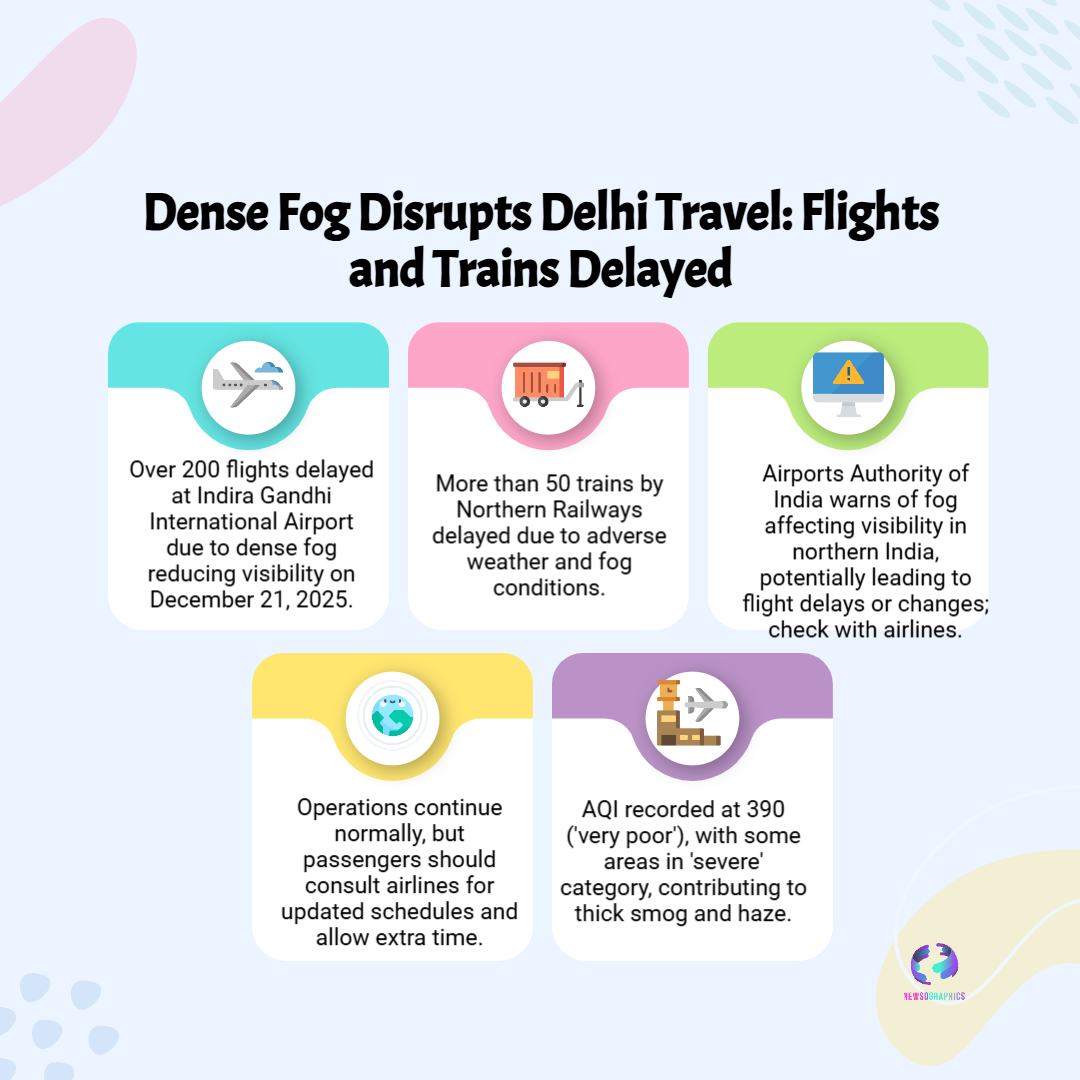
At the capital’s airport, dense fog conditions have forced airlines to delay both departures and arrivals. Low visibility during peak morning slots has restricted runway operations, creating a backlog that ripples through the day’s flight schedules. Even as conditions improve gradually, accumulated delays continue to impact subsequent services.
Air traffic flow has slowed significantly, highlighting how winter fog remains one of the most disruptive factors for aviation in northern India.
Train Services Also Bear the Impact
Reduced Speeds and Schedule Slippages
Railway operations have not been immune to the fog’s effects. Trains approaching and departing Delhi have been compelled to run at reduced speeds as a safety measure, leading to delays across long-distance and regional services. Passengers have experienced extended travel times as fog blankets key rail corridors connected to the capital.
The disruption underscores the vulnerability of rail schedules during prolonged periods of low visibility.
Visibility Challenges Across the NCR
Roads, Highways, and Commuter Routes Affected
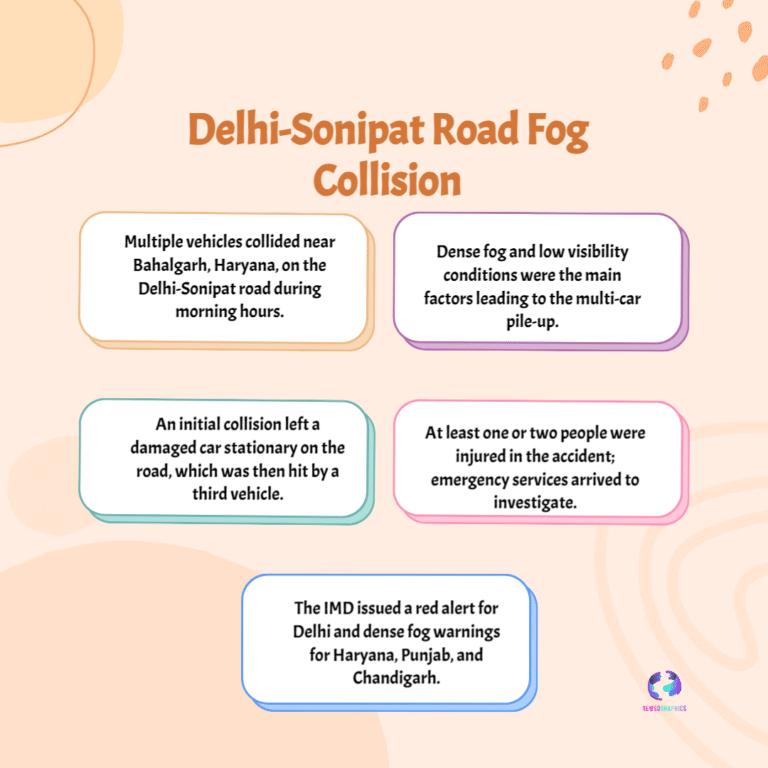
Beyond air and rail travel, dense fog has also hampered road movement across Delhi and the surrounding NCR. Highways witnessed slow-moving traffic, while urban roads saw congestion build as drivers navigated with caution. The combination of fog and cold air created a subdued, almost motionless morning landscape across the city.
Winter Weather Patterns Behind the Disruptions
Meteorological Conditions Lock in the Fog
The persistence of fog is driven by low temperatures, calm winds, and high moisture levels in the air. These conditions allow fog to linger well into daylight hours, delaying the return to normal visibility. When combined with seasonal pollution, the fog becomes thicker and more resistant to dispersal.
Such patterns have become a recurring hallmark of Delhi’s winter climate.
A City Adjusting to Seasonal Disruption
Dense fog has once again highlighted how winter weather reshapes daily life in the capital. With flights delayed, trains slowed, and roads moving cautiously, Delhi’s transport ecosystem operates under constant adjustment during these months. The fog may lift as the day progresses, but its impact on mobility leaves a lasting imprint on the city’s winter rhythm.