

Disturbing details emerging from a rape case in Faridabad highlight grave threats, abuse of power, and persistent challenges in women’s safety and justice delivery.
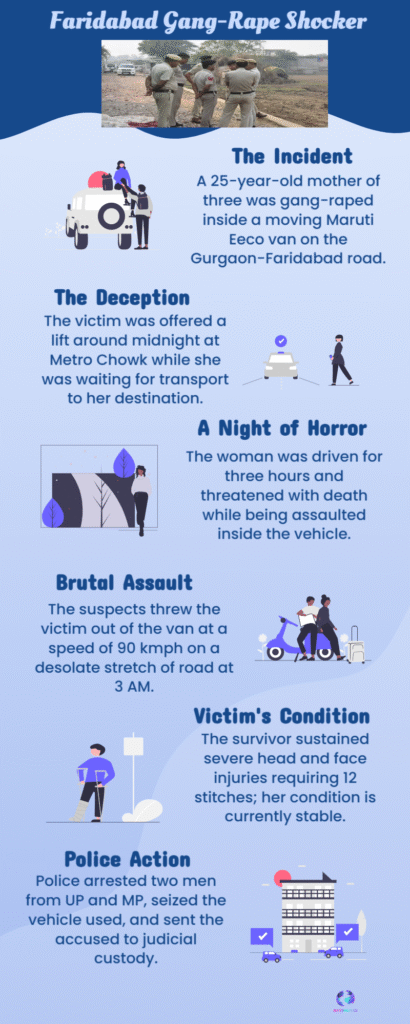
A Crime That Shook Faridabad
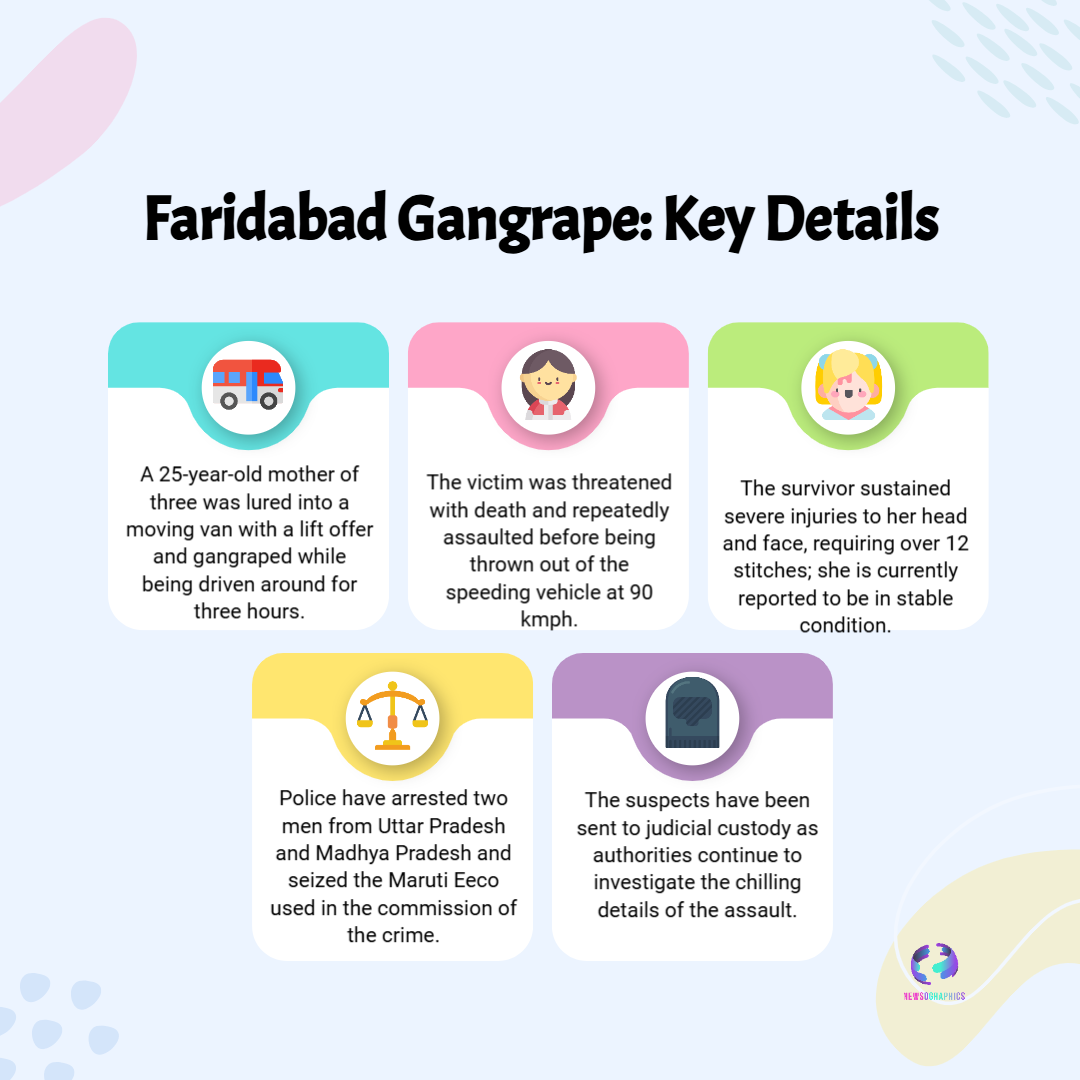
The rape of a woman in Faridabad has surfaced as a deeply disturbing episode, marked by intimidation, coercion, and extreme violence. Details emerging from the case have intensified public concern, revealing how threats were allegedly used to silence the victim and enable prolonged abuse.
The incident has resonated beyond the city, reflecting a broader anxiety about women’s safety in urban and semi-urban India and the conditions that allow such crimes to occur.
Chilling Allegations and Use of Threats
Intimidation as a Tool of Control
According to case details in Faridabad, threats to kill were allegedly employed to overpower the victim and prevent resistance. Such intimidation plays a critical role in sexual violence, stripping victims of agency and reinforcing fear long after the crime itself.
The reported use of threats underscores how violence is often sustained not only through physical force but also through psychological domination.
The Nature of the Assault
The case involves allegations of gang rape, adding another layer of gravity. Crimes involving multiple perpetrators often indicate premeditation and shared impunity, raising serious questions about social conditioning and criminal confidence.
These elements place the incident among the most severe categories of sexual violence under Indian law.
Police Action and the Legal Process
Registration of the Case
Law enforcement authorities registered the complaint following the victim’s statement, initiating formal investigation procedures. The legal process now centers on evidence collection, medical examination reports, and corroborative testimonies.
Such cases test the responsiveness and sensitivity of investigative mechanisms, particularly in ensuring that victims are protected from further harm or pressure.
Investigation Under Scrutiny
As details come to light, scrutiny of the investigation has intensified. Public attention often sharpens expectations around arrests, charge framing, and procedural transparency, especially in crimes that provoke widespread outrage.
The manner in which authorities handle the case is being closely observed as a measure of institutional accountability.
Broader Context of Violence Against Women
A Pattern That Repeats
The Faridabad case fits into a larger national pattern where sexual violence is frequently accompanied by threats and intimidation. These tactics not only facilitate the crime but also discourage reporting, perpetuating cycles of abuse.
Despite legal reforms and heightened awareness, such incidents continue to expose gaps between statutory protections and lived realities.
Social and Structural Dimensions
Sexual violence is rarely an isolated act. It often intersects with power imbalances, social silence, and fear of stigma. When threats are involved, these factors are amplified, creating conditions where perpetrators believe consequences can be avoided.
This dynamic points to deeper societal and structural challenges that extend beyond individual criminal acts.
Public Reaction and Demand for Accountability
The revelations from the case have sparked anger and concern, with citizens and civil society voices calling for swift justice. Such reactions reflect collective frustration over recurring incidents and perceived inadequacies in deterrence.
Public discourse has increasingly focused on the need for credible enforcement of laws rather than symbolic assurances.
A Stark Reminder of Unfinished Work
The Faridabad rape case stands as a grim reminder of the persistent risks faced by women and the urgent need for systemic vigilance. Beyond the specifics of one investigation, it exposes enduring vulnerabilities within social, legal, and enforcement frameworks.
As the case progresses through the justice system, it carries significance not only for the individuals involved but also for the broader conversation on safety, dignity, and accountability in contemporary India.