

South Africa rejected the US attempt to accept the G20 presidency handover by a junior diplomat, citing a breach of protocol. Analyze this diplomatic friction, the US boycott, and the rise of the Global South agenda.
South Africa US G20 Presidency Handover Protocol Dispute
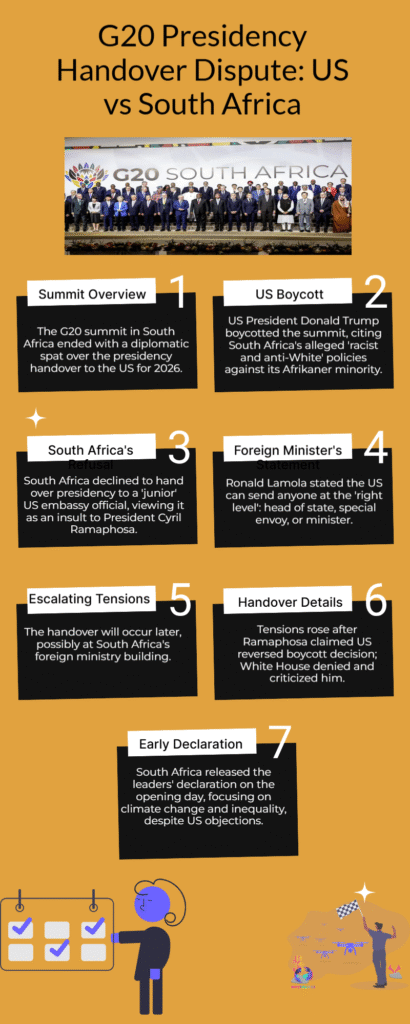
The G20 Leaders’ Summit in Johannesburg, South Africa, concluded amidst a pointed diplomatic confrontation between the host nation and the United States, which had ordered a high-profile boycott of the event. The friction culminated in South Africa’s outright refusal to accept the G20 presidency handover to a “junior” American diplomat, citing a fundamental breach of protocol and demanding representation “at the right level.”
The controversy was rooted in the decision by US President Donald Trump to skip the summit entirely due to alleged diplomatic rifts and strong opposition to the agenda’s focus on climate change and Global South development. Despite the total absence from the talks.
South African President Cyril Ramaphosa and Foreign Minister Ronald Lamola swiftly and firmly rejected the offer. Ramaphosa’s spokesman, Vincent Magwenya, clarified that the handover, which occurs at a Leaders’ Summit attended by Heads of State and Government, requires a corresponding level of seniority. Lamola explained the necessary diplomatic protocol, stating that the US, as a G20 member, needed to send the head of state, a minister, or a properly designated special envoy.
Allowing a charge d’affaires—a temporary, subordinate diplomatic post—to accept the gavel from the President of the host nation would have been widely interpreted as a profound snub to South Africa’s international stature and the importance of the multilateral forum itself. The refusal was, therefore, an act of geopolitical signaling, asserting that G20 members must respect the gravity and established conventions of the intergovernmental organization.