
After a devastating Goa club fire killed 25 people, the owners fled to Thailand on an IndiGo flight. Police said there was “intent to avoid” responsibility. Here’s the unfolding investigation and the systemic failures behind the tragedy.

A Deadly Night That Shook Goa
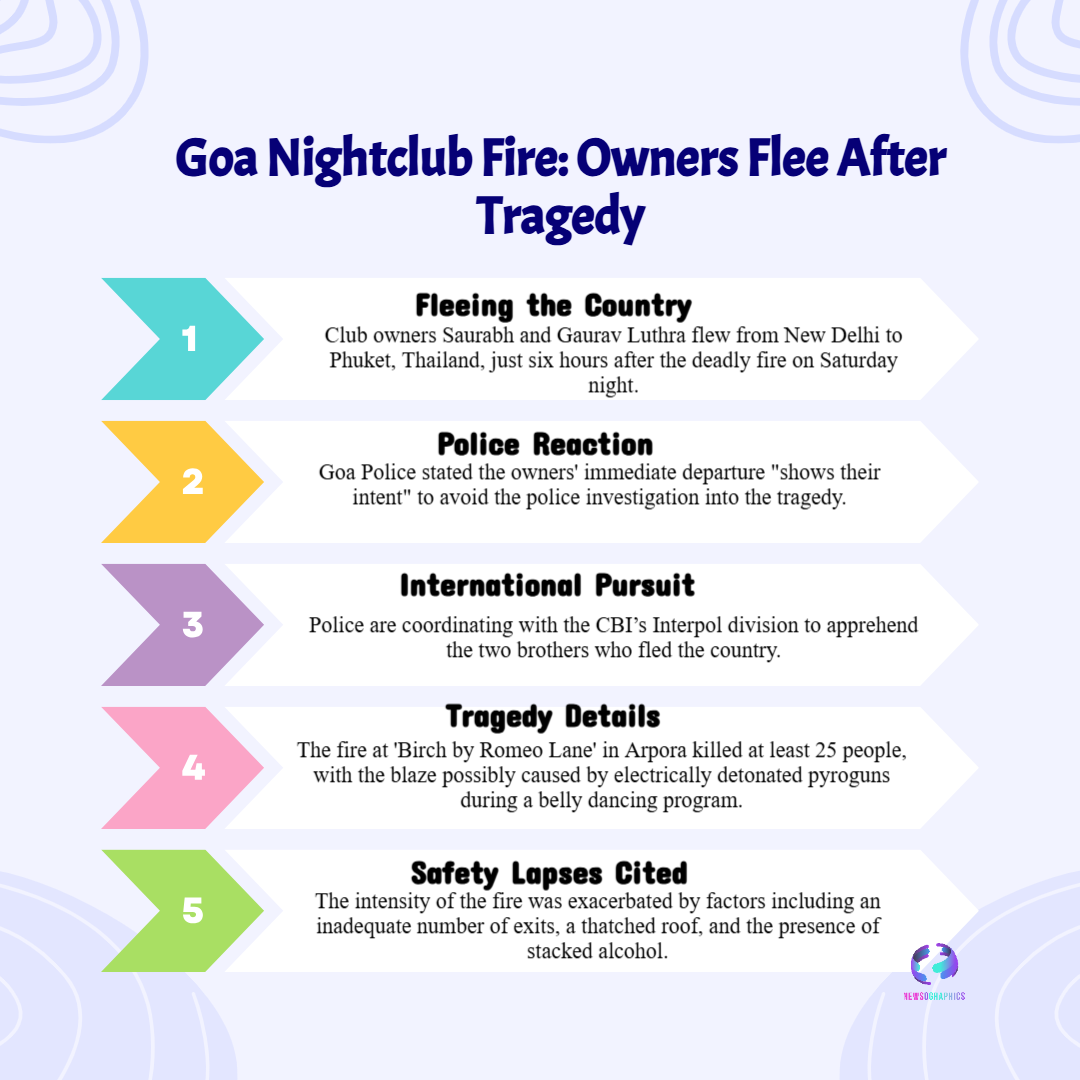
A horrific fire at a popular Goa club claimed 25 lives, turning a night of entertainment into a scene of chaos, smoke, and irreversible tragedy. Even before the ashes settled, the incident took a dramatic turn: the owners fled India on an IndiGo flight to Thailand, triggering nationwide outrage and raising questions about systemic loopholes.
The police later issued a striking statement, saying the owners’ actions showed “intent to avoid” the investigation — a phrase that has since become central to the public debate on accountability.
How the Owners Escaped — and Why It Matters
Leaving India Within Hours
The Goa Nightclub owners boarded an IndiGo flight soon after the tragedy and reportedly left for Thailand. Their swift departure raised an immediate red flag: did they flee to escape criminal liability?
Authorities now believe the timing and method of their departure reflect deliberate avoidance, not coincidence.
The Police Standpoint
According to Goa Police, the behaviour of the owners showed clear indicators of intentional evasion, reinforcing suspicions that they were aware of potential charges ranging from negligence to culpable homicide.
The Goa Nightclub case has reignited debate about how easily key suspects in high-profile cases can leave the country before formal notices or lookouts are issued.
Inside the Fire: What Preliminary Findings Suggest
Safety Violations and Structural Neglect
Early assessments point to likely safety breaches in the club’s operation. Investigators are examining:
- emergency exits and their accessibility,
- fire equipment compliance,
- building permissions,
- electrical load capacity,
- crowd management protocols.
Such lapses, if proven, would underscore a recurring problem in Indian nightlife hubs — commercial establishments stretching regulations while authorities overlook violations.
How the Blaze Turned Catastrophic
Witnesses described flames spreading rapidly, followed by panic when escape routes became clogged or inaccessible. The high casualty count reflects not just the fire’s intensity but systemic failures in preparedness.
Public Outrage and the Bigger Question of Accountability
Anger Over the Escape
The escape of the club owners has intensified public anger. Families of victims demand answers: How could the main accused leave the country so easily?
The optics of a tragedy followed by a swift international flight have amplified mistrust in regulatory vigilance.
Pressure on Authorities
The government and law enforcement are under growing pressure to:
- locate and bring back the absconding owners,
- conduct a transparent inquiry,
- identify lapses by municipal and licensing bodies,
- ensure similar establishments undergo safety audits.
The IndiGo Angle: A Catalyst, Not the Cause
A Routine International Flight, A Non-Routine Escape
IndiGo Airlines finds itself indirectly tied to the controversy because it was the carrier used by the fleeing owners. While the airline followed procedure — no alerts or notices were issued at the time — the situation reignites debate over real-time coordination between police databases and airports.
Should Exit Controls Be Stronger?
The incident highlights a key gap: authorities often begin issuing lookout notices after suspects have fled. Experts argue for:
- faster trigger mechanisms for high-risk cases,
- real-time integration of police alerts with airline systems,
- stronger protocols after mass-casualty incidents.
What Happens Next: The Investigation Ahead
Tracking the Owners Abroad
Goa Police are coordinating with central agencies to locate the owners in Thailand and initiate procedures for their return. Extradition or deportation may come into play depending on cooperation from Thai authorities.
The Legal Charges They May Face
Potential charges include:
- causing death by negligence,
- operating unsafe premises,
- violations of fire safety laws,
- evading investigation.
Successful prosecution will depend on:
- forensic analysis,
- compliance records,
- eyewitness accounts,
- structural evaluations.
A Wake-Up Call for India’s Nightlife and Safety Ecosystem
This tragedy is not an isolated incident but part of a pattern — commercial venues expanding rapidly while safety enforcement lags behind.
The case has forced India to reexamine:
- whether licensing bodies conduct meaningful inspections,
- if fire audits are genuine or procedural,
- how emergency protocols can be modernized,
- and how to close loopholes that allow suspects to flee.
Final Thoughts
The Goa club fire is a devastating reminder of the cost of oversight failures — not only in fire safety but in legal accountability. As the investigation continues, the nation watches closely to see whether justice keeps pace with the outrage.
The tragedy claimed 25 lives. The aftermath now tests India’s resolve to ensure such a disaster, and such an escape, never happen again.