
Investigators probing the Goa nightclub fire have rejected Saurabh and Gaurav Luthra’s claim that they were in Thailand for business. Here’s what this courtroom clash reveals about the evidence, the investigation, and its broader implications.
The Core of the Dispute: Thailand Trip Under Scrutiny
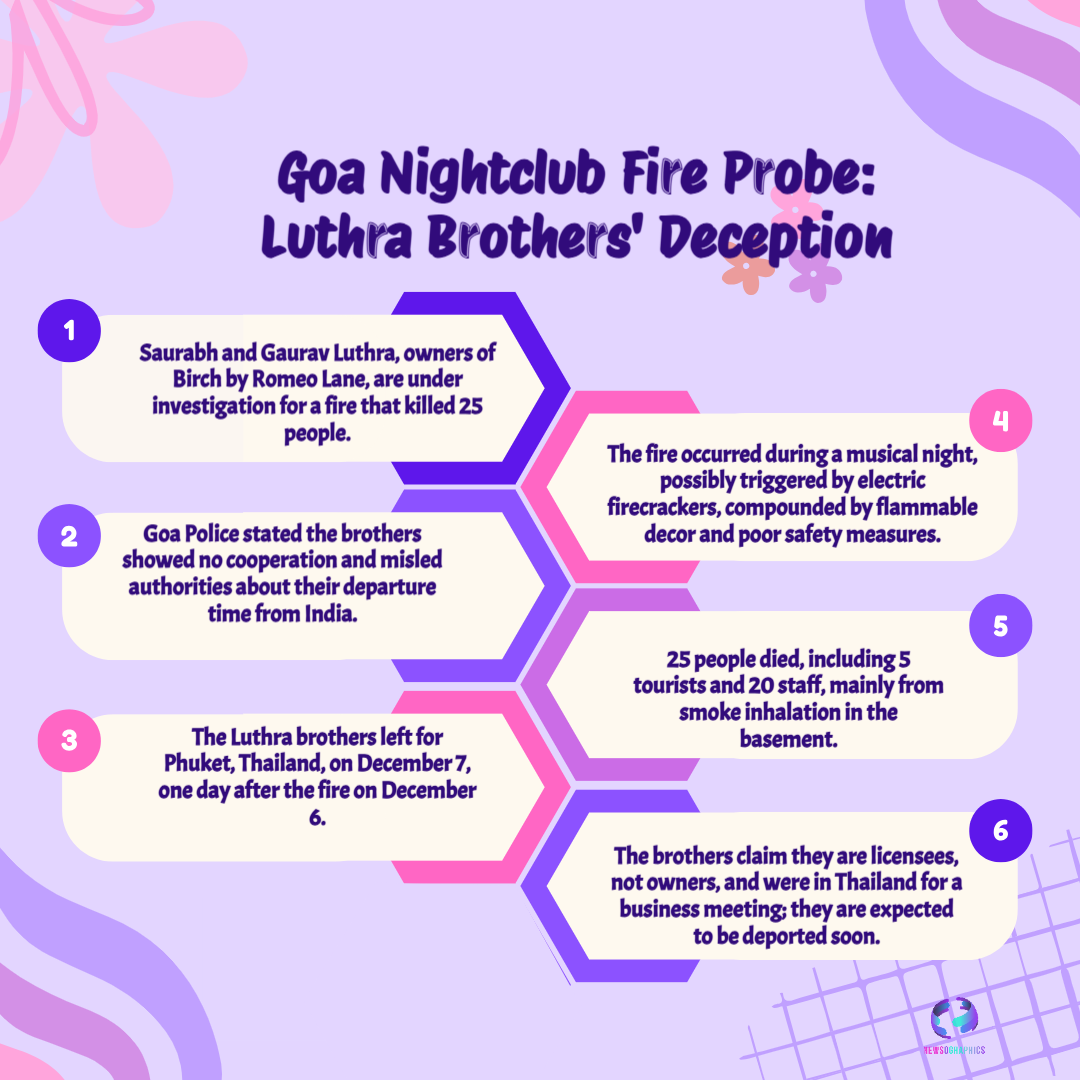
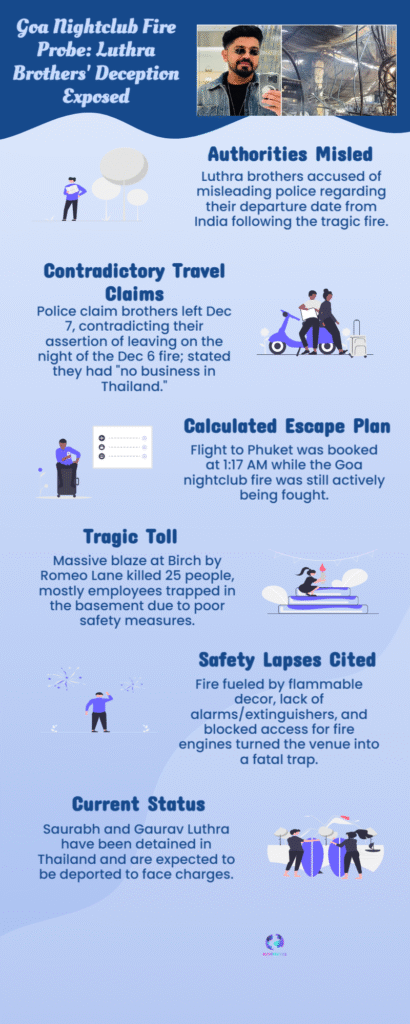
In a significant development in the Goa nightclub fire investigation, police told the court that Saurabh and Gaurav Luthra had “no business” requiring their presence in Thailand—directly challenging the brothers’ claim that they were abroad for professional purposes. This confrontation forms a key moment in the evolving probe, revealing both the investigative direction and the credibility battles shaping the case.
The Thailand trip has become more than a travel detail; it is now a point of contention that may influence how the court perceives motive, intent, and cooperation with the investigation.
Why the Thailand Claim Matters in the Investigation
A Question of Intent and Transparency
When suspects assert they were abroad for business, they imply legitimacy and routine travel. Police disputing this narrative raises questions such as:
- Was the trip an attempt to avoid scrutiny or delay questioning?
- Are there inconsistencies in the timeline that investigators view as significant?
- Does the lack of business purpose impact the assessment of their conduct leading up to or following the fire?
Such disputes often help courts evaluate whether accused individuals are fully cooperating or attempting to distance themselves from events.
Establishing Credibility
In criminal investigations, especially those involving public safety failures, credibility becomes crucial. Any inconsistency in statements—from travel rationale to operational roles—can affect how the court views subsequent explanations.
Contextualizing the Brothers’ Role in the Nightclub
The Luthra brothers, associated with management aspects of the establishment under investigation, are central to understanding how responsibility and oversight may have played into the fire incident. Their movements and explanations are therefore subject to heightened scrutiny.
The Investigative Lens: How Police Build Their Argument
Verification of Business Claims
Investigators typically verify overseas business activity through:
- Corporate records
- Contracts or scheduled meetings
- Financial transactions
- Communications related to work obligations
If these checks do not align with the accused’s statements, police may argue that the trip lacks legitimate grounds.
Reconstructing the Timeline
Understanding the brothers’ timeline before, during, and after the fire helps investigators determine:
- Whether they were aware of safety lapses
- Whether their travel was pre-planned or reactive
- Whether anyone attempted to evade responsibility
Police asserting there was “no business” in Thailand suggests they believe the timeline contains red flags.
Presenting Findings in Court
When police present such challenges to the court, they aim to:
- Influence bail considerations
- Demonstrate risk of evasion
- Underscore the seriousness of the allegations
This forms part of a broader investigative strategy to establish custodial needs or strengthen the case narrative.
What the Courtroom Clash Reveals About the Case So Far
Heightened Judicial Scrutiny
Courts take conflicting claims seriously, especially in cases involving loss of life or large-scale public endangerment. The dispute over the Thailand trip adds another dimension for judicial assessment as the probe progresses.
A Focus on Accountability
The Goa nightclub fire triggered strong public reactions, driving expectations of transparent, thorough, and unbiased investigation. Challenges to defendants’ claims often reflect the broader effort to uphold accountability across all parties involved.
Potential Impact on Future Proceedings
While a disputed travel claim alone does not determine guilt, it can influence:
- Custody decisions
- Assessment of cooperation
- Perception of credibility
- The direction of investigative questioning
Such elements can shape how subsequent evidence is interpreted.
The Larger Context: Safety, Compliance, and Public Trust
The Fire as a Catalyst for Examining Nightlife Safety
The tragic nightclub fire has intensified scrutiny of safety protocols, licensing structures, and oversight mechanisms in Goa’s hospitality sector. Cases like this often expose systemic gaps—from fire exits to electrical compliance—that extend far beyond one establishment.
Public Demand for Transparency
In incidents with intense media coverage, public confidence hinges on the clarity and integrity of investigative updates. Disputed claims, such as the Thailand business rationale, become focal points for understanding whether authorities are closing in on factual truth.
The Balance Between Rights and Responsibility
Accused individuals retain the right to defend themselves, present explanations, and challenge investigative assertions. Simultaneously, law enforcement must validate or refute such claims using evidence. The interplay between these forces defines the fairness and rigor of the judicial process.
What Comes Next in the Investigation
As hearings continue, key questions will shape the trajectory of the case:
- Will the court seek additional documentation regarding the Thailand trip?
- How will the brothers respond to the police’s assertion?
- Will further scrutiny of their role at the nightclub reveal new operational lapses?
- How will the investigation evolve as forensic, administrative, and testimonial evidence is consolidated?
The coming stages will likely offer a clearer picture of responsibility, compliance failures, and potential criminal liabilities.