


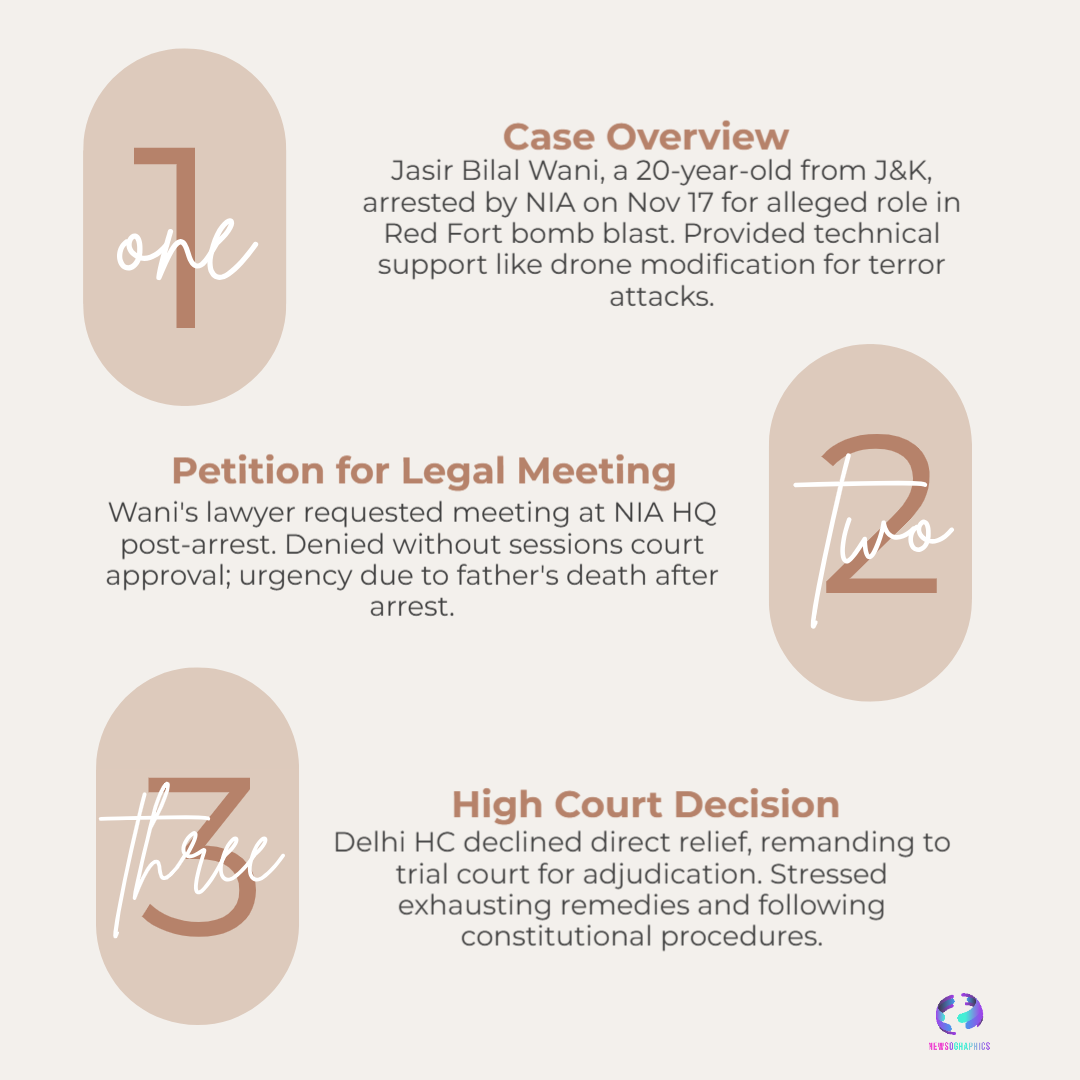
The Delhi High Court declined Jasir Bilal Wani’s request to meet his lawyer at the NIA HQ during custody, citing procedural issues. We analyze the right to counsel and the Red Fort blast conspiracy investigation.
Delhi High Court Declines Terror Accused
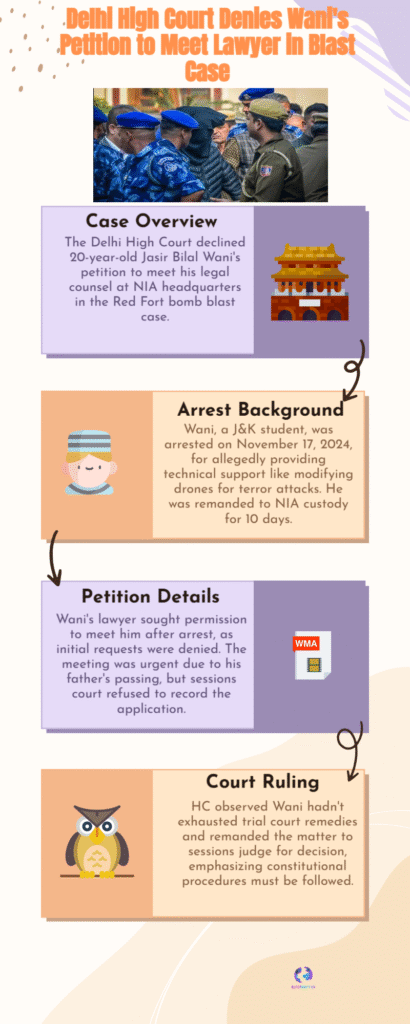
In a high-stakes legal proceeding centered on the balance between national security investigations and the constitutional rights of the accused, the Delhi High Court on Friday declined a petition filed by Jasir Bilal Wani, an alleged co-conspirator in the deadly Red Fort car blast case. The petition sought urgent directions permitting Wani to meet his legal counsel at the National Investigation Agency (NIA HQ) where he is currently undergoing custodial interrogation.
Justice Swarana Kanta Sharma of the Delhi High Court ultimately remanded the matter back to the concerned Sessions Judge, refusing to devise an “exceptional procedure” based solely on the oral submission of Wani’s counsel that the lower court had already rejected the request. The Judge cautioned that such an unprecedented move would set a troubling precedent, emphasizing that the court system must adhere strictly to established judicial norms. This ruling immediately focuses attention on the procedural diligence required in seeking relief, even when involving fundamental rights like the right to consult a lawyer, as enshrined under Article 22 of the Constitution.