




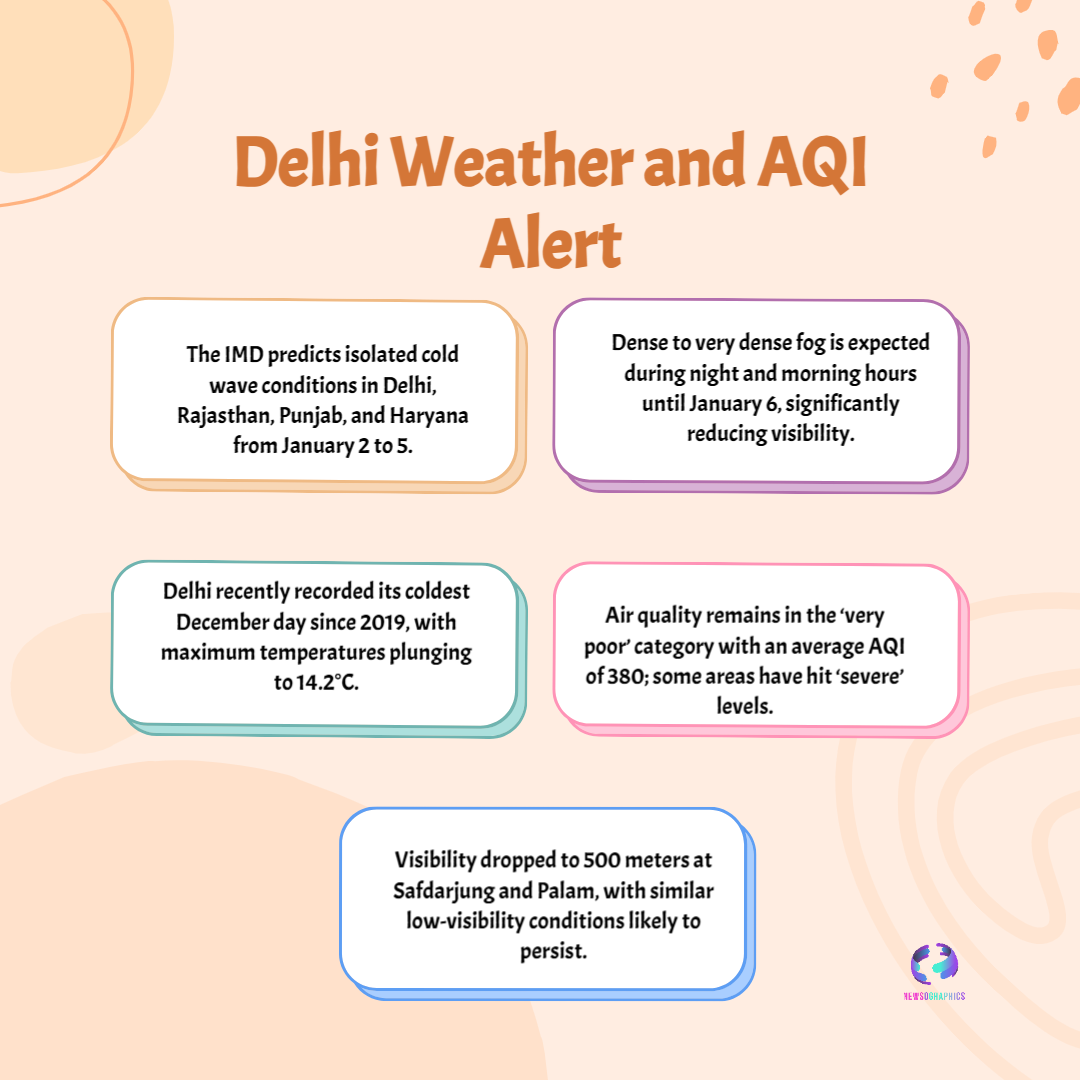
Delhi is set to experience a cold wave and dense fog, according to IMD, with AQI persisting in the very poor category amid harsh winter conditions.
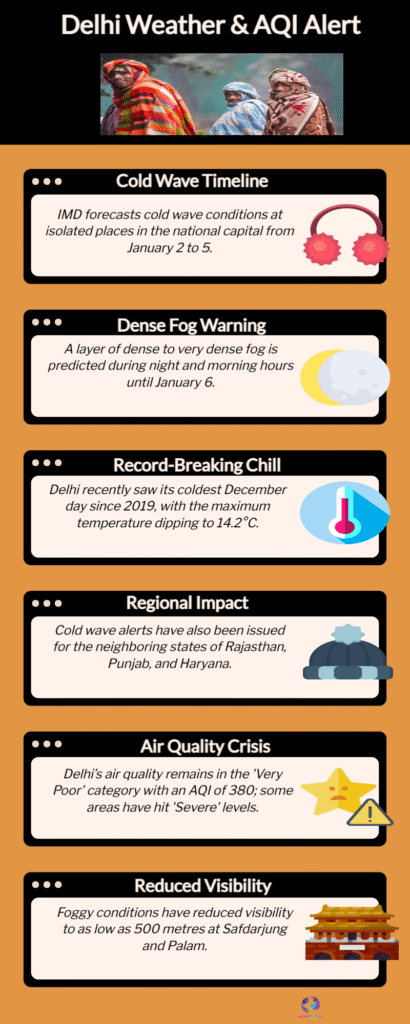
Winter Tightens Its Grip on the National Capital
Delhi is entering a sharper phase of winter as the India Meteorological Department (IMD) signals the onset of cold wave conditions accompanied by persistent fog. The forecast points to a sustained drop in minimum temperatures, intensifying the seasonal chill across the capital and its surrounding regions.
These weather patterns are unfolding against a backdrop of compromised air quality, creating a convergence of meteorological and environmental stress that typically defines peak winter in north India.
Cold Wave Conditions Take Shape
Falling Temperatures and Nighttime Chill
Cold wave conditions are characterised by temperatures dipping significantly below seasonal averages, particularly during nighttime and early morning hours. In Delhi, this translates into colder mornings, reduced thermal comfort, and heightened demand for heating and protective measures.
The IMD’s assessment reflects stable atmospheric conditions that limit heat retention, allowing cold air to dominate the lower layers of the atmosphere.
Regional Influence and Wind Patterns
Light winds and clear skies during night hours are contributing to rapid heat loss from the surface. The absence of strong air movement prevents temperature moderation, allowing cold pockets to persist across urban and semi-urban zones.
Dense Fog Likely to Disrupt Visibility
Morning Fog Episodes
Fog formation is expected to intensify during early morning hours, reducing visibility across roads, rail corridors, and airport zones. Dense fog is a recurring winter phenomenon in the Indo-Gangetic plains, driven by high moisture levels and low temperatures.
Such conditions often linger until late morning, gradually dispersing as sunlight warms the surface.
Impact on Daily Movement
While fog is primarily a weather event, its consequences extend into daily life, slowing traffic flow and complicating transport schedules. The forecast indicates that fog episodes may occur intermittently rather than as isolated events.
Air Quality Remains in the Very Poor Category
Pollution Trapped by Weather Conditions
Delhi’s air quality has remained firmly in the “very poor” category, reflecting high concentrations of particulate matter. Cold, calm conditions restrict vertical air movement, effectively trapping pollutants close to the ground.
This atmospheric stagnation reduces natural dispersion, allowing emissions from vehicles, industry, and other sources to accumulate.
Seasonal Pattern of Winter Pollution
Winter months consistently witness deterioration in air quality due to a combination of emissions and unfavourable meteorology. The current conditions align with this broader seasonal trend, where cold waves and fog episodes coincide with elevated pollution levels.
Meteorology and Air Quality: A Compounding Effect
The interaction between cold wave conditions, fog, and pollution creates a reinforcing cycle. Low temperatures and weak winds support fog formation, while the same factors inhibit pollutant dispersal. In turn, suspended particles further reduce visibility and sunlight penetration, prolonging cold and foggy conditions.
This convergence highlights the complex linkage between weather systems and environmental health in urban settings like Delhi.
Winter Outlook for the Capital
The IMD forecast suggests that these conditions are not fleeting but part of a broader winter phase. As the season advances, fluctuations may occur, but cold spells and fog are likely to recur, particularly during night and early morning periods.
Delhi’s winter narrative continues to be shaped by this dual challenge of harsh weather and persistent air pollution, marking another chapter in the city’s annual struggle with seasonal extremes.