


India has formally objected to Mexico’s recent tariff hike, warning of retaliatory steps as trade tensions rise and bilateral commerce faces new uncertainty.
Rising Strains in India–Mexico Trade Relations
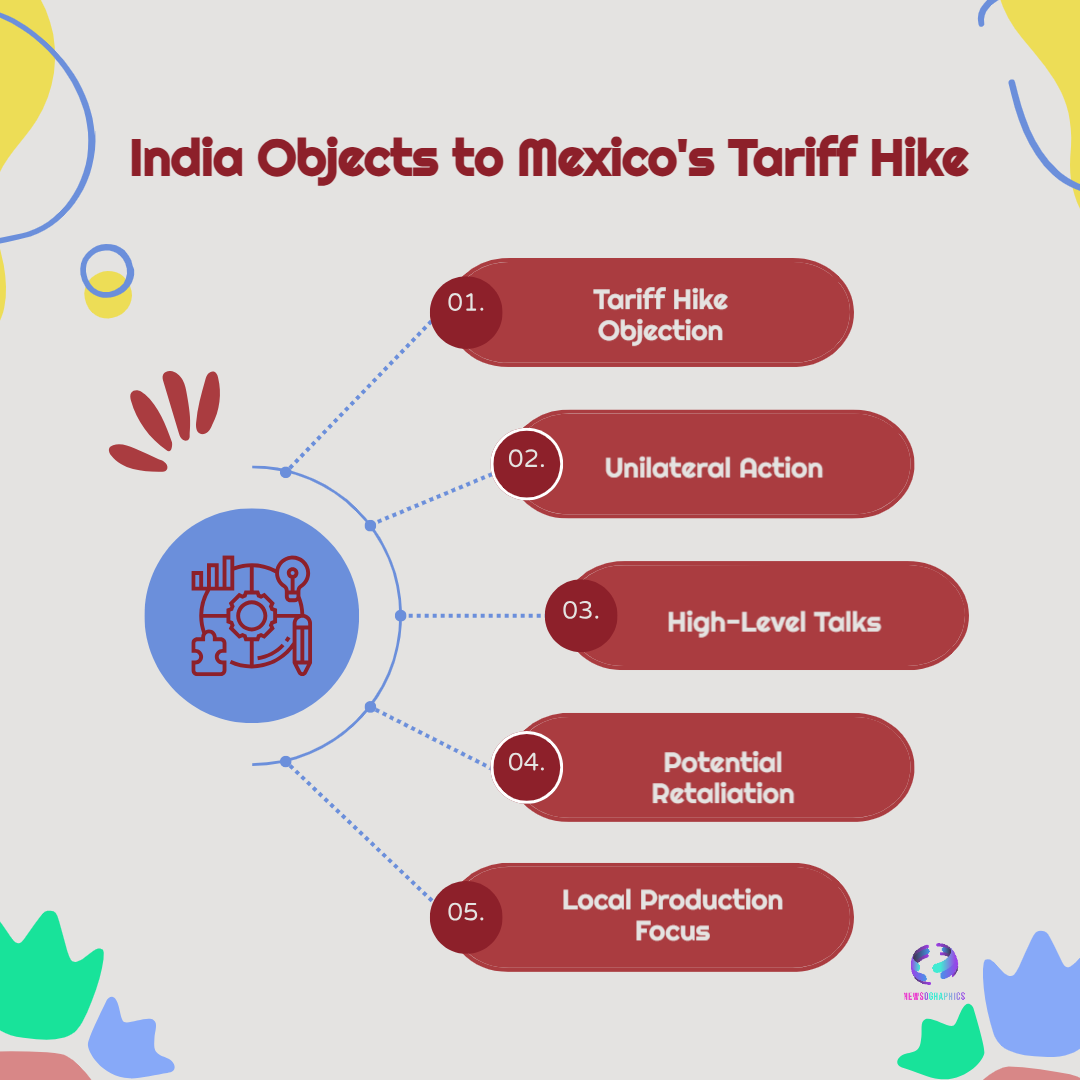
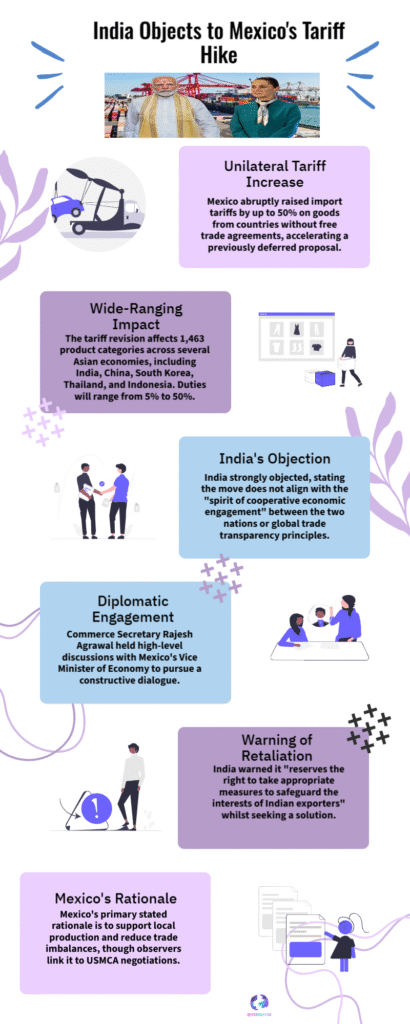
Trade relations between India and Mexico have entered a more confrontational phase after New Delhi raised strong objections to Mexico’s recent decision to increase tariffs on selected imports. The move has prompted India to formally register its concerns, warning that continued restrictions could lead to proportionate retaliatory measures.
The development marks a notable shift in what has traditionally been a stable and expanding bilateral trade relationship, especially as both countries have sought to diversify global supply chains and reduce overdependence on traditional markets.
Understanding the Tariff Hike
Mexico’s tariff adjustment targets specific categories of imported goods, a step justified domestically as a protective measure for local industries. However, Indian authorities view the increase as discriminatory in effect, arguing that it undermines fair market access and disrupts established trade flows.
For Indian exporters, the tariff hike translates into reduced competitiveness in the Mexican market, particularly in sectors where price sensitivity is high. The concern is not limited to immediate losses but extends to longer-term uncertainty for businesses that have invested in Mexico-facing supply chains.
India’s Response and Diplomatic Signaling
India’s objection has been communicated through formal trade and diplomatic channels, emphasizing adherence to global trade norms and the importance of predictable tariff regimes. The warning of retaliatory measures is widely seen as a signal rather than an immediate escalation, reflecting India’s preference for resolution through dialogue.
At the same time, the message is unambiguous: prolonged tariff barriers may compel India to reassess its own trade concessions, potentially affecting Mexican exports that rely on the Indian market.
Economic and Strategic Implications
Impact on Bilateral Trade
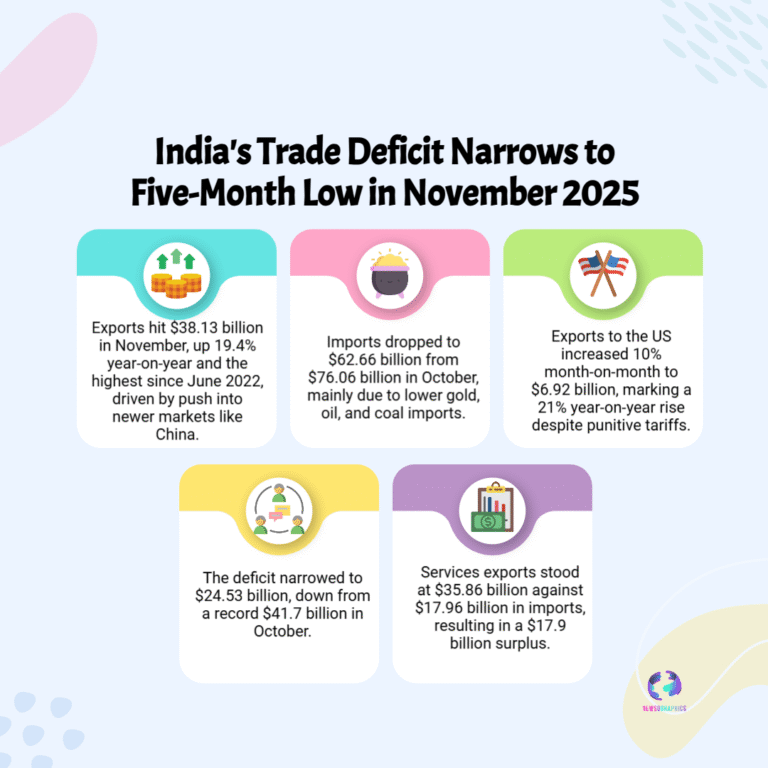
India–Mexico trade has grown steadily in recent years, spanning pharmaceuticals, automotive components, chemicals, textiles, and information technology services. Any sustained tariff dispute risks slowing this momentum, affecting not just exporters but also downstream industries and employment.
Broader Global Trade Context
The dispute unfolds against a backdrop of heightened global trade protectionism. With many economies recalibrating trade policies to shield domestic industries, such bilateral frictions are becoming more frequent. For emerging economies like India and Mexico, managing these tensions without derailing growth remains a delicate balancing act.
Scope for Negotiation and De-escalation
Despite the sharp tone, both sides retain incentives to avoid a full-fledged trade confrontation. Mexico values India as a growing market and strategic partner beyond the Americas, while India sees Latin America as a critical frontier for export diversification.
Trade experts note that tariff disputes often evolve into negotiation opportunities, where sector-specific concerns are addressed through exemptions, phased adjustments, or reciprocal concessions.
What Lies Ahead
The coming weeks will be crucial in determining whether the disagreement hardens into reciprocal trade barriers or is resolved through diplomatic engagement. India’s warning of retaliation underscores its readiness to defend trade interests, but it also leaves room for dialogue.
For businesses and investors, the episode serves as a reminder of the volatility inherent in global trade policy and the importance of monitoring geopolitical and economic signals that can reshape market access overnight.