

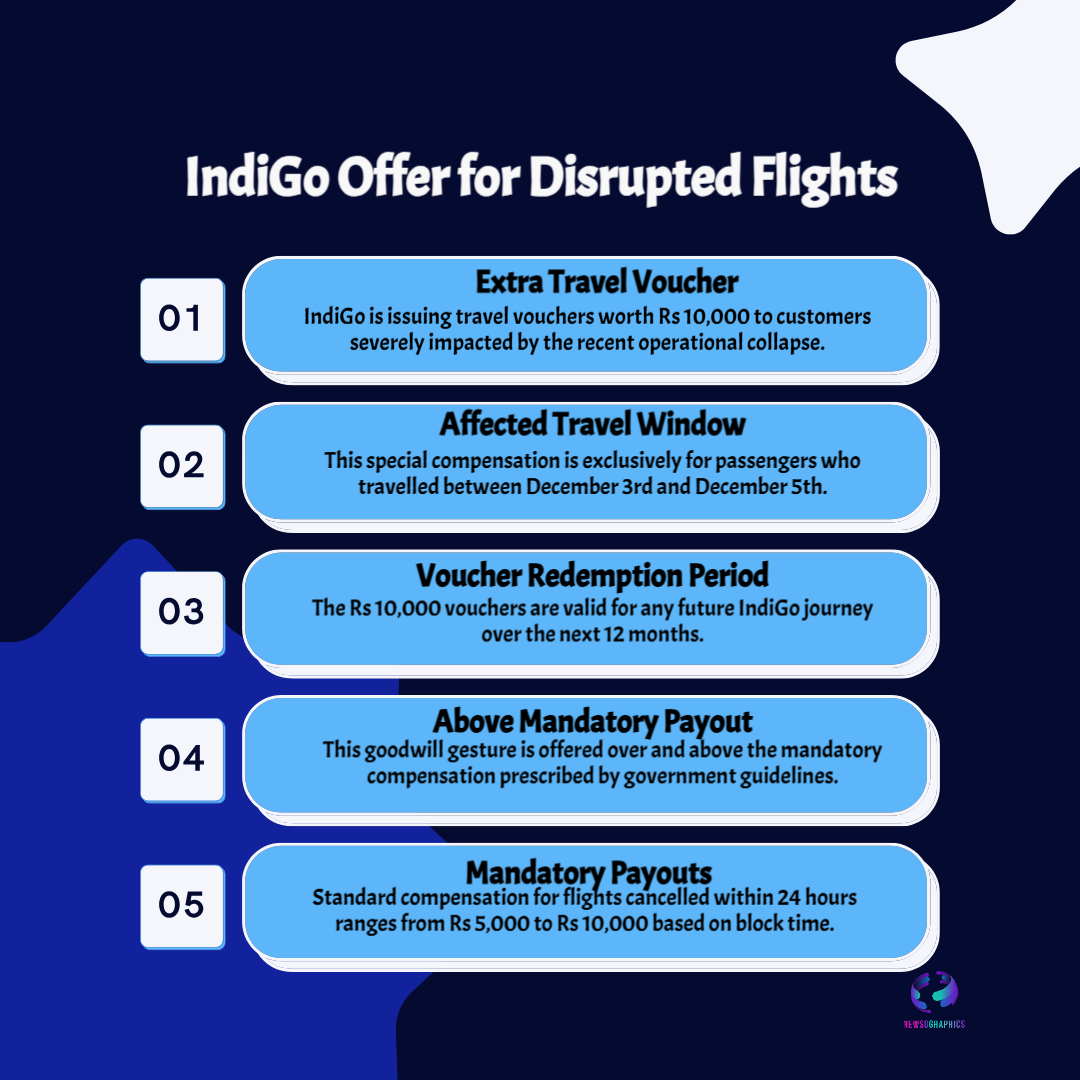
IndiGo is offering an additional ₹10,000 travel voucher to passengers severely impacted during the December 3–5 disruption. Learn what the move means, eligibility insights, and how it reflects evolving airline customer-care standards.
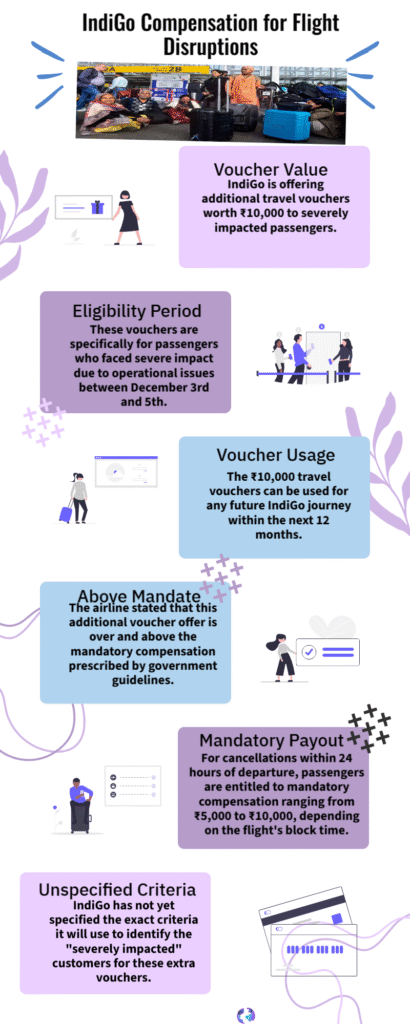
Understanding IndiGo’s Additional ₹10,000 Travel Voucher Announcement
When IndiGo introduced an additional ₹10,000 travel voucher for passengers severely affected during the December 3–5 disruption, the move signaled a shift toward more proactive accountability. While airlines typically offer rebooking, refunds, or modest credits, an added voucher of this scale stands out—both in value and in what it communicates about evolving customer-care expectations in India’s aviation market.
The gesture underscores two parallel realities: the operational challenges carriers face during widespread disruptions and the growing pressure to provide tangible, customer-centric remedies that restore trust.
Why the December 3–5 Disruption Matters
A High-Impact Operational Event
Large-scale operational interruptions—whether weather-related, infrastructural, or system-driven—can cascade quickly across routes, leaving thousands of passengers stranded or rescheduled. The affected December window appears to have been one such period where delays and cancellations significantly disrupted travel plans.
The Need for Stronger Service Recovery
Airlines have long been critiqued for inconsistent handling of mass disruptions. IndiGo’s decision to expand compensation beyond standard policies suggests a recognition that service recovery must match the magnitude of inconvenience caused.
What the Additional Voucher Suggests About Airline Compensation Trends
More Meaningful Remedial Measures
A ₹10,000 voucher is not symbolic; it is a material offering that can meaningfully offset future travel costs. This positions IndiGo’s response among the more generous customer-care approaches seen in the region.
A Competitive Push in the Market
India’s aviation sector has intensified in competition. As carriers seek to differentiate themselves, customer trust becomes a currency—and compensation policies increasingly function as retention tools rather than mere damage-control measures.
Acknowledgment of Severe Impact Categories
Not all passengers are equally affected during operational meltdowns. The airline’s use of “severely impacted” indicates a tiered internal classification, likely based on factors such as prolonged delays, missed connections, or overnight stranding.
What Impacted Passengers Should Expect
Clearer Communication Channels
Compensation programs of this scale require streamlined communication: email notifications, SMS updates, app alerts, and self-service channels that detail voucher availability and redemption timelines.
Transparent Eligibility Guidelines
While IndiGo has acknowledged “severely impacted” flyers as the target group, passengers typically expect clarity on:
- How severity is defined
- Whether rebooked or refunded passengers qualify
- The voucher’s validity period
- Applicable routes, fare classes, or blackout dates
Airlines increasingly publish this information to reduce confusion and support smoother customer interactions.
Redemption Experience Improvements
Large voucher distributions demand robust digital infrastructure. A seamless redemption experience—easy application during booking, visible balance tracking, and straightforward terms—directly influences whether customers feel adequately compensated.
The Larger Conversation: Passenger Rights and Accountability
Rising Consumer Expectations
Indian passengers today are more informed, more vocal, and more aware of global airline standards. Disruptions once considered an inevitable part of travel are now scrutinized, elevating expectations for fair treatment.
Pressure for Policy Standardization
India lacks a comprehensive, uniform compensation mandate comparable to certain international frameworks. As airlines independently introduce compensation measures, discussions around standardized rights—especially for severe delays and cancellations—continue to gain traction.
A Shift Toward Empathy-Driven Operations
Modern aviation customer care increasingly emphasizes empathy: acknowledging lost time, stress, and financial impact. IndiGo’s additional voucher aligns with this global shift toward human-centered recovery practices.
How This Move Could Influence Future Aviation Policies
Benchmarking for Other Airlines
A major carrier offering substantial vouchers sets precedent. Competitors may feel compelled to revisit their own disruption-handling strategies, driving an industry-wide recalibration.
Strengthening Long-Term Brand Loyalty
High-visibility compensations not only address immediate customer dissatisfaction but also shape how passengers perceive the brand in emergencies. This can significantly influence long-term loyalty in an industry where margin for service missteps is narrow.
Encouraging Regulatory Evolution
Visible corporate goodwill often sparks conversations about codified protections. The more airlines voluntarily elevate compensation standards, the more likely regulators are to formalize frameworks that protect travelers consistently.
What Passengers Can Take Away
IndiGo’s additional ₹10,000 travel voucher is more than a goodwill gesture—it’s a reflection of shifting consumer expectations and a sign of maturing service accountability in Indian aviation. For affected flyers, it offers tangible relief. For the industry, it creates a reference point for how disruptions should be addressed in the future.
Airline disruptions will continue to occur. What’s changing—slowly but meaningfully—is how carriers respond. IndiGo’s move may well contribute to a broader evolution in how Indian airlines manage large-scale service interruptions and engage with passengers during their most stressful travel moments.