


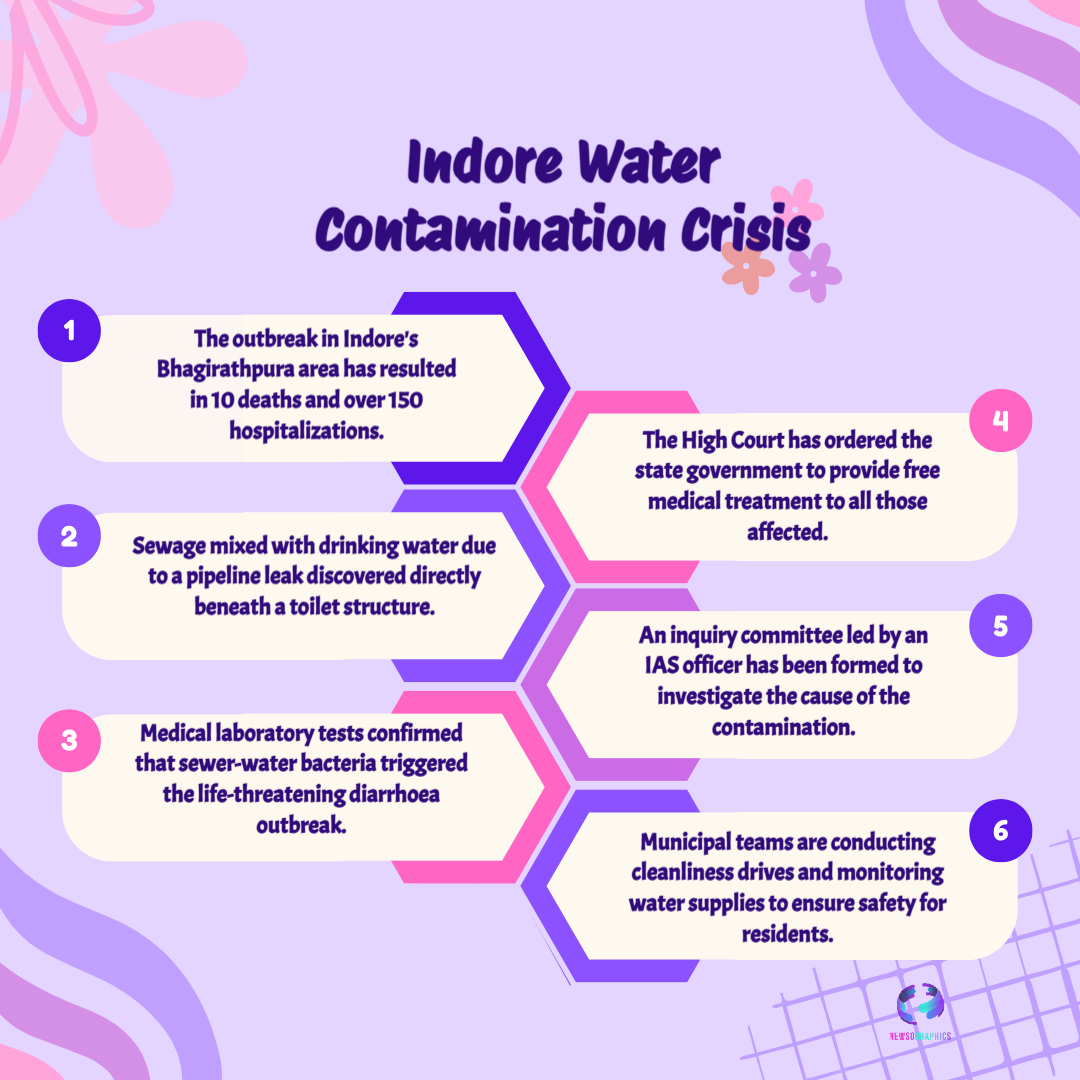
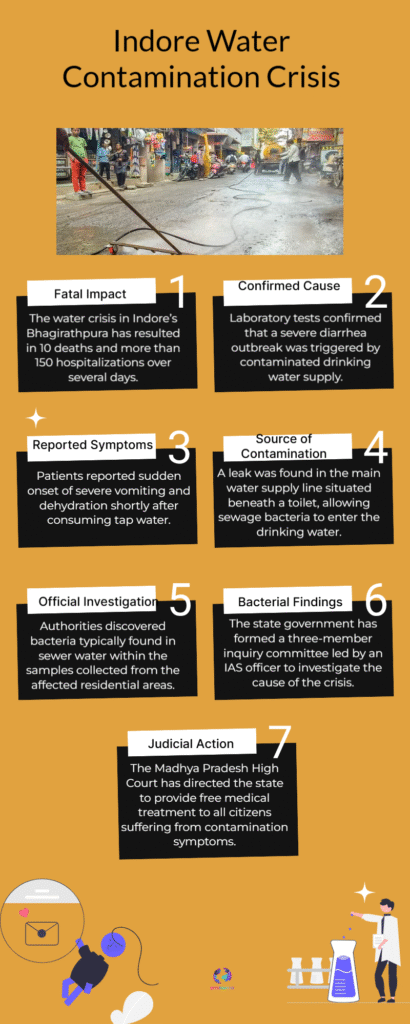
A labourer’s death during the Indore water contamination crisis has intensified concerns over urban water safety, public health accountability, and systemic neglect.
A Death That Brought the Crisis Home
The water contamination crisis in Indore moved from alarming headlines to painful reality with the death of a daily-wage labourer whose family described relentless vomiting and rapid physical decline. The account, stark and unembellished, underscored how quickly contaminated water can turn from a civic inconvenience into a fatal threat. In a city accustomed to routine water supply complaints, this incident forced a collective reckoning with the consequences of systemic neglect.
For families living on the margins, access to safe water is not a lifestyle choice but a fragile necessity. The labourer’s final hours, marked by dehydration and distress, highlighted the unequal burden borne by those least equipped to seek private medical care or alternative water sources.
Understanding the Indore Water Contamination Crisis
How Contamination Takes Hold
Urban water contamination often emerges from a convergence of aging pipelines, sewage intrusion, and lapses in monitoring. In Indore, complaints of foul-smelling and discoloured water preceded the health emergency, suggesting a prolonged breach rather than a sudden failure. When supply lines intersect with untreated sewage, pathogens spread silently, carried directly into homes.
The crisis exposed vulnerabilities in the city’s water infrastructure, where expansion has outpaced maintenance. Temporary fixes, while politically expedient, failed to address structural decay beneath the surface.
The Invisible Spread of Waterborne Illness
Contaminated water rarely announces itself with immediate catastrophe. Initial symptoms—nausea, vomiting, stomach pain—are often dismissed as seasonal ailments. By the time hospitals register a pattern, infections may already be widespread. The labourer’s death became a grim indicator of how delayed recognition can prove deadly.
Human Cost Beyond Statistics
Families Caught Between Illness and Helplessness
For the deceased labourer’s family, the crisis unfolded without warning. Medical expenses mounted as symptoms worsened, while uncertainty clouded every decision. Their testimony revealed not just grief, but confusion over how a basic necessity like drinking water could become lethal.
Such stories rarely feature in official briefings, yet they represent the true scale of loss—lives disrupted, incomes erased, and trust in civic systems deeply shaken.
Informal Workers at Higher Risk
Daily-wage earners face compounded risks during public health emergencies. Long working hours, limited access to clean storage, and dependence on municipal supply increase exposure. When illness strikes, delayed treatment becomes common, not from ignorance but from necessity.
Governance, Accountability, and Public Trust
Gaps in Early Warning and Response
The Indore crisis revealed delays in issuing public advisories and providing alternative water arrangements. While emergency measures followed, they came after residents had already consumed contaminated water for days. The labourer’s death intensified scrutiny of whether warnings were timely and sufficient.
Public trust erodes quickly when accountability appears diffused across departments. In such moments, clarity and transparency become as critical as medical intervention.
The Role of Urban Planning
Rapid urbanisation has strained Indore’s water systems. Population growth, informal settlements, and industrial demand place continuous pressure on supply lines. Without coordinated planning, contamination risks escalate, transforming infrastructure weaknesses into public health emergencies.
A Broader Reflection on Urban Health Security
Water as a Public Health Foundation
Safe drinking water underpins every other health outcome. When it fails, hospitals become overcrowded, productivity collapses, and social anxiety spreads. The labourer’s death served as a reminder that water safety is not a peripheral service but a core element of urban resilience.
Lessons for Indian Cities
Indore’s experience mirrors challenges faced by many Indian cities where infrastructure ages quietly until crisis erupts. The episode reinforced the need for proactive monitoring, not reactive containment, and for viewing water management as a continuous public health responsibility rather than a seasonal concern.
An Unavoidable Reckoning
The Indore water contamination crisis, crystallised by the death of a labourer, stripped abstraction from policy debates. It transformed infrastructure failure into human tragedy, demanding reflection on how cities safeguard their most basic resource. Beyond immediate relief and investigations, the incident stands as a somber testament to what happens when essential systems falter—and who pays the highest price when they do.