


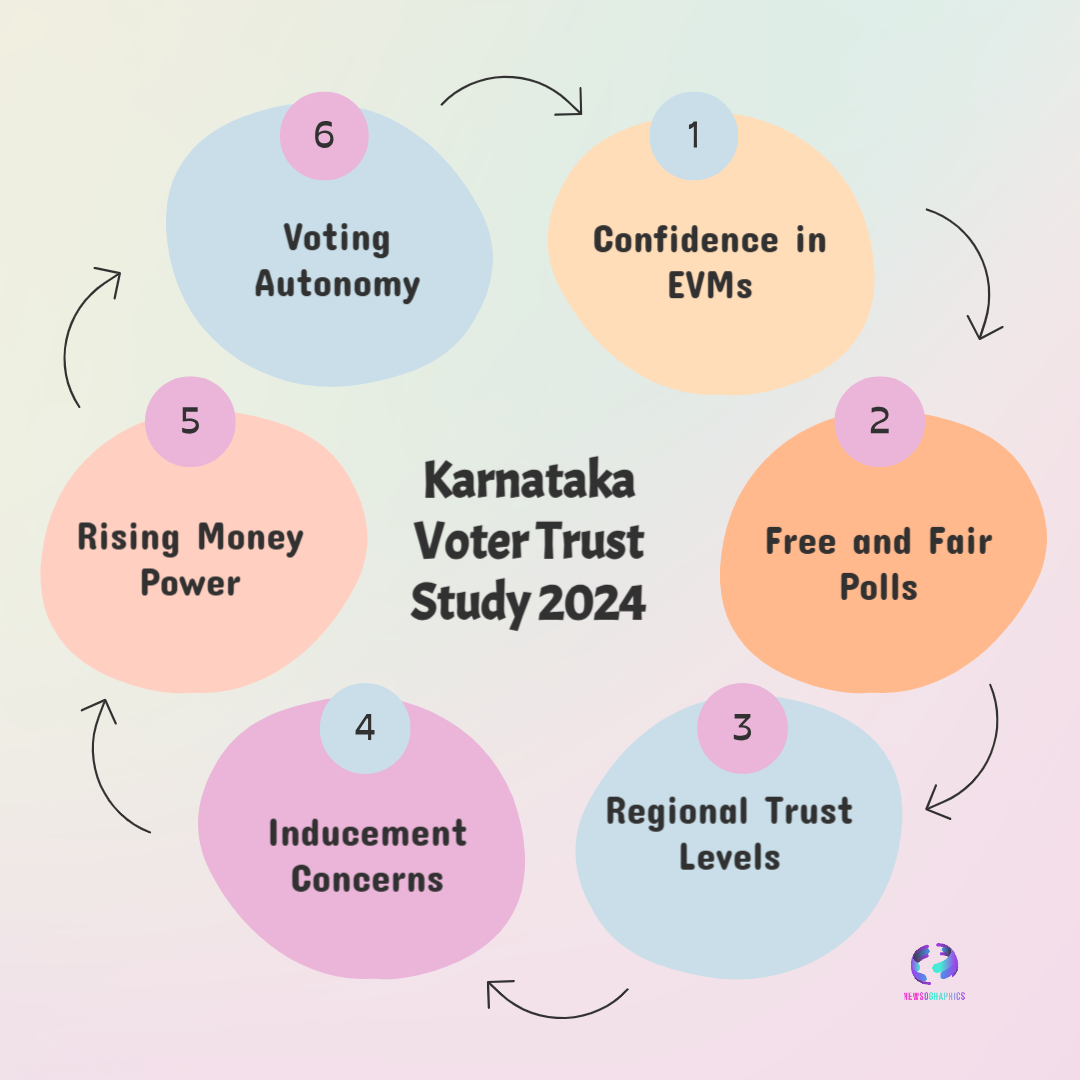
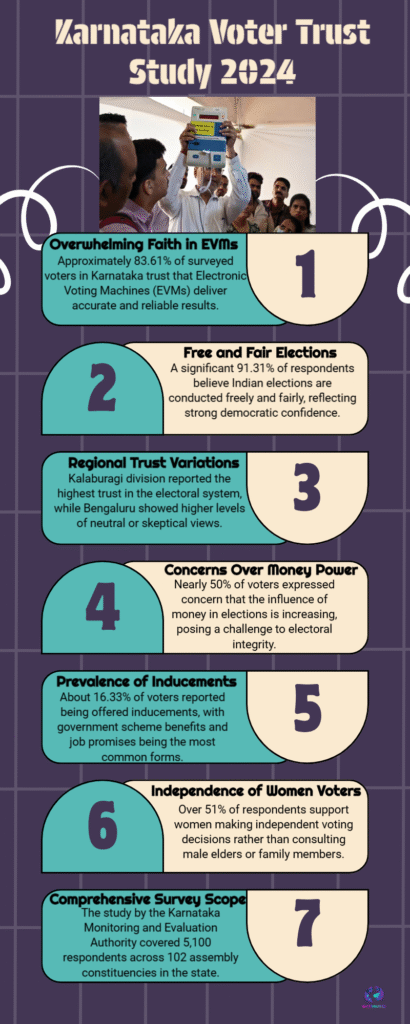
A new study indicates that most voters in Karnataka trust electronic voting machines and believe elections are conducted freely and fairly, reinforcing democratic confidence.
Measuring Public Confidence in Karnataka’s Electoral Process
A recent study examining voter attitudes in Karnataka points to a decisive trend: widespread confidence in electronic voting machines and a prevailing belief that elections are conducted in a free and fair manner. At a time when electoral integrity is frequently debated, the findings suggest that voter trust in the state remains robust and grounded in lived electoral experience.
Rather than reflecting abstract political arguments, the study captures grassroots sentiment—how ordinary voters perceive the mechanics and fairness of the democratic process they participate in.
Trust in Electronic Voting Machines
Familiarity Built Through Repeated Use
Electronic voting machines have been used across multiple election cycles in Karnataka, gradually becoming a routine part of the voting experience. Familiarity has reduced apprehension, replacing uncertainty with procedural confidence. For many voters, the act of voting has become synonymous with EVMs, reinforcing their legitimacy through consistency.
This long-term exposure has contributed to a perception that the technology is stable, reliable, and resistant to manipulation at the polling booth level.
Technology and Transparency at the Booth
Voters often associate transparency with what they can directly observe. The structured process—identity verification, controlled access, and clear confirmation of vote casting—has strengthened belief in the integrity of EVM-based voting. The study indicates that trust is less about technical specifications and more about the visible orderliness of the process.
Belief in Free and Fair Elections
Administrative Credibility and Local Oversight
The perception of fairness is closely tied to the conduct of election officials. In Karnataka, polling staff, security arrangements, and procedural clarity have played a significant role in shaping voter confidence. The study reflects a view that elections are administered professionally, with limited scope for overt interference.
This administrative credibility has translated into a broader belief that outcomes reflect the electorate’s will rather than external influence.
Competitive Politics and Acceptance of Results
Another factor reinforcing trust is political competitiveness. Regular changes in political power and closely fought contests have normalised electoral uncertainty, making outcomes appear earned rather than engineered. Voters interpret this alternation as evidence of a functioning democratic system.
Acceptance of results across constituencies further reinforces the perception that elections are genuine contests rather than predetermined exercises.
Variations Within the Voter Base
Urban and Rural Perspectives
While overall confidence remains high, the study notes nuanced differences between urban and rural voters. Urban respondents often frame trust in institutional terms, citing systems and oversight, whereas rural voters link fairness to personal experiences at polling stations. Despite these differences, both groups converge on a shared belief in the credibility of the process.
Generational Attitudes Toward Voting Technology
Younger voters, having grown up with digital interfaces, display a pragmatic acceptance of EVMs. Older voters, initially cautious, appear reassured through repeated participation. The convergence of these perspectives underscores how experience gradually bridges generational skepticism.
Implications for Democratic Stability
Confidence as a Democratic Asset
High levels of trust in electoral mechanisms contribute to political stability. When voters believe the system works, participation tends to remain steady, and post-election tensions are reduced. The Karnataka study suggests that confidence in EVMs and electoral fairness acts as a stabilising force in the state’s democratic life.
Countering the Narrative of Distrust
In an era where skepticism about institutions often dominates public discourse, the findings offer a counterpoint. They highlight that, at least at the voter level, democratic processes continue to command legitimacy when they are consistently executed and visibly regulated.
A Snapshot of Enduring Faith in the Ballot
The study’s conclusions present Karnataka as a state where democratic faith remains intact. Trust in electronic voting machines and belief in free and fair elections are not abstract ideals but reflections of repeated, tangible experiences at the polling booth. Together, they form a quiet yet resilient endorsement of the electoral system—one shaped less by rhetoric and more by participation.