


Lunar Pole Shock Chandrayaan-2’s advanced DFSAR radar delivers unprecedented evidence of massive, buried water ice reserves in the Moon’s permanently shadowed craters, fueling the race for lunar bases.

The Breakthrough Implications for Lunar Bases
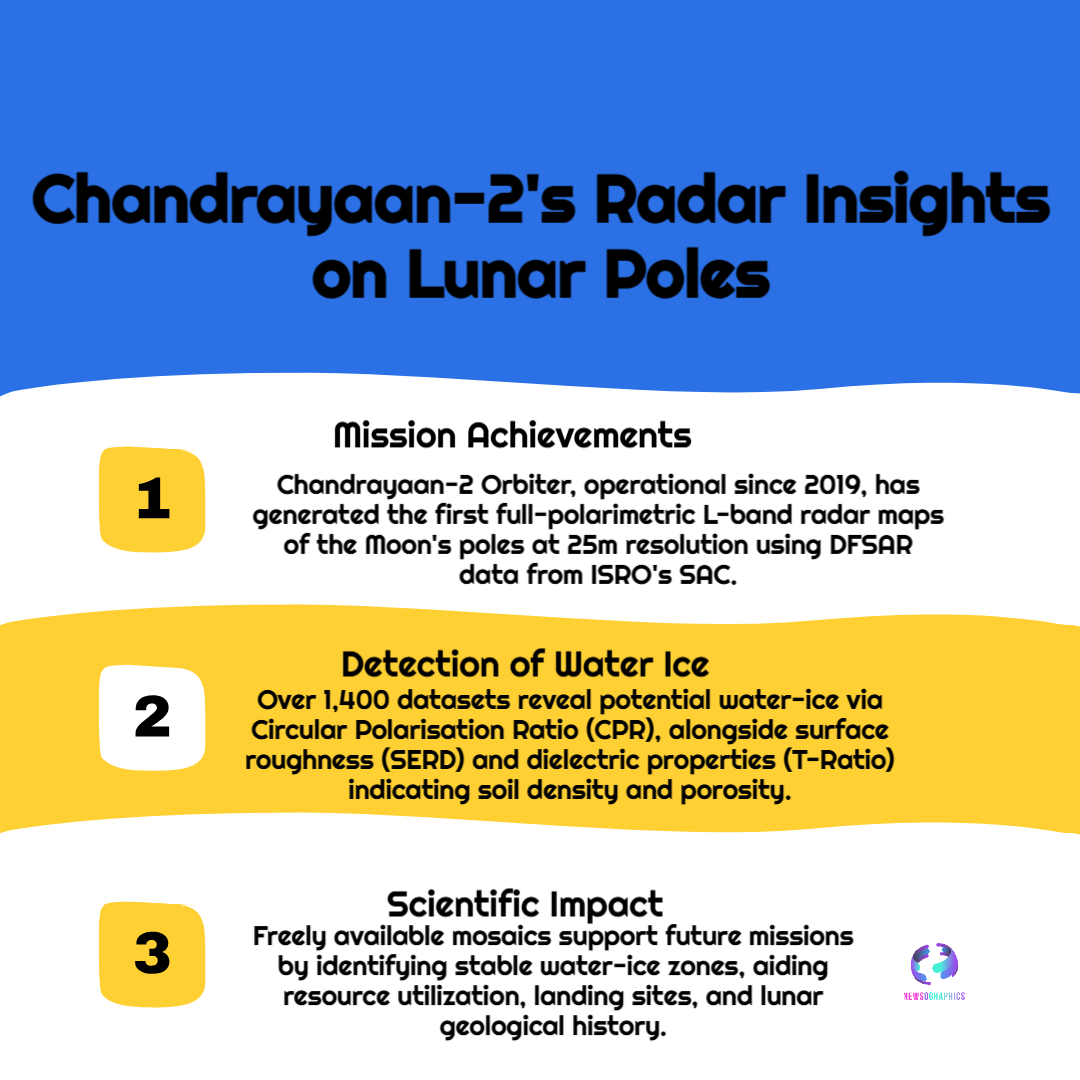
The Indian Space Research Organisation (ISRO) has provided a monumental leap forward in lunar science by releasing highly advanced data products derived from the Chandrayaan-2 orbiter. This new release, focusing on the Moon’s mysterious polar regions, offers the most detailed evidence yet regarding the potential presence and distribution of water-ice deposits and their surrounding soil characteristics. The successful release of the Chandrayaan-2 DFSAR mosaics marks a significant achievement for India’s space program, underscoring the long-term, continued success of the orbiter component of the mission.
Accurate, high-resolution data on the location and depth of subsurface water-ice is the single most critical factor for planning crewed missions and establishing sustainable lunar bases. The water ice could be extracted and processed into drinking water, breathable oxygen, and, most importantly, hydrogen and oxygen for rocket fuel (propellant), effectively making the Moon a fueling station for deep space travel. By releasing this complex, ready-to-use dataset, ISRO is encouraging research that directly supports the Artemis program and India’s own ambitions for deep-space endeavors.
The successful release of the Chandrayaan-2 DFSAR mosaics marks a significant achievement for India’s space program, underscoring the long-term, continued success of the orbiter component of the mission. The Moon’s polar regions are of immense scientific interest globally because the permanently shadowed craters act as cold traps, preserving the oldest chemical records of the early solar system—a sort of “fossil record” for planetary evolution.