


The Centre’s move to replace the MGNREGA name has sparked political backlash, reviving debates over legacy, welfare delivery, and symbolism in governance.
A Policy Decision That Sparked a Political Flashpoint
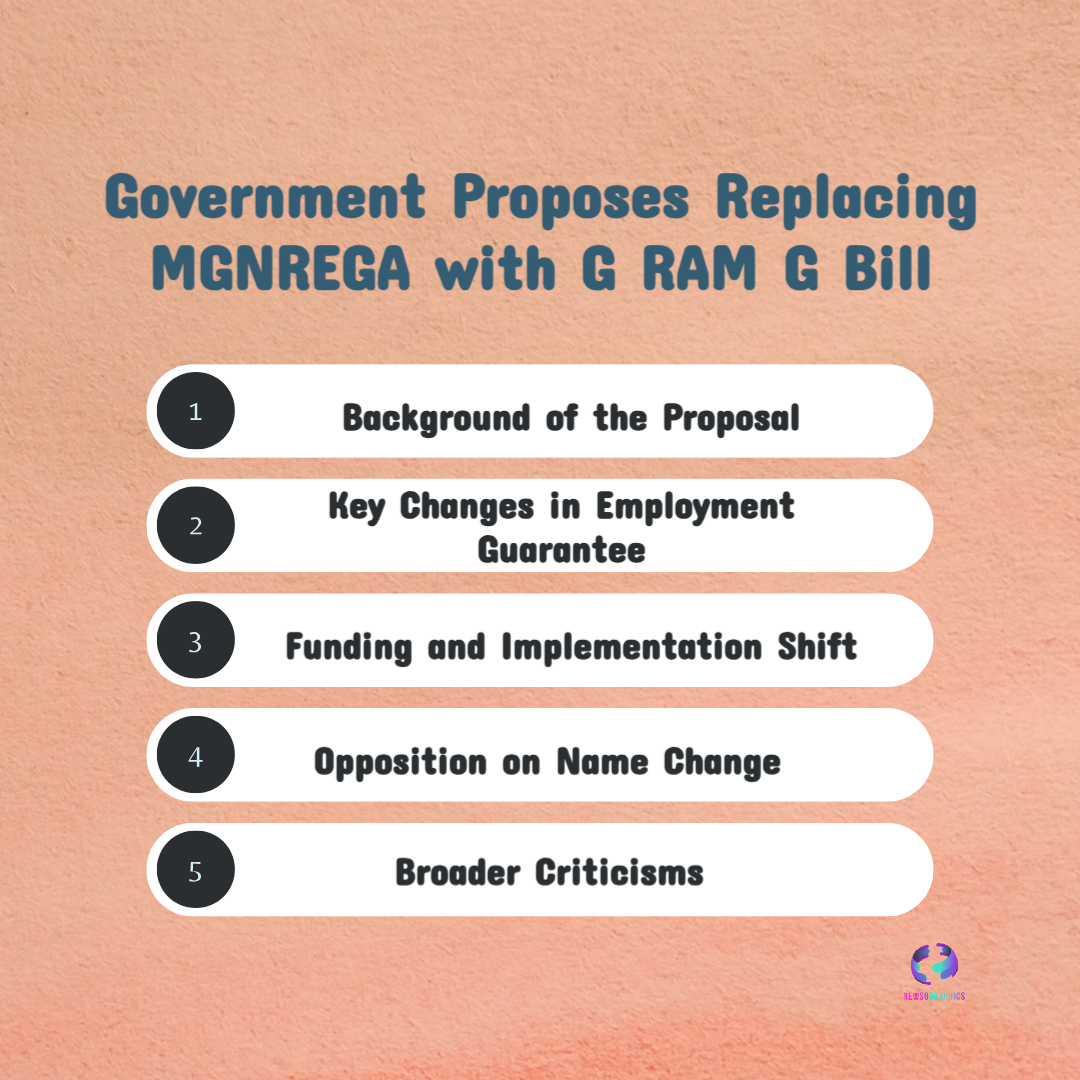
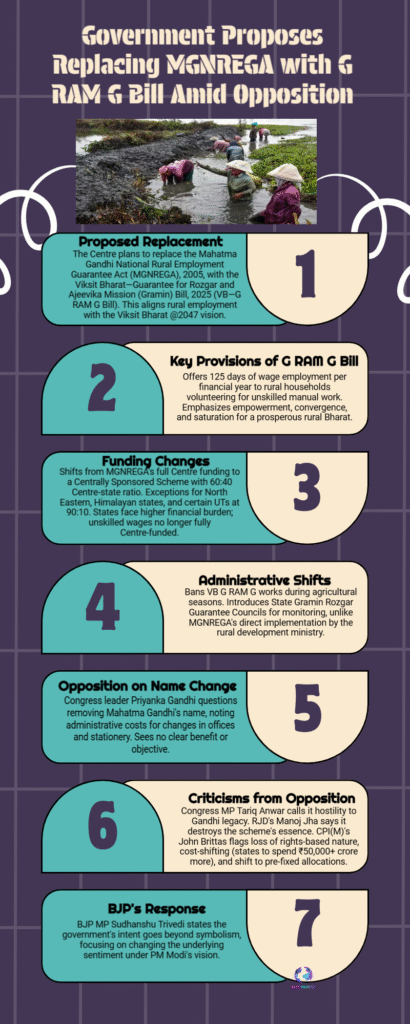
The Centre’s reported move to replace the name of the Mahatma Gandhi National Rural Employment Guarantee Act has triggered a sharp political reaction, turning a policy adjustment into a wider ideological confrontation. While the employment scheme itself remains a cornerstone of rural welfare, the proposed renaming has reignited debates over intent, symbolism, and the role of legacy in public policy.
What might otherwise have been viewed as an administrative decision has instead become a focal point for questions about continuity, political messaging, and the future direction of flagship welfare programmes.
The Significance of MGNREGA in Rural India
MGNREGA has long been one of India’s most visible social security initiatives, providing guaranteed wage employment to rural households. Over the years, it has evolved into a lifeline during periods of economic distress, migration shocks, and agricultural uncertainty.
Beyond its economic function, the scheme has carried strong political and symbolic weight. Its name, invoking Mahatma Gandhi, has linked rural employment policy with ideas of dignity of labour and state responsibility toward the poorest citizens.
Welfare Beyond Economics
For many beneficiaries, the MGNREGA scheme represents more than income support. It reflects access, accountability, and the presence of the state in remote regions. MGNREGA embedded significance explains why any change associated with the programme attracts heightened scrutiny.
Opposition Pushback and the Question of Legacy
Opposition parties have framed the proposed renaming as an unnecessary and politically motivated move. Their criticism centers on the argument that changing the name does little to improve implementation while potentially erasing historical associations tied to the programme’s origins.
The controversy has revived a familiar question in Indian politics: whether altering names and symbols strengthens governance or distracts from substantive policy challenges. Critics argue that the focus should remain on funding adequacy, timely wage payments, and coverage rather than nomenclature.
The Centre’s Broader Policy Narrative
From the government’s perspective, renaming MGNREGA schemes has often been presented as part of a broader effort to standardize, streamline, or reframe welfare initiatives. Supporters of such moves argue that policy effectiveness should not be tethered to individual names and that outcomes matter more than symbolism.
This approach aligns with a governance narrative that emphasizes restructuring and rebranding as tools to reflect changing priorities. However, when applied to programmes with deep social and political roots, it also invites resistance.
Symbolism Versus Service Delivery
The debate highlights a recurring tension between symbolism and service delivery. While names do not directly determine outcomes, they shape public perception, political ownership, and institutional memory. In welfare policy, these elements often carry real-world consequences.
Implications for Rural Governance
The controversy arrives at a time when rural employment and income security remain politically sensitive issues. Any perception of dilution, whether real or symbolic, risks unsettling beneficiaries and state administrations responsible for on-ground execution.
If the focus shifts excessively toward political positioning, there is a risk that operational concerns—such as budget allocations, demand-driven employment, and transparency—may receive less attention.
A Debate That Goes Beyond a Name
The MGNREGA renaming row underscores how deeply welfare programmes are woven into India’s political fabric. What is formally a question of naming has become a proxy for larger debates about ideology, continuity, and the ownership of social policy.
As the discussion unfolds, the central challenge remains unchanged: ensuring that rural employment guarantees function effectively, regardless of what they are called. The intensity of the reaction suggests that in India, welfare schemes are never just administrative instruments—they are also symbols of governance philosophy and political identity.