


A Delhi court has declined to take cognisance of the Enforcement Directorate’s chargesheet involving Sonia Gandhi and Rahul Gandhi in the National Herald case, marking a key legal development.
Court’s Decision Marks a Procedural Turning Point
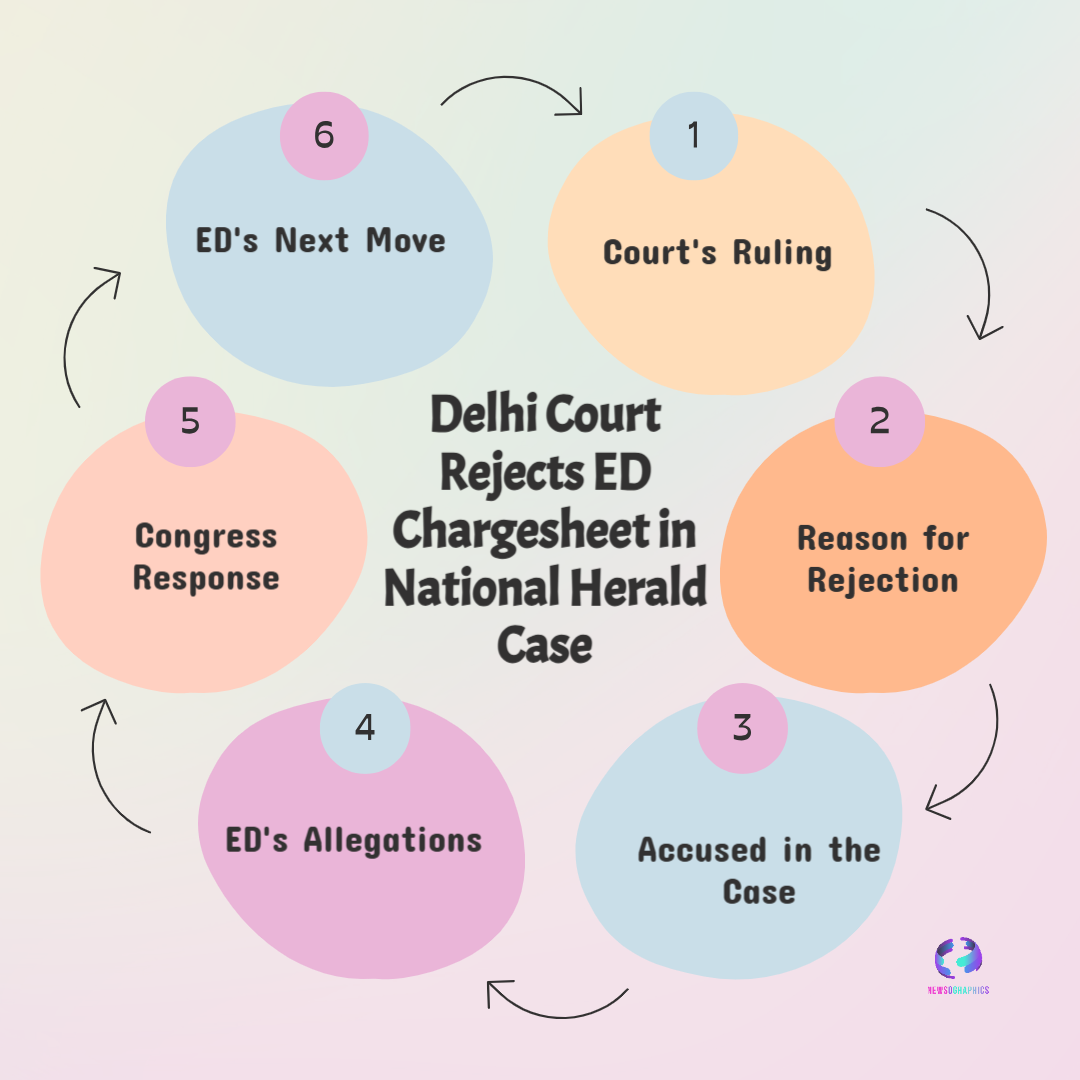
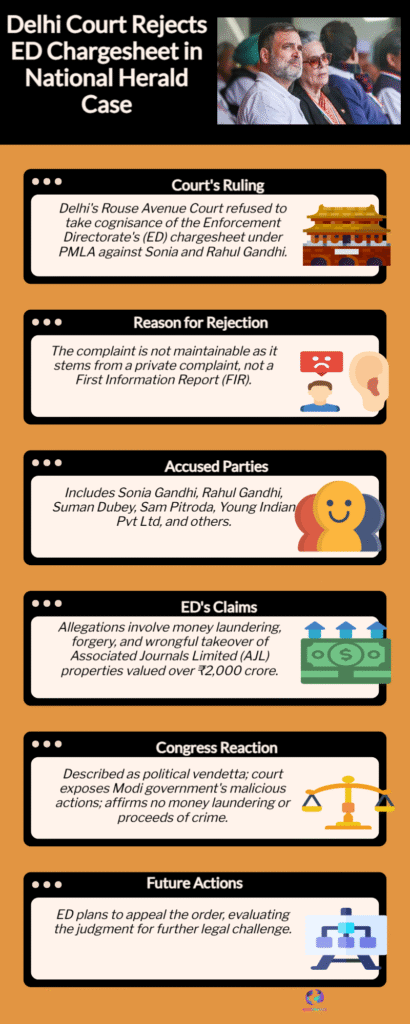
A Delhi court has refused to take cognisance of the Enforcement Directorate’s chargesheet filed in connection with the long-running National Herald case. The decision represents a significant procedural moment in a matter that has remained under legal scrutiny for years and involves prominent political figures Sonia Gandhi and Rahul Gandhi.
The court’s order does not amount to a verdict on the merits of the allegations but instead focuses on the legal and procedural requirements necessary for the case to move forward.
Understanding the National Herald Case
The National Herald case revolves around allegations linked to the ownership, management, and financial dealings of entities associated with the now-defunct newspaper. Over time, the case has expanded into a politically sensitive legal battle, drawing attention due to the stature of those named and the broader implications for political funding and corporate governance.
Investigative agencies have examined whether financial transactions connected to the matter violated provisions of financial and anti-money laundering laws.
Why Cognisance Matters in Criminal Proceedings
Taking cognisance is a critical step in criminal law, as it signifies a court’s formal acknowledgment that a case is fit to proceed. Without cognisance, a chargesheet cannot translate into active judicial proceedings such as summoning of accused persons or framing of charges.
By declining to take cognisance at this stage, the court has effectively paused the process, pending resolution of procedural or legal deficiencies identified in the filing.
Key Legal Issues Under Review
The court’s refusal highlights the importance of strict compliance with statutory requirements when investigative agencies bring National Herald case before the judiciary. Such scrutiny ensures that prosecutions are grounded in due process and that legal safeguards are respected, particularly in cases involving complex financial allegations.
This phase of the proceedings places emphasis on documentation, jurisdictional clarity, and adherence to procedural law rather than factual determination.
Political and Public Reactions
Given the involvement of senior Congress leaders, the development has sparked political reactions across the spectrum. Supporters view the court’s decision as reinforcement of legal safeguards, while critics continue to question the underlying transactions that led to the investigation.
The case remains closely watched as it sits at the intersection of law, politics, and public accountability.
What the Decision Does and Does Not Do
It is important to note that the court’s refusal to take cognisance does not exonerate any individual named in the chargesheet. Nor does it close the case. Instead, it underscores that the judicial process requires precise legal compliance before substantive hearings can begin.
Investigative agencies retain the option to address the court’s concerns and pursue further legal steps within the framework of the law.
Broader Implications for High-Profile Investigations
The development serves as a reminder that high-profile investigations are subject to the same procedural rigor as any other case. Courts play a crucial role in acting as gatekeepers, ensuring that prosecutions are not only thorough but also legally sound.
As the National Herald case continues to evolve, the focus is likely to remain on procedural correctness, judicial oversight, and the balance between investigative authority and legal safeguards.
A Case Far From Conclusion
The refusal to take cognisance marks another chapter, rather than an endpoint, in the National Herald case. With legal options still open and scrutiny ongoing, the matter continues to be a test case for how complex financial investigations involving political figures are handled within India’s judicial system.
Future developments will determine whether the case advances to substantive hearings or undergoes further procedural examination before reaching that stage.