

A Kerala court on December 8, 2025, acquitted Malayalam actor Dileep of conspiracy charges in the 2017 abduction-sexual assault case, while convicting six others. The verdict ends an eight-year legal saga that shook the Malayalam film industry.
Background: The 2017 Assault Case and Its Unfolding
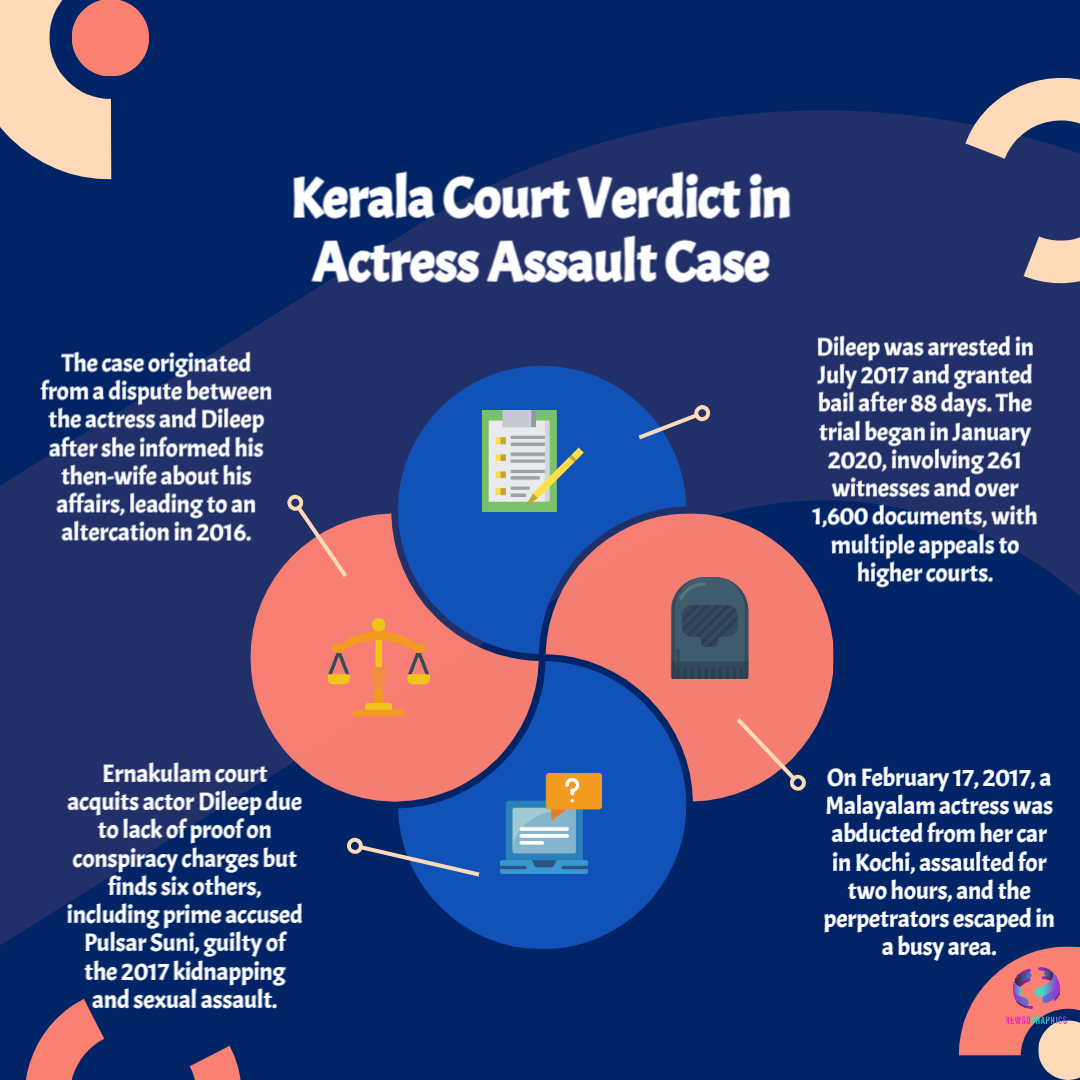
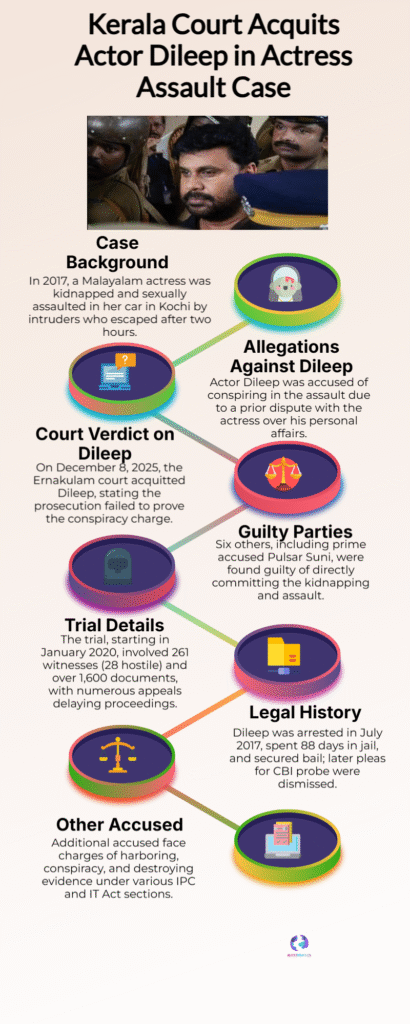
In February 2017, a well-known Malayalam actress was allegedly abducted and subjected to a sexual assault in a moving vehicle near Kochi. The incident reportedly lasted two hours and was purportedly filmed — escalating shock and outrage across the film fraternity and the public.
Among the accused was actor Dileep, who was accused of masterminding the assault — along with several others. The case led to a long and convoluted investigation and trial.
Over the years, the trial saw dramatic developments: multiple petitions, change of prosecutors, many delays including pandemic-related ones, alleged tampering of evidence (memory card containing the assault video was reportedly accessed illegally), and a large number of witnesses — including several from the film industry — being examined.
The Verdict: Who Was Acquitted — Who Was Convicted
On December 8, 2025, the Ernakulam Principal District and Sessions Court — presided over by Judge Honey M Varghese — delivered its long-awaited verdict:
- The court acquitted Dileep, ruling that the prosecution failed to establish beyond a reasonable doubt that he had conspired in the crime.
- However, six others, including the prime accused Sunil N S (aka “Pulsar Suni”), were found guilty for the actual kidnapping and sexual assault.
The court recognized that the evidence sufficed to convict those directly involved, but not to prove a larger conspiracy implicating Dileep.
Significance & Implications
Legal Closure — For Some
After more than eight years of legal wrangling — with 261 witnesses, over 1,600 documents and multiple rounds of appellate proceedings — the verdict provides finality on the involvement of specific perpetrators. The six convicted individuals now have to face the consequences of their actions.
Reputation & Industry Repercussions for Dileep
For Dileep, the acquittal means he is legally cleared of the most serious charges — conspiracy to orchestrate the abduction and assault. Given that the case had enormous public attention and had deeply impacted his career (including loss of professional affiliations earlier), this may influence his public and industry standing.
Nonetheless — because the crime itself (abduction and assault) is confirmed against others — the moral and social discourse around accountability, ethics in the film industry, and victim-rights remains active.
Spotlight Back on Evidence Handling & Legal Process
The trial exposed significant issues in handling sensitive evidence (especially video footage), delays due to procedural complexities, and the challenge of hostile or recanting witnesses. It underscores systemic difficulties in prosecuting sexual offences — even in high-profile cases.
Also, the verdict may shape how future cases in film or other industries of power imbalance are perceived and litigated.
Broader Conversation: Gender Justice & Film-Industry Ethics
The case had evoked strong reactions, with many calling for introspection within the film fraternity: about abuse of power, exploitation, and the need for safer working environments — especially for women. Even with the acquittal of a high-profile name, the conviction of others reinforces that crimes will be punished, but debates around structural issues and support for survivors are far from over.
What Comes Next: Key Questions
- Will the convicted six appeal the verdict — and how long might that legal process take?
- How will the film industry react? Will there be shifts in who’s trusted, employed, or welcomed back?
- Will this verdict change protocols for evidence-handling, especially in sexual assault cases involving video evidence?
- Will this influence ongoing advocacy around gender justice in cinema and beyond?
The 2025 verdict offers a sobering mix: accountability for the perpetrators, but also lingering questions about justice, power dynamics and protection of survivors. As the dust settles on one chapter, the larger conversation around ethics and reform — in law, in cinema, in society — continues.