



Donald Trump Truth Social post details his radical foreign policy success: preventing 5 wars using massive tariff threats. We analyze this aggressive use of economic leverage and its geopolitical strategy implications.
Trump Tariff Strategy War Prevention Claim Analysis
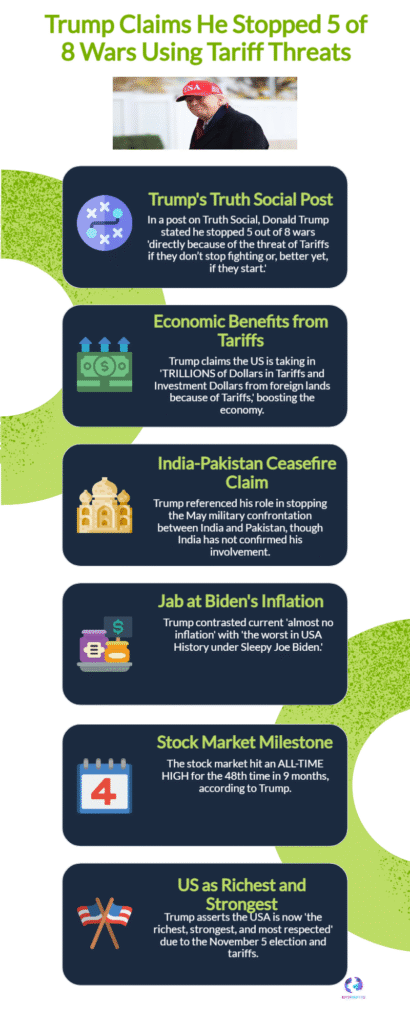
Former United States President Donald Trump has reignited a critical debate surrounding the intersection of trade policy and international security, asserting that his aggressive use of economic tools, specifically tariffs, was directly responsible for preventing multiple global conflicts. In a heavily worded post published on his Truth Social platform, Trump made the striking Trump Tariff Strategy War Prevention Claim, stating, “I have stopped 5 of the eight WARS directly because of the threat of Tariffs if they don’t stop fighting or, better yet, if they start.”
This declaration places economic coercion at the very heart of his foreign policy success narrative, a theme that remains central to the former president’s messaging, particularly amidst discussions about the upcoming Trump 2024 campaign. Trump’s assertion centers on the idea that the threat of crushing tariffs—taxes levied on imported goods.
According to the former president, this aggressive use of trade sanctions transformed economic policy into a potent diplomatic and military deterrent, a form of military conflict prevention achieved without deploying troops. He claims this unconventional approach bypassed traditional diplomatic friction and allowed him to secure concessions from other nations who were desperate to maintain access to the massive American consumer market.
In the same Truth Social post, Trump tied his claims of global stability directly to his economic policies. He claimed that the US is currently “taking in TRILLIONS of Dollars in Tariffs and Investment Dollars from foreign lands,” a common assertion that, while often debated by economists regarding its actual impact on national debt and consumer costs, resonates strongly with his base.
The statement also included a sharp critique of his successor, President Joe Biden, particularly focusing on the current cost of living. Trump argued that there is “almost no inflation” now, a direct jab at the current administration’s Biden inflation record, which has been a major point of economic anxiety for Americans. This comparison is a strategic move, linking his trade policies (tariffs bringing in money) to price stability, contrasting it with the high inflation experienced under the current Democrat leadership. This dual narrative—peace through economic might and prosperity through controlled trade—forms a powerful core of his political platform.