


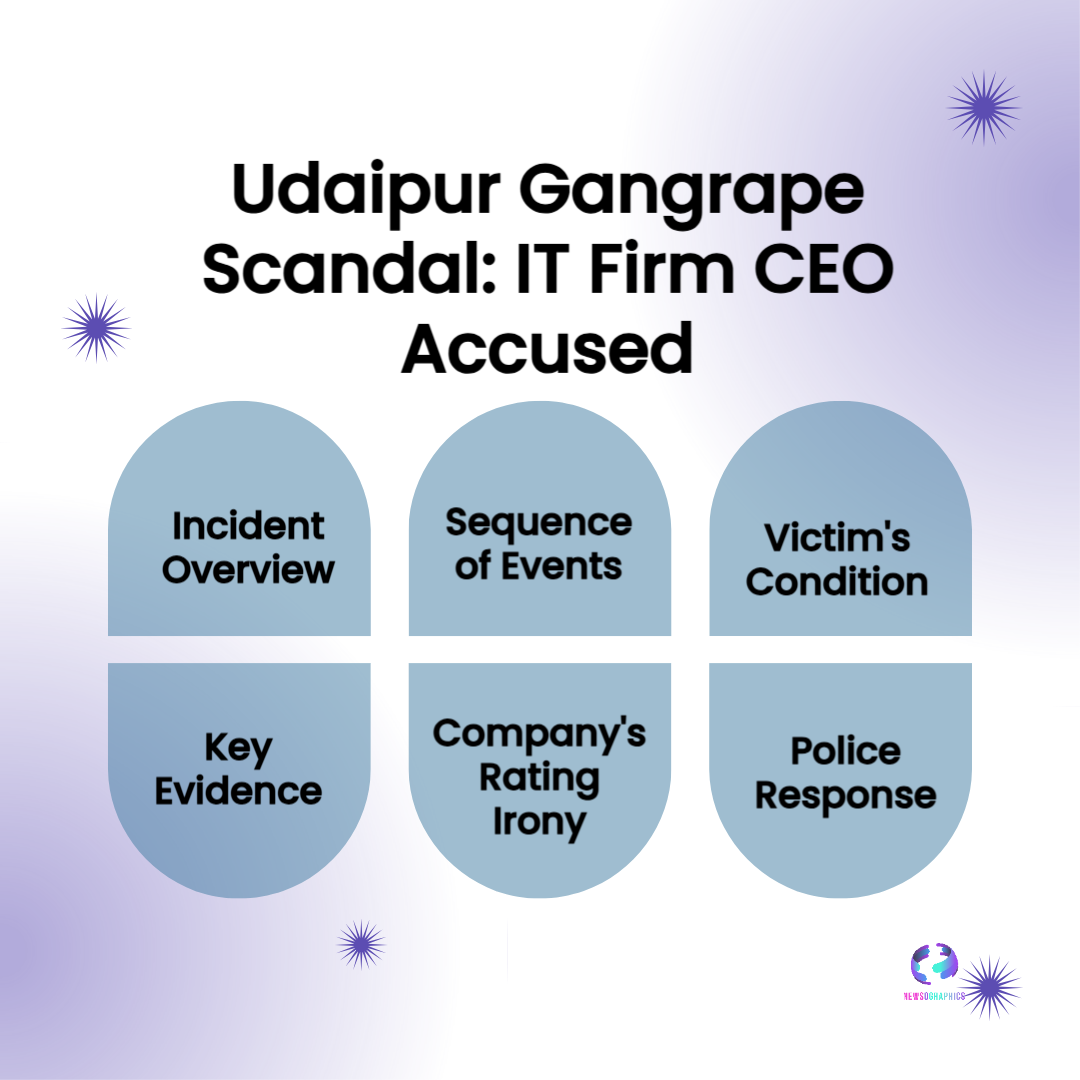
The Udaipur gangrape case involving senior executives has reignited national debate on workplace exploitation, consent, and the systemic misuse of authority within professional environments.

A Crime That Shattered the Illusion of Safety
The alleged gangrape in Udaipur has unsettled public consciousness not merely because of its brutality, but due to the environment in which it is said to have occurred. When violence is reported from within professional or semi-professional settings, it disrupts assumptions about safety, trust, and accountability. The case has drawn attention to how authority, proximity, and silence can intersect to create spaces where exploitation becomes possible.
Unlike crimes committed in isolation, incidents linked to workplaces expose vulnerabilities that extend beyond individual wrongdoing, pointing instead to structural failures that allow abuse to go unchecked.
Power, Hierarchy, and Coercion
Authority as a Tool of Control
In many professional environments, hierarchical imbalance creates implicit pressure. Senior roles carry not only administrative power but also influence over livelihoods, reputations, and career trajectories. When such power is abused, consent becomes distorted, replaced by coercion masked as obligation or fear.
The Udaipur case has intensified scrutiny of how unchecked authority can override personal boundaries, especially when victims are placed in positions of dependence or vulnerability.
The Weight of Silence
Silence often surrounds workplace-related sexual crimes, sustained by stigma, fear of retaliation, and institutional apathy. Victims may hesitate to report abuse due to concerns about credibility, professional fallout, or social judgment. This silence, over time, becomes an enabling force, protecting perpetrators and eroding trust in internal safeguards.
The public response to the case reflects a growing recognition that silence is not neutrality but a systemic failure.
Corporate Spaces and the Myth of Immunity
When Professional Settings Become Unsafe
Corporate and private-sector environments are frequently perceived as regulated and secure. However, the Udaipur incident underscores that professionalism does not automatically translate into protection. Without robust enforcement of ethical standards, formal structures can conceal misconduct rather than prevent it.
This contradiction—between outward order and internal vulnerability—has become a focal point of public debate.
Gaps in Internal Accountability
Many organisations rely on internal mechanisms to address grievances, yet these systems often falter when allegations involve senior figures. Conflicts of interest, reputational concerns, and procedural delays can dilute accountability, leaving victims isolated.
The case has revived questions about whether internal redressal systems are equipped to handle crimes that demand immediate legal intervention rather than administrative resolution.
Legal Process and Public Attention
Law Enforcement Under Scrutiny
High-profile cases inevitably place law enforcement actions under intense observation. From the registration of complaints to investigative transparency, each step shapes public confidence in the justice system. In crimes involving influence and status, the perception of impartiality becomes as critical as the process itself.
The Udaipur case has become a reference point for examining how swiftly and decisively institutions respond when allegations cut across social and professional hierarchies.
Media, Ethics, and Responsibility
Public discourse around sexual Violence carries ethical weight. While attention can amplify accountability, it also risks sensationalism. The challenge lies in sustaining focus on justice, systemic reform, and survivor dignity without reducing the issue to fleeting outrage.
A Broader Social Reckoning
Beyond One Case
While rooted in a specific incident, the Udaipur gangrape case resonates far beyond city limits. It reflects persistent issues around consent, power imbalance, and institutional inertia that surface repeatedly across sectors. Each such case adds urgency to conversations that have long struggled to translate awareness into structural change.
Redefining Responsibility
The unfolding discourse suggests a shift from viewing sexual violence solely as individual criminality to recognising its systemic dimensions. Responsibility, in this context, extends beyond perpetrators to organisations, oversight mechanisms, and cultural norms that shape behaviour.
The Uneasy Path Forward
The Udaipur case stands as a stark reminder that professional titles and corporate settings do not neutralise the potential for violence. Instead, they can amplify harm when authority operates without accountability. As legal proceedings advance, the larger significance of the case lies in what it reveals about power, silence, and the fragile boundaries of safety within modern workspaces.
Its lasting impact will be measured not only by judicial outcomes, but by whether it compels institutions and society to confront uncomfortable truths embedded in everyday professional life.