

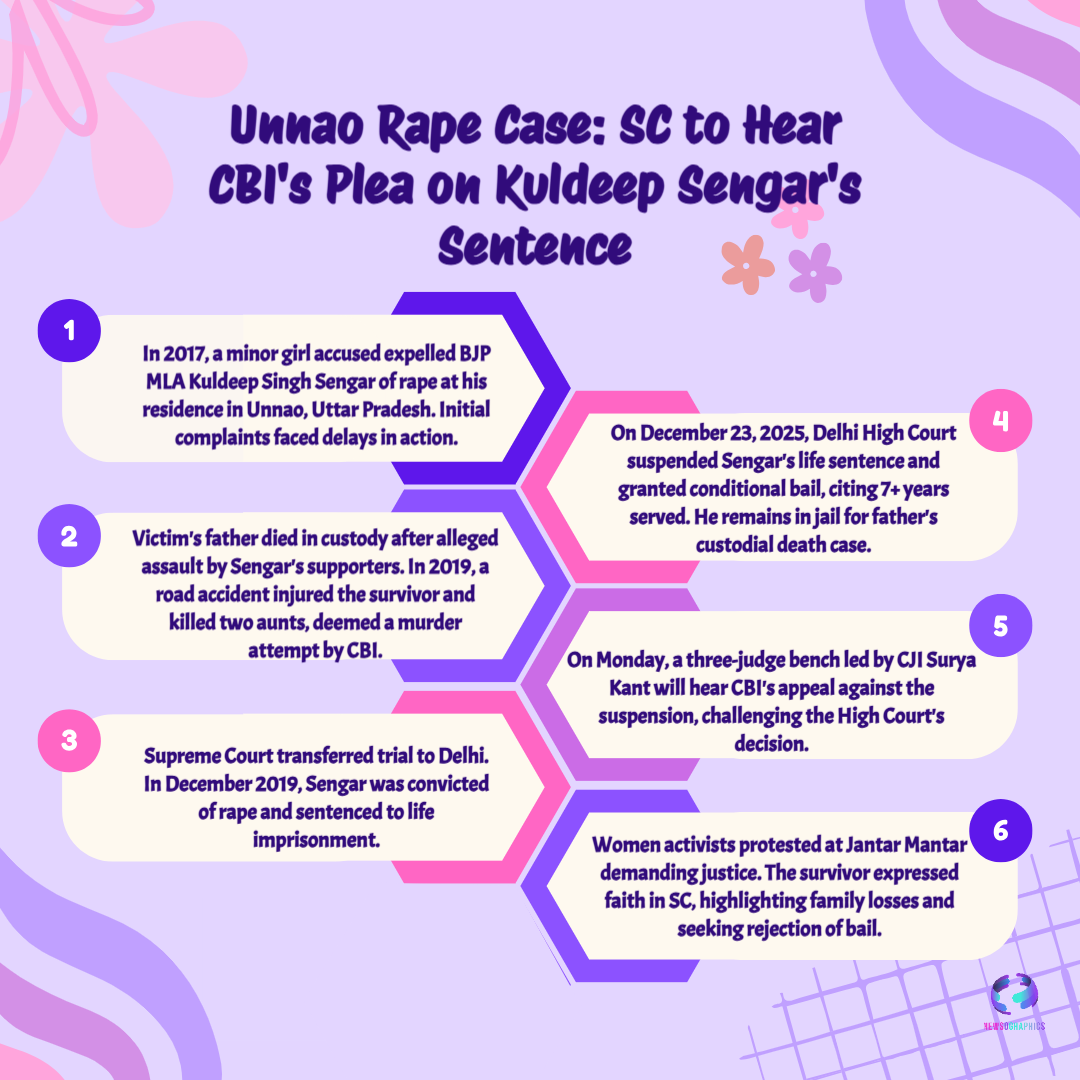
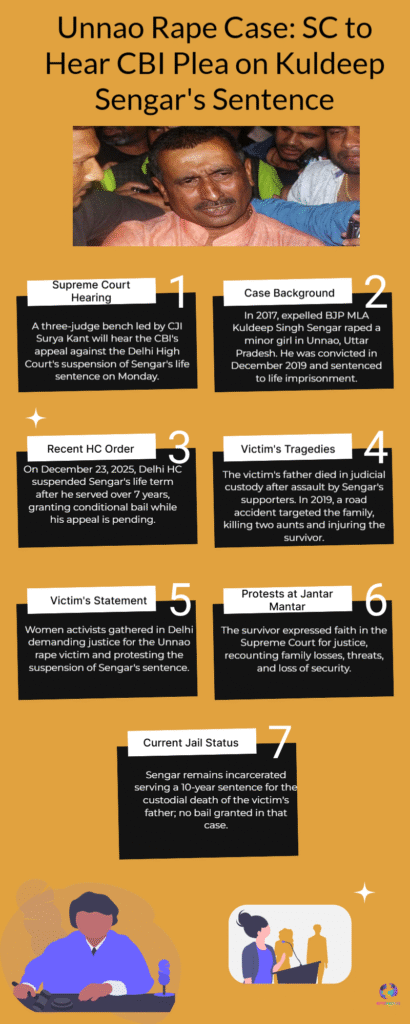
The Supreme Court is set to hear the CBI’s plea seeking enhancement of Kuldeep Sengar’s sentence in the Unnao rape case, as protests erupt demanding justice.
A Case That Continues to Shape Public Conscience
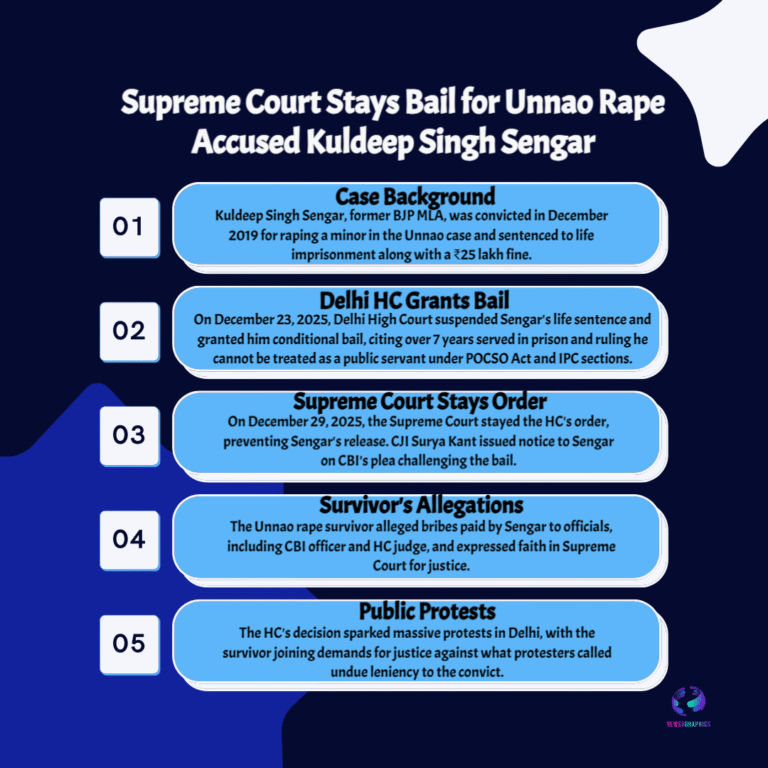
The Unnao rape case has remained one of the most unsettling episodes in India’s recent legal and political history. Years after the crime first surfaced, it continues to resurface in the national conversation, reflecting unresolved questions around justice, accountability, and institutional responsibility. The Supreme Court’s decision to hear the Central Bureau of Investigation’s plea regarding the sentence awarded to former legislator Kuldeep Singh Sengar marks another critical moment in the Unnao case’s long trajectory.
This renewed judicial scrutiny underscores how deeply the case has penetrated public consciousness, refusing to fade despite the passage of time and earlier verdicts.
The Supreme Court Hearing and Its Significance
The apex court’s upcoming hearing centers on the CBI’s request for reconsideration of the punishment awarded to Sengar. The agency’s move signals a belief that the existing sentence does not fully reflect the gravity of the crime or its wider implications. While the legal arguments will unfold inside the courtroom, the hearing itself carries symbolic weight.
It represents the judiciary’s willingness to revisit outcomes in cases that have broader societal resonance, especially those involving sexual violence and alleged abuse of power.
CBI’s Role in Pursuing Accountability
From Investigation to Sentencing Review
The CBI took over the Unnao case amid widespread outrage and allegations of local interference. Its investigation led to convictions, yet the agency’s decision to seek a review of the sentence suggests that accountability is not viewed as complete. By approaching the Supreme Court, the CBI has positioned itself as an advocate for proportional justice rather than procedural closure.
Institutional Messaging Through Legal Action
Beyond the specifics of the Unnao case, the plea carries an institutional message. It reflects an assertion that crimes involving extreme abuse and prolonged intimidation warrant penalties that send a clear signal of deterrence and moral condemnation.
Protests at Jantar Mantar Reflect Public Anger
As legal proceedings resume, the streets have echoed with renewed dissent. Protests at Jantar Mantar have brought together activists, civil society groups, and ordinary citizens demanding stronger action and swifter justice. The demonstrations highlight a persistent gap between legal outcomes and public expectations.
For many protesters, the issue extends beyond a single individual. It speaks to systemic failures, delays, and the perceived imbalance of power that victims often confront when accused persons hold political or social influence.
The Political Shadow Over the Case
Kuldeep Sengar’s political background has always cast a long shadow over the proceedings. From the outset, allegations of intimidation, obstruction, and misuse of influence shaped public perception. Even after convictions, debates around the adequacy of punishment have remained intertwined with concerns about political privilege.
The Supreme Court hearing thus unfolds not only as a legal event but also as a moment that tests the credibility of institutions in cases involving powerful accused.
Broader Implications for Sexual Violence Cases
Sentencing as a Measure of Justice
The focus on sentence enhancement draws attention to how punishment is perceived in cases of sexual violence. For survivors and advocates, sentencing is not merely a legal endpoint but a reflection of how seriously society treats such crimes. The outcome of the hearing may influence future debates on proportionality and consistency in sentencing.
Public Trust in the Justice System
Repeated returns of the Unnao case to headlines reveal an enduring trust deficit. Each judicial development is closely watched, not just for its legal merit but for what it signals about fairness and resolve. The Supreme Court’s handling of the plea will contribute to shaping that trust, either reinforcing confidence or deepening skepticism.
An Unfinished Chapter
The Unnao rape case stands as a reminder that justice is often a prolonged process rather than a single verdict. With the Supreme Court set to examine the CBI’s plea and public protests amplifying demands for accountability, the case enters yet another defining phase. Its outcome will resonate beyond the individuals involved, influencing how the justice system is judged in matters of grave violence and entrenched power.