Starting December 15, 2025, U.S. visa applicants under H-1B and H-4 must make all social media profiles public and submit handles past 5 years. This post explains what’s changed, why, and what visa-seekers should know.
The New Rule: What’s Changed
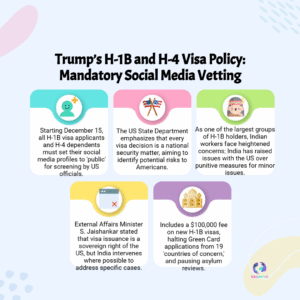
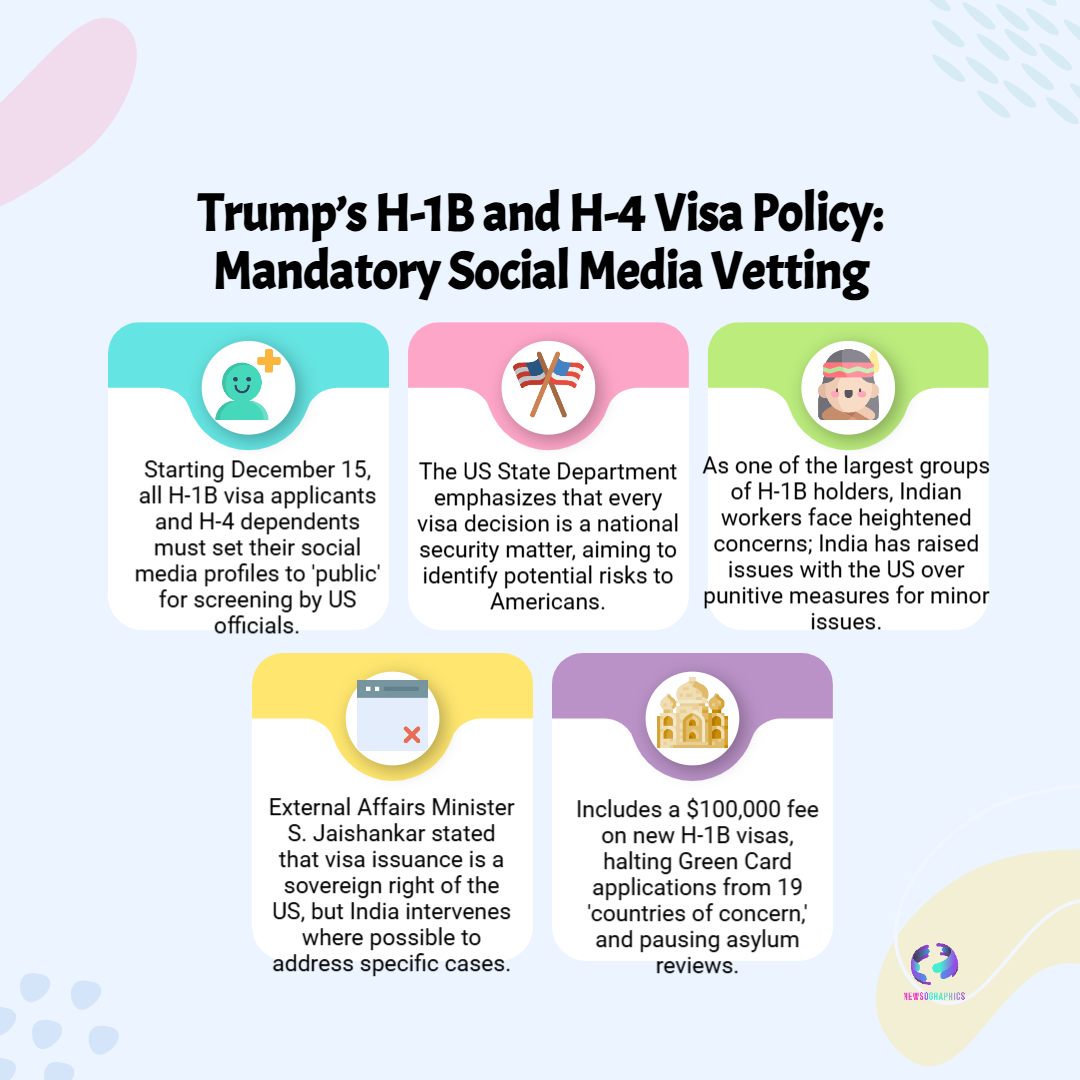
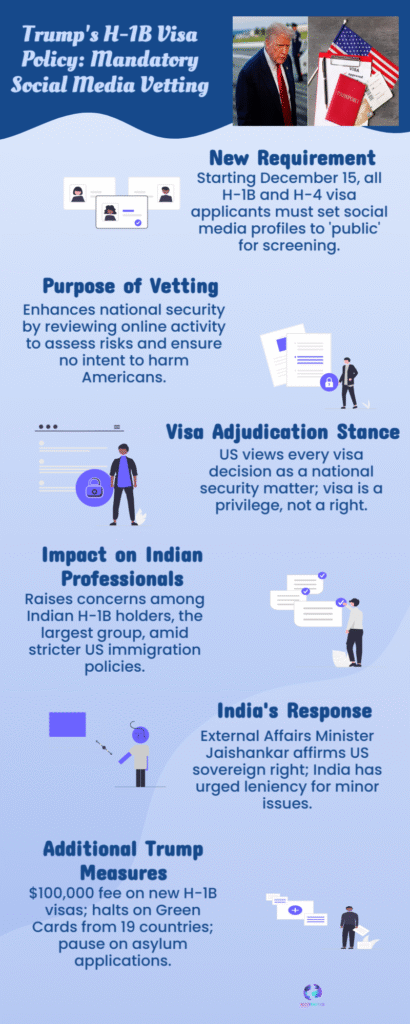
- From December 15, 2025, the U.S. Department of State will require all H-1B visa applicants and their H-4 dependents to have a full “online presence review.”
- As part of this, applicants must declare all social-media handles used over the past 5 years (even if inactive) and switch their privacy settings to “public” on platforms like Facebook, Instagram, Twitter/X, LinkedIn, YouTube, etc.
- This expands a policy previously limited categories like students and exchange visitors (F, M, J) to now cover skilled-worker visas and dependents.
The Official Rationale
- The State Department frames each visa adjudication as a “national security decision,” requiring review of all available information — including digital footprints.
- Authorities said the move is intended to detect potential security, safety, or admissibility risks, by analyzing social media activity and possible red flags in behaviour or background.
Practical Impacts — What It Means for Applicants
More Transparency, Less Privacy
Applicants who once could keep social media private must now make everything visible — public profiles, posts, comments, networks. Past activity (even from 3-4 years ago) can be reviewed.
Heightened Risk of Delay or Rejection
Consular officers now have broader discretion. Posts or histories deemed problematic — e.g. controversial opinions, political activism, or association with disallowed groups — might lead to extra scrutiny, delays, or outright denial.
Broader Scope: Not Just You, But Your Dependents
Even spouses or children applying for H-4 visas must comply. A dependent’s social-media presence could affect the main application.
Potential Delays in Processing
Because of the additional review load, visa processing may slow down. Experts advise applying well in advance to accommodate possible extended background checks.
Why This Matters Especially for Indian Applicants
- Indians constitute a large share of H-1B visa holders globally — the policy change therefore affects thousands of tech professionals and their families.
- Historically, social-media screening was for student visas; now expanding to skilled-worker signals a tougher US stance on immigration under the current administration.
What Applicants Should Do Now
- Make sure to list all social media accounts used in the past 5 years in the visa application (Form DS-160).
- Before applying — review and clean up social media content: delete or archive any controversial posts, ensure profile info (education, job history) matches official documentation.
- Be prepared for longer processing times. Apply early, especially if you have travel or job start dates lined up.
- Understand that visa approval is no longer just about job offer or credentials — online history and presence now plays a key role in admissibility.