

An editorial analysis of protests in Uttarakhand led by Rawat, examining the renewed demand for a CBI probe in the 2022 receptionist murder case and its political and social resonance.
A March That Revived a Dormant Case
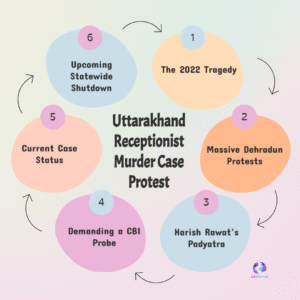
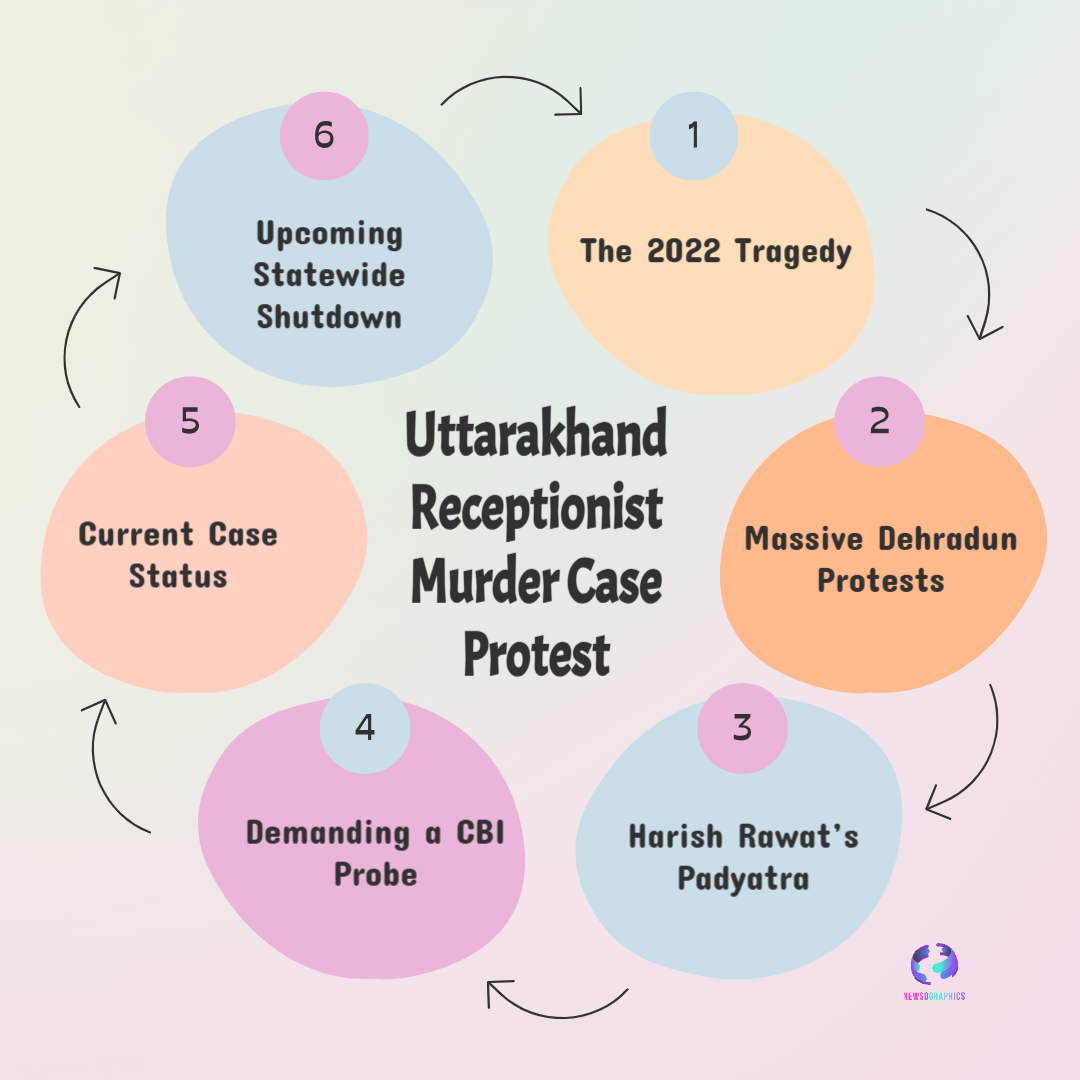
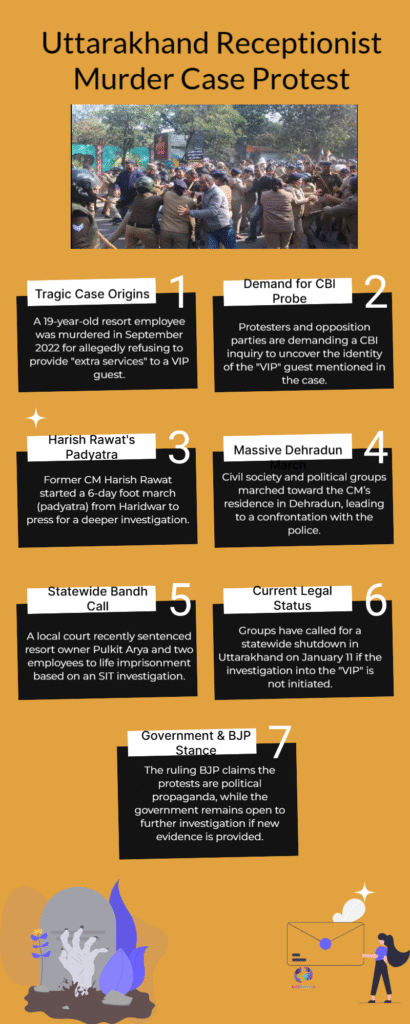
The streets of Dehradun witnessed renewed political mobilisation as a protest march led by Rawat brought the 2022 receptionist murder case back into public focus. What might have remained a closed chapter in administrative records resurfaced as a live political and moral question, driven by public memory and unresolved disquiet.
The demonstration was not merely about revisiting an old case. It reflected a broader frustration with the pace and perceived direction of justice, particularly in crimes that carry strong emotional and symbolic weight.
The Case as a Political and Social Symbol
From Crime to Collective Cause
Over time, certain criminal cases transcend their immediate legal boundaries. The 2022 receptionist murder evolved into one such symbol, representing concerns over power, accountability, and institutional credibility. As years pass, unresolved doubts tend to harden rather than fade, especially when public narratives suggest gaps between investigation and closure.
The Uttarakhand (Dehradun) march illustrated how collective memory can sustain pressure long after official processes appear to have moved on.
Leadership and the Language of Protest
Rawat’s presence at the head of the march transformed the gathering into a political statement. Leadership in such protests signals that the issue has crossed from private grievance into the public arena of accountability, where questions of governance and oversight take precedence over procedural timelines.
The Demand for a CBI Probe
Why Central Investigation Becomes the Focus
Calls for a Central Bureau of Investigation probe often arise when public confidence in state-level investigations weakens. A central agency is perceived—rightly or wrongly—as more insulated from local influence, and therefore better positioned to re-examine sensitive cases.
In Uttarakhand, the renewed demand reflects a belief that only an external lens can address lingering inconsistencies and restore faith in the outcome.
Legal Weight Versus Public Expectation
A CBI probe carries significant symbolic value, but it also raises expectations of definitive answers. When such demands emerge years after the original incident, they highlight the tension between legal finality and public satisfaction, two outcomes that do not always align.
Uttarakhand’s Political Undercurrents
Protest as a Tool of Reframing
In Uttarakhand’s political landscape, protests frequently serve as mechanisms to reframe past events under current realities. By reviving the 2022 case, the Dehradun march effectively repositioned it within ongoing debates about governance, transparency, and institutional trust.
This reframing does not alter facts, but it reshapes how those facts are interpreted and prioritised in public discourse.
Administrative Silence and Public Noise
When official responses remain measured or procedural, protests often fill the communicative vacuum. The contrast between administrative restraint and street-level mobilisation creates a dynamic where perception becomes as influential as documented action.
Public Trust and the Long Shadow of Unresolved Justice
Emotional Persistence of Violent Crime
Crimes involving young victims tend to linger in collective consciousness. The passage of time does not necessarily soften their impact; instead, unresolved questions can deepen scepticism toward institutions meant to protect and deliver justice.
The Dehradun protests underscore how emotional persistence can reignite demands long after legal processes appear settled.
Institutions Under Moral Scrutiny
Beyond the specifics of the case, the march placed broader institutions under scrutiny. Law enforcement, investigative agencies, and political leadership were all implicitly evaluated against public expectations of fairness and resolve.
Reading the Protests Beyond the March
The Rawat-led protest in Dehradun was not simply an act of remembrance or dissent. It functioned as a reminder that justice, in the public imagination, is not confined to verdicts or reports. It is an evolving relationship between institutions and citizens, shaped by transparency, timing, and trust.
As the demand for a CBI probe resurfaces, the episode highlights how unresolved cases continue to shape political narratives, reinforcing the idea that in a democracy, silence rarely signals closure.