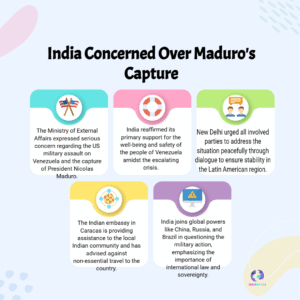


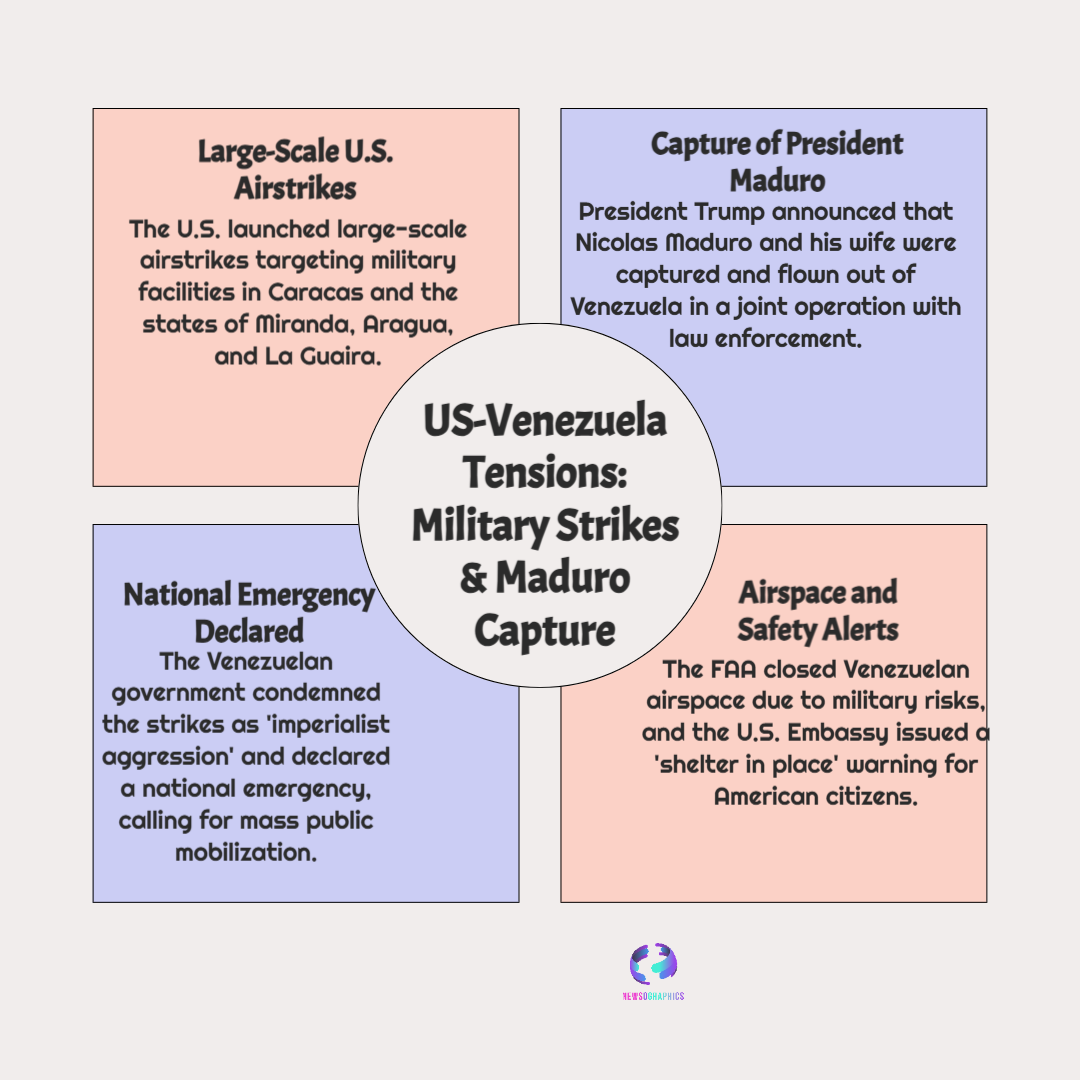
Relations between Venezuela and the United States have entered a volatile phase as political rhetoric, military signalling, and diplomatic strain deepen tensions between Washington and Caracas.
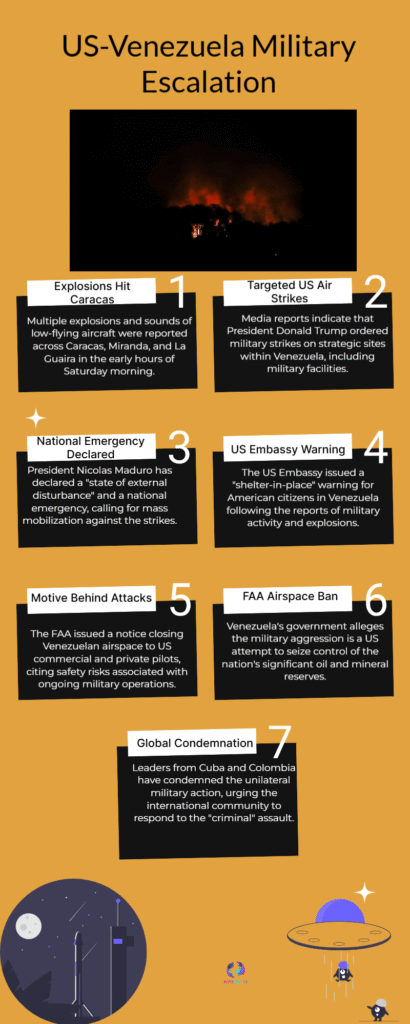
Renewed Strain in Venezuela–US Relations
Tensions between Venezuela and the United States have intensified, marking a sharp turn in an already fraught bilateral relationship. Political messaging from both sides has grown increasingly confrontational, reinforcing a climate of uncertainty across the region.
The latest phase reflects long-standing ideological divides layered with renewed strategic posturing.
Washington’s Hardening Political Posture
The administration of Donald Trump has historically framed Venezuela as a focal point of its Latin America policy, combining economic pressure with assertive diplomatic language. Recent developments indicate a revival of that hardline approach, with signals designed to project strength and deterrence.
This posture resonates beyond bilateral ties, shaping broader perceptions of US engagement in the Western Hemisphere.
Strategic Messaging and Power Projection
Statements emerging from the White House have emphasised national security and regional stability, language that underscores Washington’s willingness to escalate pressure if its interests are perceived to be at risk.
Caracas Responds with Defiance
In Caracas, the response has been one of defiance rather than conciliation. Venezuelan leadership has portrayed US actions as external aggression, reinforcing domestic narratives centred on sovereignty and resistance.
This rhetorical stance plays a dual role: consolidating internal political support while signalling resolve to international observers.
Regional and Global Implications
The escalation reverberates across Latin America, where regional actors closely monitor shifts in US–Venezuela dynamics. Any intensification risks destabilising already delicate diplomatic balances, particularly in a region historically sensitive to external intervention.
Globally, the confrontation adds another layer to an international landscape marked by overlapping geopolitical flashpoints.
Military Signals and the Risk of Miscalculation
Periods of heightened tension often involve symbolic military signalling. Such actions, while intended as deterrents, carry the risk of misinterpretation, especially when communication channels are strained.
In the Venezuela–US context, the margin for error narrows as political rhetoric hardens and trust remains minimal.
A Familiar Cycle of Confrontation
The current escalation fits a familiar pattern: diplomatic strain, assertive messaging, and strategic signalling followed by uneasy pauses. While outright conflict remains unlikely, the persistence of this cycle sustains volatility and uncertainty.
For both Washington and Caracas, the challenge lies in managing confrontation without allowing it to spiral beyond political control.
An Uncertain Path Forward
As tensions persist, Venezuela–US relations remain locked in a phase defined more by confrontation than dialogue. The trajectory suggests continued friction, shaped by domestic politics, regional strategy, and global power calculations.
In the absence of meaningful engagement, the standoff stands as another reminder of how unresolved political divides can repeatedly resurface on the international stage.